Plant Overview
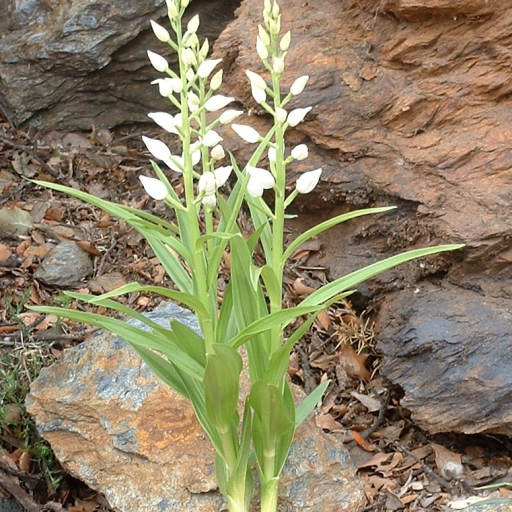
Often called the Sword-leaved Helleborine, this orchid is a vision of pure elegance. Rising from the forest floor like a slender white spire, it has long been admired for its "ghostly" beauty in shaded woodlands. In European folklore, these brilliant white orchids were sometimes whispered to be forest spirits appearing briefly to mark the arrival of late spring.
🔍 How to Identify
- ⚔️ The Foliage: True to its name, it features long, lance-shaped leaves that look like miniature swords, arranged in two neat rows (distichous) along the stem.
- ☁️ The Flowers: The plant produces a spike of 8 to 20 pure white, bell-like blossoms. Unlike many other orchids, these flowers rarely open fully, giving them a shy, delicate appearance.
- 🍳 The "Fried Egg" Lip: If you peek closely inside the flower, you’ll see a distinct orange-yellow patch on the lip (labellum), which looks like a tiny egg yolk against the white petals.
🌲 Habitat & Ecology
- 🌳 The Woodland Specialist: This orchid is a lover of ancient forests, particularly beech and oak woods. It thrives in the dappled "Goldilocks" light of the forest floor—not too dark, but protected from the harsh midday sun.
- 🍄 Fungal Partnerships: It is a "mycoheterotroph" at heart. It relies on a complex underground relationship with specific soil fungi to survive. Because of this delicate symbiosis, it is notoriously difficult to grow in a traditional garden; if you find one, it is best enjoyed in the wild.
⚠️ Safety & Toxicity
- 🕊️ Non-Toxic: The Sword-leaved Helleborine is not known to be poisonous to humans, cats, or dogs.
- 🚫 Strictly Protected: While safe to touch, it is a rare and protected species in many countries. Digging it up is often illegal and almost always results in the plant’s death because the necessary soil fungi are left behind.
✨ Fun Fact
- 🐝 The Great Bamboozle: This orchid is a master of deception! It produces absolutely no nectar. Instead, it mimics the color and light-reflecting patterns of nectar-rich bellflowers (Campanula) to trick bees into pollinating it for free.

Detailed Care Instructions
| Humidity | Normal |
| Lighting | Part Sun |
| Difficulty | Medium |
| Hibernation | Cold Period |
| Hardiness Zones | 5 - 9 |
To grow Cephalanthera Longifolia, also known as the Narrow-leaved Helleborine, you can follow these steps:
- Climate: Determine if your climate is suitable for this particular species. Cephalanthera Longifolia is generally found in temperate to cool regions and prefers partial shade. It tends to grow in woodlands or areas with well-drained soil.
- Propagation: There are a few ways to propagate Cephalanthera Longifolia. The most common method is by collecting and planting seeds. You can also divide existing clumps during the plant's dormant season.
- Seed Collection: Look for mature seed pods on existing plants. The pods will turn brown and dry out when the seeds are ready to be collected. Once collected, store the seeds in a cool, dry place.
- Soil: Prepare a well-draining soil mix with high organic content. Cephalanthera Longifolia prefers acidic to neutral soil, so consider amending the soil if necessary.
- Planting: Sow the seeds in late autumn or early winter. Press the seeds lightly into the soil mix and cover them with a thin layer of compost or vermiculite. Keep the soil moist, but not waterlogged.
- Germination: Place the pots or trays in a cool, shaded area with temperatures around 15-20°C (59-68°F). Germination may take several weeks to months, so be patient. Do not let the soil dry out completely during this period.
- Transplanting: Once the seedlings have grown a few inches tall and developed a few leaves, they can be transplanted into individual pots or into a prepared garden bed. Make sure to plant them at the same depth they were growing in the seed tray.
- Maintenance: Provide consistent moisture during the active growing season, but avoid overwatering. Apply a balanced, slow-release fertilizer in early spring, and top-dress with compost annually. Remove any weeds that compete with the plants.
- Protection: If frost or harsh weather conditions are common in your area, consider protecting the plants with mulch or a frost cover during the winter months.
- Patience: Cephalanthera Longifolia is a slow-growing plant and may take several years to reach maturity and bloom. Be patient and continue to provide the necessary care and conditions for optimal growth.
Remember to always research the specific care requirements for Cephalanthera Longifolia in your region, as climate and environmental conditions can vary.

Place in a window with dappled sun or a spot in the middle of a room. Or directly in a window facing west or east.

Cephalanthera longifolia is a plant that belongs to the orchid family. It requires a specific watering regime to ensure its proper growth and health. The best way to water this plant is to ensure that the soil is moist, but not water-logged. Over-watering can lead to root rot, which can be fatal to the plant.
The plant should be watered when the topsoil feels dry to the touch. The frequency of watering will depend on various factors, including the temperature, humidity, and the amount of sunlight the plant is getting. During the summer months, the plant may require more frequent watering as the heat can cause the soil to dry out quickly.
When watering, it is essential to avoid wetting the leaves and flowers of the plant, as this can lead to the development of fungal diseases and foliar damage. To achieve this, it is advisable to water the soil directly around the base of the plant.
Cephalanthera longifolia is a sensitive plant that requires a specific balance of water, light, and temperature to thrive. When watering, it is essential to be mindful of the plant's needs while avoiding over-watering or under-watering. With proper care, the plant will grow strong and produce beautiful flowers.
This plant requires a balanced fertilizer applied during its active growing season. A slow-release formula or a liquid fertilizer diluted to half strength can be used. Apply the fertilizer evenly around the base of the plant and water thoroughly afterwards. Avoid fertilizing during dormant periods.
Cephalanthera Longifolia, a type of orchid, should be planted in soil that is well-draining and rich in nutrients. A soil mix with a pH of 5.5 to 6.5 is ideal for this plant. A combination of peat moss, perlite, and bark or spaghnum moss is recommended for this species. The soil mix should be moist, but not waterlogged, and should allow for good airflow around the roots. Epiphytic orchids, like Cephalanthera Longifolia, typically prefer a loose, aerated soil mix that is capable of holding moisture while allowing for good drainage.
To propagate this species of plant, you will need to start by collecting its seeds. The seeds should be sown in seed trays filled with a well-draining potting mix. It is important to keep the soil moist, but not waterlogged. Place the seed tray in a warm, bright location, but not in direct sunlight. The seeds should germinate within a few weeks.
Once the seedlings have grown to a size where they can be handled, they can be transplanted into individual pots. The pots should also be filled with a well-draining potting mix. Keep the soil moist and place the pots in a bright location, but not in direct sunlight.
After a few months, the plants should have grown to a size where they can be planted outdoors. Choose a location that receives partial shade and has well-draining soil. Dig a hole for each plant and place it in the hole, making sure the top of the root ball is level with the soil surface. Water the plants thoroughly and keep the soil moist until they become established.
It is important to note that this species of plant may take several years to flower, so it requires patience to see the blooms.








