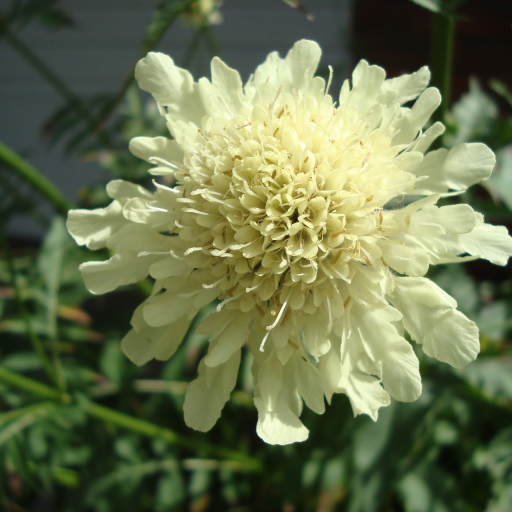
Plant Overview
Often called the "Giant Scabious," Cephalaria gigantea is the towering aristocrat of the cottage garden. Originating from the meadows of the Caucasus, this plant is beloved for its "see-through" quality; despite its massive height, its wiry stems allow you to see the rest of your garden right through it. It’s a favorite for gardeners who want to add architectural drama without creating a heavy, solid wall of foliage.
🔍 How to Identify
- 🌼 Pincushion Blooms: The flowers are a delicate primrose-yellow, resembling soft, ruffled pincushions about 2 inches wide.
- 📏 Stately Stature: It is unmistakably tall, often reaching between 6 to 8 feet, with long, slender branching stems that sway gracefully in the breeze.
- 🌿 Basal Foliage: Most of the greenery stays low to the ground. The leaves are large, deeply lobed, and fern-like, forming a dense mound at the base of the plant.
🏡 In Your Garden
- 🌬️ Wind & Support: Because it grows so tall on such thin stems, it is best placed at the back of a border or against a fence. While the stems are surprisingly tough, they may require staking in very windy areas to prevent them from flopping over after a heavy rain.
- 🦋 Pollinator Magnet: This plant is one of the best choices for a wildlife garden. Its high nectar production acts like a beacon for bumblebees, hoverflies, and butterflies, who will frequent the blooms from mid to late summer.
- ✂️ Space Matters: Give it room to breathe. While the stems are airy, the root clump can become quite wide over time, and it may outcompete smaller, delicate neighbors if planted too closely.
⚠️ Safety & Toxicity
- ✅ Generally Safe: Cephalaria gigantea is not known to be toxic to humans, dogs, or cats. It is considered a safe addition to family-friendly landscapes.
- 🧤 Skin Sensitivity: While not poisonous, some gardeners with sensitive skin might find the slightly hairy stems mildly irritating. Wearing gloves during pruning or deadheading is a simple way to stay comfortable.
✨ Fun Fact
In the language of flowers, Scabious-type plants often represent "unfortunate love," but in the garden, they represent pure resilience—this plant is so hardy it was once a staple in Victorian "wild gardens" because it can thrive with almost zero human intervention!

Detailed Care Instructions
To grow Cephalaria Gigantea plant, also known as Giant Scabious, you can follow these steps:
- Climate and location: Giant Scabious plants prefer partial shade to full sun. They can tolerate a wide range of soil types but prefer well-draining soil.
- Planting: Start the seeds indoors in late winter or early spring, around 8-10 weeks before the last frost date in your area. Sow the seeds in seed trays or pots filled with seed compost, covering them lightly with soil. Keep the soil consistently moist.
- Transplanting: Once the seedlings have grown enough and the danger of frost has passed, transplant them outdoors into your garden or large pots. Choose a location with good sunlight and enough space for the plant to grow and spread.
- Soil conditions: Ensure the soil is well-drained and fertile. If the soil in your garden is heavy clay, mix it with some organic matter, such as compost, to improve drainage and nutrient content.
- Watering: Water the plants regularly, especially during dry spells, providing enough moisture to keep the soil moist but not waterlogged. Avoid overwatering, as it can lead to root rot.
- Fertilizer: Prior to planting, incorporate compost or well-balanced fertilizer into the soil. Additionally, feed the plants with a balanced liquid fertilizer every 4-6 weeks during the growing season.
- Support: Cephalaria Gigantea plants grow tall and may require support. Consider inserting stakes or using a trellis to prevent the stems from bending or breaking.
- Pruning: Remove any dead or damaged stems throughout the growing season to maintain plant health and appearance.
- Division: Every 3-4 years, in early spring or late autumn, you can divide the mature clumps of plants to maintain their vigor. Dig up the plant, separate the root clumps, and replant them in well-prepared soil.
- Pests and diseases: Generally, Cephalaria Gigantea is a relatively pest-free plant. However, keep an eye out for common garden pests like aphids or snails. Treat any infestation promptly using appropriate organic or chemical methods.
By following these steps, you can successfully grow Cephalaria Gigantea and enjoy its beautiful yellow flowers during the flowering season.

Place in a bright room that is sun drenched almost all day. Or directly in a south-facing window.

Cephalaria Gigantea plant requires consistent watering to ensure optimal growth and health. When watering, it is important to water the soil thoroughly, rather than just the surface, to encourage deeper root growth. It is recommended to water deeply once or twice a week, depending on the weather and soil conditions. Overwatering should be avoided, as this can lead to root rot. To ensure proper drainage, it is also important for the soil to have good drainage and for the pot to have drainage holes. Watering in the morning or evening, rather than during the heat of the day, can also help to minimize water evaporation and ensure that the plant is able to absorb the water it needs.
To fertilize this plant, apply a balanced fertilizer such as a 10-10-10 or 20-20-20 in early spring before new growth appears. Use a slow-release fertilizer or apply liquid fertilizer every four weeks during the growing season. Be sure to follow the manufacturer's instructions for the proper dosage and application method. Avoid over-fertilization, as this can lead to excessive foliage growth at the expense of flower production.
When it comes to growing Cephalaria Gigantea, it is important to use a soil that is well-draining and loose. This allows for air to circulate around the roots and prevents moisture buildup that can lead to root rot. A soil with a pH level between 6.5 and 7.5 is ideal, as this is within the range that the plant prefers. Adding organic matter such as compost or well-rotted manure can also help improve soil structure and fertility. Additionally, Cephalaria Gigantea prefers a soil that is rich in nutrients, so incorporating a slow-release fertilizer into the soil or using a liquid fertilizer during the growing season can help promote healthy growth.
Propagation of this plant can be done through seed sowing in the spring. The seeds should be sown in a well-draining soil mix and covered lightly with soil. Keep the soil moist until germination occurs, which can take up to 4 weeks. Once the plants have developed a few leaves, they can be transplanted into larger pots or directly into the garden. This plant can also be propagated through division in the spring or fall. Lift the plant carefully and divide it into smaller clumps with a sharp knife. Each clump should have at least one strong shoot and a good root system. Plant the divisions in well-prepared soil and keep them well-watered until they are established.








