Plant Overview
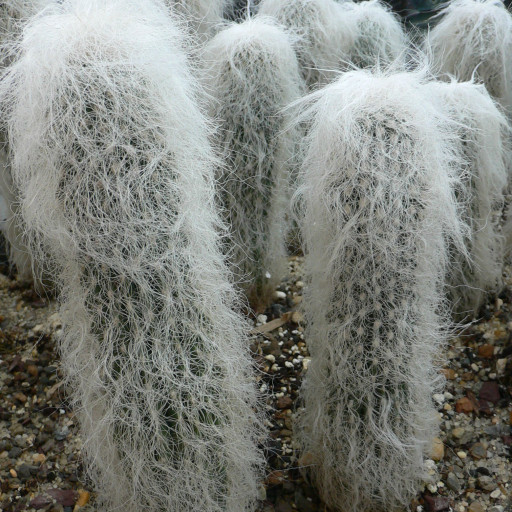
The Cephalocereus senilis, affectionately known as the "Old Man Cactus," looks like a wise desert sage with a long, unkempt white beard. Native to the steep canyons of Mexico, this iconic succulent is beloved for its shaggy, whimsical appearance. While it looks soft and cuddly, this elder of the plant world hides a prickly secret beneath its snowy exterior.
🔍 How to Identify
- ☁️ The "Beard": Long, shaggy white hairs (trichomes) cover the entire body. These are actually modified spines designed to protect the plant from the intense high-altitude sun.
- 🌵 The Column: Beneath the hair is a sturdy, cylindrical green stem. In its youth, it is a small ball, but it eventually grows into a tall, stately pillar.
- 📍 Hidden Spines: Tucked discreetly under the white fluff are sharp, yellow-to-grey spines. They are hard to see but very easy to feel if you try to "pet" the plant.
🏡 In Your Garden
- ☀️ Light is Life: The "hairier" the cactus looks, the more light it is likely receiving. To keep that brilliant white sheen, it needs full, direct sun; in low light, the hair becomes thin, sparse, and grey.
- 💧 The Moisture Trap: Unlike many cacti, the Old Man's hair can trap humidity and dust. Avoid overhead watering at all costs, as wet "hair" can lead to fungal rot or unsightly matting that is difficult to clean.
- 🌱 Slow and Steady: This plant is the marathon runner of the garden. It grows incredibly slowly, often taking decades to reach maturity. It rarely flowers in indoor settings, making its unique texture the main attraction.
⚠️ Safety & Toxicity
- 🩹 Physical Hazard: While not chemically toxic or poisonous, the hidden spines are sharp and can cause painful punctures.
- 🐾 Pets & Kids: The plant is deceptive. Because it looks "soft," children and pets are often tempted to touch it. It should be placed on a high shelf or in a protected area to avoid accidental stings.
✨ Fun Fact
Those long white hairs aren't just for show! They act as a sophisticated climate control system. In the wild, they reflect harsh UV rays during the day to prevent sunburn and trap a layer of warm air against the plant's "skin" to protect it from freezing during cold desert nights.

Detailed Care Instructions
| Color | Grey Hairs Cover The Stem; Occasional Pink, White, Or Red Flowers On Mature Plants |
| Soil Ph | 7-8 |
| Humidity | Dry |
| Lighting | Full Sun |
| Toxicity | Non-Toxic |
| Soil Type | Sandy, Very Free-Draining Compost |
| Bloom Time | Summer At Night |
| Difficulty | Easy |
| Plant Type | Perennial Cactus |
| Mature Size | Up To 40 Feet Tall With A 6 Foot Spread In Wild; Smaller In Container |
| Native Area | Parts Of Mexico |
| Temperature | 20°C - 35°C |
| Sun Exposure | Full Sun |
| Hardiness Zones | 10-13 |
To successfully grow Cephalocereus senilis, also known as the old man cactus, you can follow these steps:
- Climate and lighting: This plant thrives in dry, warm climates and requires plenty of sunlight. Place it in a location with at least 6 hours of direct sunlight daily. If you live in a colder climate, consider growing it indoors near a sunny window or using grow lights.
- Soil: Use a well-draining cactus mix or create your own by combining equal parts of regular potting soil, sand, and perlite. This will ensure good drainage and prevent root rot.
- Potting: Choose a pot that has drainage holes and is slightly larger than the plant's root ball. Repotting should be done every 2-3 years or when the plant outgrows its container.
- Watering: Cephalocereus senilis is a drought-tolerant plant and is susceptible to root rot if overwatered. Allow the soil to dry out completely between waterings. During the spring and summer, water thoroughly and then let the soil dry out before watering again. Reduce watering during the fall and winter months.
- Fertilizer: Use a balanced, water-soluble fertilizer diluted to half strength during the growing season (spring and summer) every 4-6 weeks. Do not fertilize during the winter when the plant is dormant.
- Pruning: Minimal pruning is necessary for this plant. However, you can remove any dead or diseased parts with clean, sharp shears. Be cautious as the plant's spines can be sharp and should be handled with care.
- Propagation: Cephalocereus senilis can be propagated from seeds or stem cuttings. For seeds, sow them in a well-draining cactus mix and keep them warm and moist until they germinate. Stem cuttings need to be allowed to callus for a few days before planting in well-draining soil mix.
- Pest control: Monitor your plant for common pests like mealybugs or spider mites. If infested, treat with insecticidal soap or neem oil according to the product instructions.
Remember that Cephalocereus senilis is a slow-growing plant, so be patient with its growth. With proper care, it can become a stunning and unique addition to your plant collection.

Place in a bright room that is sun drenched almost all day. Or directly in a south-facing window.

When watering this type of plant, it is important to do so sparingly to avoid overwatering. Let the soil dry out completely between watering sessions, and only water about once a month during the growing season. During the dormant season, it may not need any water at all. When you do water, make sure to thoroughly saturate the soil, but avoid getting water on the plant itself, as this can lead to rot. Use a well-draining soil mix that allows excess water to drain away easily. It's always best to water in the morning so that the soil can dry out before nightfall.
To fertilize this plant, use a balanced fertilizer with an N: P: K ratio of 10-10-10. Follow the instructions on the package to determine the appropriate amount, usually 2-3 tablespoons per gallon of water. Apply the fertilizer to the soil around the plant once a month during the growing season, which is typically spring and summer. Avoid fertilizing during the dormant season, which is usually winter. Water the plant thoroughly after fertilizing to help distribute the nutrients throughout the soil.
Cephalocereus Senilis is a type of cactus that requires well-draining soil that is sandy or gritty in texture. It is important to avoid using heavy clay soils or soils that retain too much moisture as this can lead to root rot and other issues. A mix of coarse sand, perlite, and peat moss can be used to create a suitable soil mixture for this plant. Additionally, it is important to ensure that the plant is potted in a container with drainage holes to allow excess water to drain away.
To propagate this plant, you can take stem cuttings from the mature plant. Choose a healthy stem that has at least two nodes and use a clean, sharp knife to make a clean cut. Let the cut end of the stem callus over for a few days before planting it in a well-draining soil mix.
Plant the stem cutting about 1-2 inches deep in the soil mix and water lightly. Keep the soil moist but not waterlogged and place the cutting in a warm, bright location but out of direct sunlight. It may take a few weeks for the cutting to root.
Once the cutting has rooted, you can gradually introduce it to more sunlight and begin watering it more regularly. After a few months, the young plant should be established enough to be transplanted to a larger pot or even outdoors, depending on your climate.
Common pests of the old man cactus include Scale insect, mealybugs, spider mites. Make a habit of checking your old man cactus frequently for pests so that any infestations can be caught and managed early.








