Plant Overview
Often referred to as the Japanese Plum Yew or the "Cow's Tail Pine," Cephalotaxus harringtonia is the elegant, shade-loving cousin of the traditional Yew. Native to the coastal forests of Japan and Korea, this ancient-looking evergreen is a favorite for gardeners who want the classic "conifer look" in areas where the sun rarely reaches. It carries a sense of prehistoric mystery, with its dark, leathery foliage that remains vibrant even in the deepest shadows of a woodland garden.
🔍 How to Identify
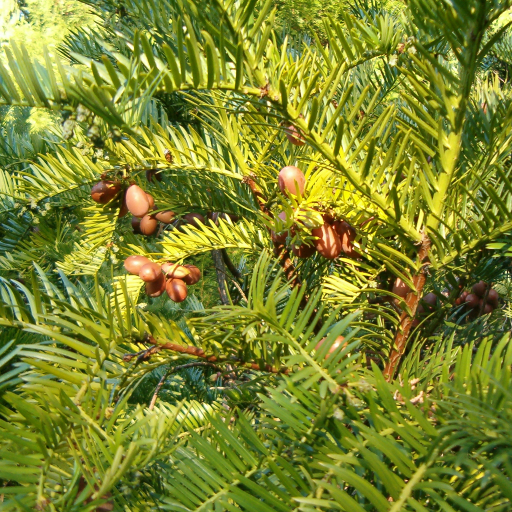
- 🌿 Needle Arrangement: The flat, linear needles are long and dark green, typically arranged in two flat rows along the stem, often forming a distinct "V" shape or a trough along the branch.
- 🍦 Texture: Unlike many prickly conifers, these needles are flexible and relatively soft to the touch, lacking the sharp, stinging tips of true pines or spruces.
- 🟣 The "Plum" Fruit: Female plants produce fleshy, oval seeds that look remarkably like small, green-to-purple plums or olives nestled among the foliage.
🏡 In Your Garden
- 🌒 The Shade Solution: While most evergreens crave the sun, the Japanese Plum Yew is a champion of the shade. It is one of the few conifers that can thrive under a dense forest canopy or on the north side of a tall building without thinning out.
- 🦌 Deer Resistance: A major selling point for rural gardeners is its high resistance to deer. While deer often treat traditional Taxus species like a buffet, they generally find the Cephalotaxus far less appetizing.
- 🐌 Slow & Steady: This plant is notoriously slow-growing. This is a "set it and forget it" plant that won't outgrow its space quickly, making it excellent for foundation plantings or structured hedges.
⚠️ Safety & Toxicity
- 🐾 Caution Recommended: While it is considered less toxic than the "True Yews" (Taxus genus), Cephalotaxus still contains various alkaloids (like cephalotaxine).
- 👶 Keep Away from Pets/Kids: Ingestion of the foliage or the seeds can cause digestive upset. It is best to plant it in areas where curious pets or small children won't be tempted to snack on the plum-like fruits.
✨ Fun Fact
The Japanese Plum Yew is a "living fossil." Its lineage can be traced back to the middle of the Jurassic period, meaning ancestors of this very plant likely provided shade for dinosaurs over 160 million years ago!

Detailed Care Instructions
Growing Cephalotaxus Harringtonia, commonly known as Japanese plum yew or Cow’s Tail Pine, requires attention to specific growing conditions and care. Here are some steps to help you grow this plant:
- Choosing a suitable location: Cephalotaxus Harringtonia prefers partial shade to full shade. It should be protected from harsh sunlight, especially during hot summer months. Select a well-draining soil location that is sheltered from strong winds.
- Soil preparation: Prepare the soil by amending it with organic matter like compost or well-rotted manure. This will help improve drainage and overall soil health. The pH level should be slightly acidic to neutral.
- Planting: Cephalotaxus Harringtonia can be planted in spring or early fall. Dig a hole that is slightly larger than the plant’s root ball. Gently place the plant in the hole, making sure it sits at the same level it was previously planted. Backfill with soil and press firmly around the base to remove any air pockets.
- Watering: Japanese plum yew prefers moist, but not waterlogged, soil. Water the plant thoroughly after planting and ensure the soil stays evenly moist, especially during the first year. Reduce watering during cool weather, but avoid letting the soil dry out completely.
- Mulching: Apply a layer of organic mulch, like wood chips or straw, around the base of the plant. Mulching helps retain moisture, regulate soil temperature, and suppress weed growth.
- Fertilization: Cephalotaxus Harringtonia generally does not require much fertilization. However, you can apply a balanced slow-release fertilizer in early spring to provide necessary nutrients. Follow the package instructions for proper dosage and application.
- Pruning: Pruning is generally not necessary for healthy growth. However, you may trim stray or damaged branches as needed. Avoid pruning in late summer and early fall, as new growth during that time may be vulnerable to frost damage.
- Pest and disease control: Cephalotaxus Harringtonia is generally resistant to most pests and diseases. However, occasional issues might occur, such as spider mites or aphids. Use organic pest control methods if necessary, such as spraying with soapy water or applying neem oil.
Remember to consult local gardening resources to ensure specific recommendations for your region as climates may vary.

Place in a window with dappled sun or a spot in the middle of a room. Or directly in a window facing west or east.

To properly water the Cephalotaxus Harringtonia plant, you can follow the steps below:
1. Assess soil moisture: Before watering the plant, check the soil moisture level to ensure that it actually needs watering. Stick your finger or a moisture meter about 2 inches into the soil to determine if it feels dry. This plant prefers slightly moist soil but not overly saturated conditions.
2. Watering frequency: The frequency of watering will largely depend on the climate and environmental conditions in your area. Typically, watering once a week during dry spells is sufficient. However, if the weather is particularly hot and dry, you may need to water more often.
3. Watering technique: When watering, it is best to water the soil directly around the plant's root zone. Avoid overhead watering or excessively wetting the foliage as it can lead to fungal diseases. Pour water directly at the base of the plant, allowing it to soak into the soil. Ensure that the water penetrates at least a few inches deep.
4. Adequate water quantity: To make sure your Cephalotaxus Harringtonia plant receives enough water, consider the size of the plant and its container. The goal is to moisten the entire root ball adequately. Water until you see water coming out of the drainage holes at the bottom of the container, indicating that the soil is thoroughly saturated. If the plant is in the ground, water it until the soil is moist several inches below the surface.
5. Avoid waterlogged conditions: While providing enough water is important, it is equally crucial to prevent waterlogged conditions. Excessive water retention in the soil can lead to root rot and other drainage-related issues. Make sure the soil has sufficient drainage or consider adding organic matter like compost to improve soil structure and moisture retention.
6. Monitor plant response: Keep an eye on your plant's appearance and overall health. If the foliage begins to droop or turn yellow, it may indicate over or under-watering. Adjust your watering routine accordingly, making sure not to let the soil dry out completely or become overly saturated.
Remember, watering requirements may vary depending on the specific Cephalotaxus Harringtonia variety and local growing conditions. It's always advisable to research and understand the particular needs of your plant to provide it with optimal care.
To fertilize the Cephalotaxus Harringtonia plant, follow these instructions:
- Choose a balanced, slow-release fertilizer with equal amounts of nitrogen (N), phosphorus (P), and potassium (K). An NPK ratio of 10-10-10 or 14-14-14 is suitable for this evergreen plant.
- Apply the fertilizer in early spring, just before new growth begins. This will help replenish nutrients in the soil and support healthy development throughout the growing season.
- Read the fertilizer's instructions carefully to determine the appropriate dosage based on the size and age of your Cephalotaxus Harringtonia plant.
- Sprinkle the fertilizer evenly around the base of the plant, ensuring that it does not come into direct contact with the foliage or stems.
- Gently work the fertilizer into the top layer of soil using a small garden fork or your hands, being careful not to disturb the plant's root system.
- Water the plant thoroughly after fertilizing. This will help the nutrients from the fertilizer to penetrate the soil and be taken up by the roots.
- Repeat the fertilization process annually in early spring, following the same dosage and application method. Avoid over-fertilizing as it can harm the plant.
- Monitor the plant's overall health and adjust the fertilization schedule if necessary. If the plant appears to be lacking in nutrients or showing signs of nutrient deficiencies (such as yellowing leaves or stunted growth), additional fertilization may be required.
Note: It is always recommended to consult specific fertilization guidelines or seek advice from a local horticulturist or nursery for precise instructions tailored to your Cephalotaxus Harringtonia plant.
When growing Cephalotaxus Harringtonia, it is important to choose the appropriate soil for its optimal growth. The ideal soil for this plant should be well-draining and rich in organic matter. It should have a slightly acidic to neutral pH level, ranging from 5.5 to 7.0.
The soil should have good moisture retention capacity but should not become waterlogged, as excessive moisture can lead to root rot. Therefore, avoiding heavy clay soils is recommended. Instead, a loamy or sandy soil texture is preferred, as it allows for sufficient drainage while retaining enough moisture for the plant's needs.
Adding organic matter to the soil, such as compost or well-rotted manure, helps improve its structure, nutrient content, and moisture retention ability. This amendment also promotes beneficial microbial activity and enhances overall soil fertility, which positively impacts the plant's growth.
To further ensure the plant's health, incorporating a granular slow-release fertilizer into the soil during planting helps provide essential nutrients gradually over time. Additionally, it is useful to periodically apply a balanced, water-soluble fertilizer during the growing season to support the plant's nutritional requirements.
Once planted, regular monitoring of soil moisture levels is crucial. Ensuring that the soil remains consistently moist but not waterlogged is important for the Cephalotaxus Harringtonia plant's growth and overall health. It is advisable to water deeply and moderately rather than frequently and lightly. Ideally, allowing the topsoil to dry slightly between watering sessions promotes healthy root development.
In summary, when selecting soil for Cephalotaxus Harringtonia plants, opt for a well-draining, slightly acidic to neutral soil that is rich in organic matter. Ensure proper soil moisture levels and provide necessary nutrients through organic amendments and regular fertilization for successful plant growth.
To propagate Cephalotaxus Harringtonia plants, follow these steps:
- Gather mature seeds from the Cephalotaxus Harringtonia plant. Look for seeds that are firm, brown, and fully mature. Harvest the seeds in autumn when they are ready.
- Soak the seeds in water for 24 hours to help with germination. This can soften the seed coat and enhance the chances of successful propagation.
- Prepare a seed tray or container filled with well-draining soil mix. Ensure the soil is moist but not overly wet. Sow the seeds on the surface of the soil, spacing them out adequately.
- Place the seed tray or container in a location with indirect light and maintain a temperature of around 65-75°F (18-24°C). Provide a consistent level of moisture by misting the soil regularly.
- The seeds will take several weeks to germinate. Keep an eye on the seed tray and ensure the soil remains evenly moist. Avoid overwatering as it can lead to rotting.
- Once the seedlings have developed their first set of true leaves, they can be transplanted into individual pots. Use a well-draining potting mix to ensure their healthy growth.
- Maintain the seedlings in a partially shaded area to protect them from direct sunlight. Provide adequate moisture by watering regularly, but avoid waterlogged conditions.
- As the plants grow, gradually expose them to more sunlight to help them acclimate to outdoor conditions. This process is known as hardening off.
- After the last frost of spring, transplant the young plants into their permanent location in the garden. Choose an area with well-drained soil and partial shade to mimic their natural habitat.
- Water the newly transplanted plants thoroughly and continue to provide regular watering during dry periods. Mulching around the base of the plants can help conserve moisture and control weed growth.
By following these steps, you can propagate and grow Cephalotaxus Harringtonia plants from seeds, allowing you to enjoy the beauty and unique features of this species.








