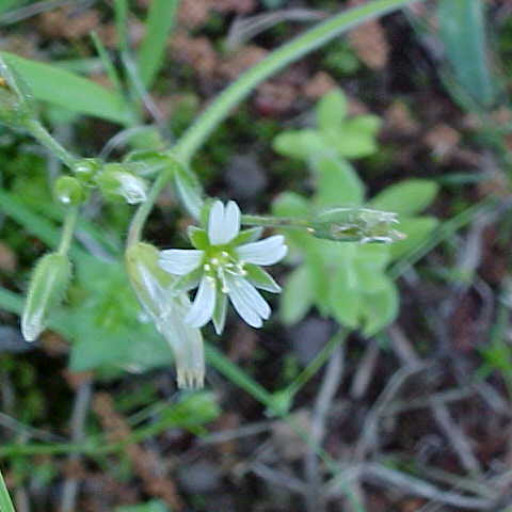
Plant Overview
Known as the "Mouse-ear Chickweed" due to its soft, velvety foliage, Cerastium fontanum is the ultimate garden wanderer. Often dismissed as a mere weed, this resilient little herb travels across lawns and meadows worldwide, creating low-growing mats topped with tiny, starry white blooms. It is a master of survival, frequently appearing in the most trampled paths or forgotten corners of a garden.
🔍 How to Identify
- 🐭 The "Mouse-Ears": The leaves are small, oval, and densely covered in fine, short hairs, giving them a fuzzy texture that feels remarkably like a tiny mouse’s ear.
- 🌸 Starry Petals: Each flower has five white petals, but they are so deeply notched down the center that they often appear to be ten separate petals.
- 🌿 Mat-Forming Habit: It grows in low, spreading clumps. The stems are slightly sticky and have a tendency to root wherever they touch the ground, allowing it to "crawl" across your lawn.
🏡 In Your Garden
- 🌱 The Indicator Plant: This plant is a specialist in compacted soil. If you see it thriving in your lawn, it’s often a sign that the ground is heavy or lacks aeration, as its shallow roots love to sit just above the hard-pack.
- 🐝 Early Pollinator Support: While many gardeners pull it out, it provides an important early-season nectar source for tiny solitary bees and hoverflies when other flowers haven't yet woken up.
- ✂️ Hardy Survivor: It is incredibly resistant to mowing; it simply hugs the ground tighter. If you want to remove it, hand-pulling is effective, but you must ensure you get the nodes where the stems have rooted.
⚠️ Safety & Toxicity
- ✅ Safe Status: Cerastium fontanum is generally considered non-toxic to humans, cats, and dogs.
- 🐾 Pet Friendly: It does not contain the saponins found in some other chickweed relatives that can cause stomach upset, making it a "safe" weed for backyards where pets roam.
- 🌾 Allergy Note: While not poisonous, the fine hairs on the leaves can occasionally trap pollen or dust, which might irritate particularly sensitive skin or noses during weeding.
✨ Fun Fact
The name Cerastium comes from the Greek word keras, meaning "horn," which refers to the shape of its seed capsule—a tiny, curved cylinder that looks like a miniature goat's horn!

Detailed Care Instructions
| Humidity | Normal |
| Lighting | Shade |
| Difficulty | Medium |
| Hardiness Zones | Max 7A |
To grow Cerastium fontanum plant, also known as common mouse-ear chickweed, follow these steps:
- Choose a suitable location: Cerastium fontanum thrives in full sun to partial shade. Select a well-draining site with fertile soil.
- Prepare the soil: Before planting, loosen the soil with a garden fork or tiller. Remove any weeds or debris from the area.
- Sow the seeds: Scatter the seeds evenly over the prepared soil. Gently press them into the soil surface with a rake. The ideal time for sowing is in early spring or early fall.
- Watering: Keep the soil consistently moist but not waterlogged. Water the seeds gently to avoid displacing them. Use a watering can or a misting sprinkler attachment to water evenly.
- Germination: Cerastium fontanum seeds usually germinate within 1-3 weeks. During this time, continue to keep the soil moist. Once the seedlings are established, decrease the frequency of watering.
- Thinning: When the seedlings have grown to about 2-3 inches in height, thin them to provide enough space for proper growth. Space them approximately 4-6 inches apart.
- Mulching: Apply a layer of organic mulch around the plants to help retain moisture, reduce weed growth, and regulate soil temperature.
- Maintenance: Common mouse-ear chickweed is a low-maintenance plant. Water during dry spells and remove any competing weeds. Avoid over-fertilizing as it can cause excessive foliage growth with fewer flowers.
- Propagation: Optionally, you can propagate Cerastium fontanum through division or stem cuttings. Division is best done in early spring, and stem cuttings can be taken in summer.
- Harvesting: If you want to collect seeds, wait until the plants have finished flowering and the seed heads have dried. Snip off the seed heads and allow them to dry further indoors before extracting the seeds.
By following these steps, you should be able to successfully grow Cerastium fontanum in your garden.

Place in a window with dappled sun or a spot in the middle of a room. Or directly in a window facing west or east.

To water this plant, ensure that the soil is well-draining and not waterlogged. The plant needs a moderate amount of water, so it is best to check the soil's moisture level consistently before watering. Avoid overwatering, as this may lead to root rot. Water the plant when the soil has dried out a few inches down from the surface. When watering, ensure that the water reaches the root system by watering slowly and deeply. In general, this plant prefers evenly moist soil, so regular watering is essential for optimal growth and health.
To promote healthy growth and blooming of the plant, apply a balanced fertilizer, such as a 10-10-10 or 20-20-20 formula, in early spring before new growth appears. Follow the instructions on the fertilizer package regarding application rates and frequency. Be sure to water the plant thoroughly after fertilizing. Avoid over-fertilizing, as this can lead to leggy growth and reduced flowering.
Cerastium Fontanum is a plant that prefers soil that is well-draining and fertile. The soil should have a neutral pH level or slightly alkaline and be able to retain moisture while also allowing for proper drainage. It is beneficial to amend the soil with organic matter such as compost before planting to improve soil structure and provide essential nutrients for the plant's growth. The plant also prefers soil that is rich in nutrients and has good aeration to support healthy root growth. When choosing soil for Cerastium Fontanum, it is important to consider the plant's growing requirements and choose a soil that will provide the ideal growing conditions for the plant to thrive.
To propagate this plant, first identify a healthy, mature plant with sturdy stems and abundant leaves. Cut a stem of approximately six inches in length from the parent plant, making sure to use sharp, sterile pruning shears to prevent introducing any diseases.
Remove the lower leaves from the stem, leaving the top few intact, and dip the cut end of the stem into rooting hormone powder to encourage root development.
Prepare a pot or container filled with well-draining soil such as a mixture of perlite and peat moss. Make a hole in the soil using a pencil or a dibber and gently insert the stem, deep enough so that the whole cut end is covered with soil.
Water the newly-planted stem thoroughly and keep the soil moist but not soggy. Provide bright, indirect light and a warm, humid environment by covering the pot with a clear plastic bag.
Within a few weeks, new roots should begin to form. Watch for new growth from the top of the stem, indicating that the new plant has begun to establish itself. Once growth is robust, move the plant to a larger container or transplant it outdoors.








