Plant Overview
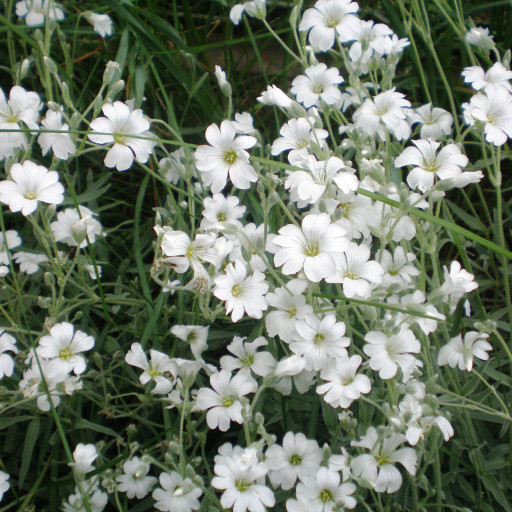
Known affectionately as "Snow-in-Summer," Cerastium tomentosum is a shimmering, low-growing perennial that creates a luminous, frosty carpet in the garden. This Mediterranean native is beloved for its ability to turn rocky, dry patches into a sea of brilliant white blossoms that appear to glow under the moonlight. It is a top choice for gardeners seeking a "set it and forget it" groundcover with a romantic, cottage-core aesthetic.
🔍 How to Identify
- 🌿 Silvery Foliage: The leaves are small, narrow, and covered in fine, silvery-grey hairs, giving the entire plant a soft, felt-like texture and a metallic sheen.
- 🌼 Notched Petals: Each tiny white flower has five petals, but every petal is deeply notched at the tip, making the bloom look like a delicate ten-pointed star.
- ☁️ Low-Hugging Habit: It forms a dense, woolly mat that rarely rises above 6 inches, spreading horizontally to fill empty spaces quickly.
🏡 In Your Garden
- ⛰️ The Rock Specialist: Because it originates from alpine and Mediterranean slopes, this plant thrives in poor, rocky soil where others might struggle. It is the perfect candidate for cascading over stone walls or softening the edges of gravel paths.
- ☀️ Sun-Loving & Drought-Hardy: The woolly silver leaves aren't just for looks; they reflect intense sunlight and trap moisture. Once established, it requires very little water and can survive harsh summer heat with ease.
- ✂️ Post-Bloom Refresh: After the "snow" of flowers fades in early summer, the plant can look a bit "shaggy." Giving it a quick shearing (like a haircut) will keep the silver foliage tight and tidy for the rest of the year.
⚠️ Safety & Toxicity
- ✅ Generally Safe: Cerastium tomentosum is considered non-toxic to humans and is not listed on the ASPCA's common list of toxic plants for dogs and cats.
- 🐾 Mild Indigestion: Like most garden plants, if a curious pet consumes a large quantity of the fuzzy foliage, they may experience mild stomach upset, but it is not a cause for major alarm.
✨ Fun Fact
The species name tomentosum comes from the Latin word "tomentum," which refers to the woolly stuffing used in ancient pillows and mattresses. It perfectly describes the dense, hairy coating that acts as a natural "sunscreen" for the plant.

Detailed Care Instructions
While considered fussy in some regions, especially in cooler climates, snow-in-summer has a reputation for being a fairly invasive plant. Be careful to keep this plant within its boundaries and not allow it to naturalize into surrounding areas. It takes vigilance, but it's worth the effort.
Where should I plant snow-in-summer?
Ideal locations are slopes and embankments as well as rock gardens or along curbsides.
Does snow-in-summer withstand foot traffic?
Although it is a fast-spreading groundcover, it is not a good plant for high-traffic areas.
| Color | White |
| Soil Ph | 6.0-7.0 |
| Humidity | Normal |
| Lighting | Full Sun |
| Soil Type | Dry, Sandy, Well-Drained Soil |
| Bloom Time | June |
| Difficulty | Medium |
| Plant Type | Herbaceous Perennial |
| Hibernation | Cold Period |
| Mature Size | 6 To12 Inches Tall; 9- To 12-Inch Spread |
| Native Area | Italy, Sicily |
| Temperature | 18°C - 25°C |
| Sun Exposure | Full Sun |
| Hardiness Zones | 3-7 |
To grow Cerastium tomentosum, also known as snow-in-summer, follow these steps:
- Select a suitable planting location: Cerastium tomentosum prefers full sun but can tolerate partial shade in hotter regions. It requires well-draining soil.
- Prepare the soil: Ensure the soil is loose and well-draining. If your soil is heavy or clay-like, amend it by adding organic matter like compost or peat moss.
- Sow seeds: You can start Cerastium tomentosum from seeds. Sow the seeds directly into the soil in spring, after the last frost date, or start them indoors 6-8 weeks before the last frost. Scatter the seeds over the soil and lightly press them into the surface. Do not cover them with soil as they need light to germinate.
- Watering: Keep the soil consistently moist until the seeds germinate. Once the plants are established, they are drought-tolerant and require minimal watering. Allow the top inch of soil to dry out between waterings.
- Thin out seedlings: If you started the seeds indoors, transplant the seedlings outdoors once they have developed a few true leaves. Space them about 6-12 inches apart to allow for their spreading growth habit.
- Pruning and maintenance: Cerastium tomentosum forms a low, spreading mat of foliage, and you can trim it back lightly after flowering if desired. This promotes tidiness and can stimulate new growth.
- Fertilization: Snow-in-summer plants do not require much fertilization. However, you can apply a balanced, slow-release fertilizer in early spring to promote healthy growth.
- Weed control: Regular weeding is necessary, especially during the plant's early growth stages, to prevent competition with weeds.
With proper care and maintenance, Cerastium tomentosum will grow into a beautiful, low-growing ground cover with silvery foliage and small white flowers that bloom in late spring or early summer.

Place in a bright room that is sun drenched almost all day. Or directly in a south-facing window.

When watering this particular plant, it is important to ensure that the soil is thoroughly moistened but not waterlogged. Watering should be done evenly and consistently throughout the growing season, but it is important to monitor the weather conditions and adjust your watering schedule accordingly.
As a general rule, this plant should be watered deeply once or twice a week during periods of dry weather, and less frequently during periods of heavy rain or cooler temperatures. Additionally, it is important to avoid getting water on the leaves or flowers, as this can cause damage or fungal infections.
To water this plant properly, it is best to use a hose or watering can with a gentle sprinkler nozzle, directing the water at the base of the plant and allowing it to soak into the soil slowly. Once the soil has been moistened to a depth of several inches, be sure to allow excess water to drain away before replacing any mulch or other ground cover around the base of the plant.
To fertilize this plant, first ensure that the soil is moist. Then apply a balanced fertilizer, such as a 10-10-10 or 20-20-20 blend, following the manufacturer's instructions for application rates and frequency. Wait until the plant has finished flowering before fertilizing again. Avoid over-fertilizing, as this can lead to excessive foliage growth and a decrease in flowering.
It is recommended to use well-draining soil for this particular plant, as it does not thrive in soil that is wet or waterlogged. A good soil mix for this plant would consist of a combination of sand, peat moss, and loamy soil. It is important to ensure that the soil is not too rich in nutrients, as this can lead to excessive growth that is not healthy for the plant. Additionally, adding a small amount of perlite to the soil can help with drainage and aeration, which will further benefit the plant's growth and health.
To propagate this plant, start by taking softwood cuttings from the tips of the plant in the early summer. Cut off a section with a sharp, sterile knife about 2-3 inches long and remove the lower leaves. Dip the cuttings in rooting hormone and plant in a well-draining, moist potting mix. Cover with plastic or place in a propagation dome to maintain humidity. Keep the cuttings well-watered and in bright, indirect light. After roots have formed and the plant has started to grow, transplant to a larger container or into the garden.








