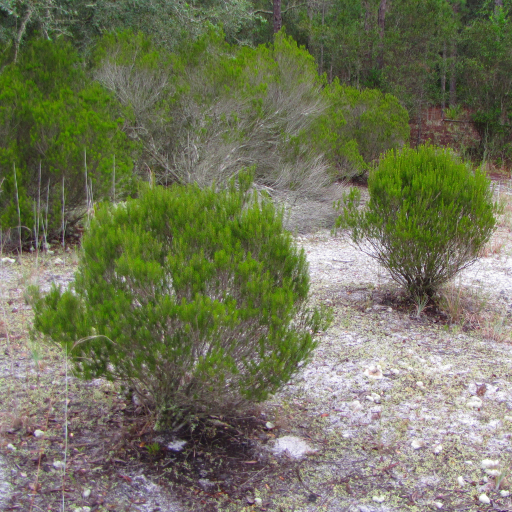
Plant Overview
Known as the Sandhill Rosemary, this resilient evergreen is a signature sight in the coastal dunes and scrublands of the southeastern United States. Despite its name and striking resemblance to the culinary herb, it isn't a true rosemary at all. Instead, it is a master of minimalism, perfectly adapted to survive in "Florida snow"—the harsh, nutrient-poor white sands where few other plants dare to grow.
🔍 How to Identify
- 🌿 Needle-like Foliage: The plant is covered in tiny, stiff, dark green needles that grow in whorls, giving it a soft, feathery appearance from a distance.
- 🧶 Symmetrical Mounds: It naturally grows into a dense, rounded "pompom" or dome shape, often looking like it has been professionally manicured.
- 🍒 Hidden Berries: If you look closely at a female plant, you’ll find tiny, translucent yellow or olive-colored drupes (berries) tucked tightly against the stems.
🏡 In Your Garden
- 🏜️ The Drainage King: This plant has a "feet dry" policy. It requires extremely well-draining, sandy soil. In typical potting mix or clay, the roots will succumb to rot almost overnight.
- 🚫 A Natural Loner: Sandhill Rosemary is allelopathic, meaning it releases special chemicals into the soil to prevent other plants from growing too close. This often creates a beautiful "halo" of bare white sand around the base of the plant.
- ☀️ Sun or Nothing: To maintain its tight, iconic shape, it needs full, intense sunlight. If placed in the shade, the branches will stretch out and the plant will lose its ornamental density.
⚠️ Safety & Toxicity
- ✅ Non-Toxic: There are no recorded toxicities for Ceratiola ericoides regarding humans, cats, or dogs.
- 👅 Not for the Kitchen: While it looks like the rosemary you use for roasting potatoes, it lacks the aromatic oils and flavor of the true herb. It is an ornamental plant, not a culinary one.
✨ Fun Fact
Sandhill Rosemary has a "fire-dependent" legacy. While the adult plants are easily killed by wildfires, their seeds are incredibly tough—they actually need the heat and chemicals from smoke to crack their dormancy and sprout, ensuring the species can reclaim the landscape after a fire!

Detailed Care Instructions
To successfully grow Ceratiola ericoides (commonly known as sandhill rosemary), follow these steps:
- Climate: This plant is native to the sandhills of the southeastern United States and thrives in sandy, well-draining soil. It requires a warm climate with long, hot summers and mild winters. Ensure that your growing location fits these climatic requirements.
- Sunlight: Ceratiola ericoides prefers full sun exposure. Choose a spot in your garden where it will receive at least 6-8 hours of direct sunlight daily.
- Soil: This plant prefers slightly acidic to neutral soil. Sandy soil is ideal, but you can improve drainage by incorporating organic matter like compost or peat moss into the soil. Ensure the soil is well-draining to prevent waterlogged conditions that can harm the plant.
- Watering: Once established, Ceratiola ericoides is drought-tolerant. However, when initially planting and establishing the plant, ensure regular watering until it gets established. Water deeply but infrequently, allowing the top inch of soil to dry out between waterings.
- Planting: Plant the Ceratiola ericoides seedling or small plant in the prepared soil, ensuring the hole is slightly larger than the root ball. Backfill the hole and gently firm the soil around the plant. Water thoroughly after planting.
- Mulching: Apply a layer of organic mulch around the base of the plant, but ensure it is not touching the stem. Mulching helps retain moisture, suppresses weeds, and keeps the soil temperature relatively consistent.
- Pruning: Ceratiola ericoides generally requires minimal pruning. However, you can lightly trim it to shape it or to remove any dead or damaged branches. Pruning should be done in early spring before the plant starts actively growing.
- Fertilization: Generally, Ceratiola ericoides doesn't require heavy fertilization. However, you can apply a slow-release, balanced fertilizer in early spring to provide some nutrients to the plant.
- Protection: In colder regions, provide protection from freezing temperatures by covering the plant with a frost cloth or other suitable material during cold spells.
Note: Since Ceratiola ericoides is a rare and protected plant in some areas, it's essential to ensure you are obtaining it legally and ethically. Additionally, check if appropriate permits or permissions are required before collecting or propagating it.

Place in a bright room that is sun drenched almost all day. Or directly in a south-facing window.

Ceratiola Ericoides is a type of plant that requires appropriate watering to ensure healthy growth. Firstly, it is advisable to use a well-draining potting mix that allows proper drainage of excess water. This helps to avoid waterlogging, which can lead to root rot and other diseases.
It is important to water the plant thoroughly, allowing the water to reach the roots. The frequency of watering is determined by the climatic conditions and individual plant needs. Generally, during the warmer months, the plant may require more watering compared to the cooler months.
To determine when to water, it is advisable to check the soil moisture level by inserting a finger into the soil. If the soil feels dry to the touch, it is time to water the plant. However, if the soil feels moist, it is best to wait a bit before watering again.
When watering, avoid getting water on the foliage of the plant, as this can cause leaf damage or provide a breeding ground for fungus and other diseases. It is best to water at the base of the plant or use a watering can with a narrow spout that delivers water directly to the soil.
In conclusion, adequate watering is essential for the proper growth and health of Ceratiola Ericoides, and it is essential to monitor the soil moisture levels to determine when to water.
To fertilize this plant, first make sure it is planted in well-draining soil. Use a slow-release fertilizer with balanced ratios of nitrogen, phosphorus, and potassium. Apply the fertilizer according to the package instructions, but always err on the side of caution and use less than recommended. Fertilize once every three months during the growing season, but avoid fertilizing during periods of drought or extreme heat. Water the plant thoroughly after fertilizing to help the nutrients enter the soil.
The best soil to use with this plant should be acidic, well-draining and free from clay and other heavy particles. It should have a pH range of 4.5 to 5.5. A soil mix that contains peat moss, sand, and perlite would be suitable for providing optimal drainage. The soil should also be nutrient-poor as this is a plant that does not require a lot of fertilizer. It is important to avoid using any soil that is heavily enriched with nutrients as this can cause damage to the roots. When planting, it is recommended to allow some space between the plant and the edge of the container to allow for air circulation. Additionally, regular watering is essential to keep the soil moist but not saturated.
To propagate this plant, start by collecting mature seeds in the fall. Plant the seeds in a well-draining soil mix and keep them moist until germination. Alternatively, you can take stem cuttings from mature plants in the spring or summer. Choose a healthy stem with several leaves and remove the lower leaves. Dip the end of the stem in rooting hormone and plant it in a well-draining soil mix. Keep the cutting moist and in a warm, bright location until roots form. Once rooted, the new plant can be potted up and cared for like a mature plant.








