Plant Overview
Often called the "Coontail" for its bushy, tail-like appearance, Ceratophyllum demersum is a rootless wonder that has conquered freshwater bodies on every continent except Antarctica. This underwater nomad is a favorite for aquarium hobbyists and pond owners because it acts like a natural water purifier, gulping down nitrates and keeping the water crystal clear for its neighbors.
🔍 How to Identify
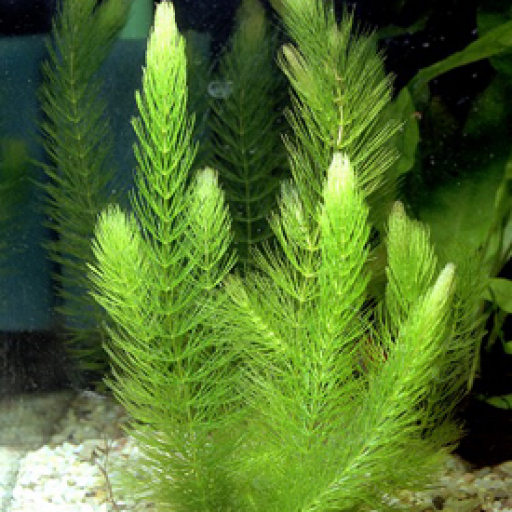
- 🌿 Whorled Leaves: The dark green, brittle leaves grow in circles (whorls) of 6 to 12 around the stem. They feel stiff and "crunchy" rather than soft.
- 💧 Rootless Growth: You won’t find any true roots on this plant. It spends its life either floating freely or anchoring itself to the floor using specialized, hair-like leaves.
- 🦊 The "Coontail" Tip: Look at the ends of the branches; the leaves become much more crowded and dense at the tips, creating a shape that looks exactly like a raccoon's tail.
🏡 In Your Garden & Pond
- 🧹 Nutrient Sponge: Because it grows at a lightning-fast pace, it absorbs massive amounts of nitrogen and phosphorus. This makes it a "living filter" that helps prevent unsightly algae blooms.
- 🏠 A Safe Nursery: The dense, feathery foliage provides an ideal hiding spot for baby fish (fry) and small invertebrates like shrimp, protecting them from larger predators.
- 🚿 The "Shedding" Stress: If you move the plant to a new tank or the light levels drop suddenly, it may drop its needles (leaves) in a dramatic "molt." Don't panic—once it acclimates, it usually grows back stronger.
⚠️ Safety & Toxicity
- ✅ Safe Status: This plant is non-toxic to humans, cats, dogs, and aquatic life.
- 🌵 Prickly Texture: While not "sharp," the leaves are coated in a waxy substance called cutin. Some very delicate-skinned fish or curious pets might find the texture a bit too rough or prickly to nibble on.
✨ Fun Fact
🧪 Chemical Warfare: Hornwort is allelopathic! It releases specific chemicals into the water that actually inhibit the growth of blue-green algae. It essentially uses "chemical warfare" to ensure it doesn't have to compete for space or light.

Detailed Care Instructions
| Humidity | High |
| Lighting | Part Sun |
| Difficulty | Easy |
| Temperature | 15°C - 30°C |
| Hardiness Zones | 5 - 11 |
To grow Ceratophyllum Demersum, also known as hornwort, follow these steps:
- Select a suitable container: Damertsum can be grown in ponds, aquariums, or even in a bucket. Make sure the container has enough depth and space for the plant to grow.
- Water conditions: Hornwort is a versatile plant that can tolerate a wide range of water conditions. However, it thrives best in neutral to slightly alkaline water with a pH range of 6.0 to 7.5. The water temperature should be between 15 to 30°C (59-86°F).
- Lighting: Hornwort can survive in low light conditions, but it flourishes under moderate to high light levels. If growing indoors, make sure to provide sufficient artificial light or place the container near a sunny window. In outdoor ponds, choose a location that receives at least 6 hours of direct sunlight daily.
- Planting: Hornwort is free-floating plant, so it doesn't require any substrate. Simply place the plant in the water, and it will begin to grow. Some people prefer to anchor the plant using rocks or weights to keep it in place.
- Maintenance: Hornwort is a fast-growing plant, so it may require regular trimming to control its growth. You can trim it using sharp scissors or simply pull out excess growth. It is important to remove any dead or decaying parts of the plant to keep it healthy.
- Nutrients: Hornwort absorbs nutrients directly from the water column, so it does not require additional fertilizers. However, if you notice slow growth or yellowing leaves, you can supplement the water with liquid or tablet fertilizers specifically formulated for aquatic plants.
- Algae control: Hornwort is effective in controlling algae growth by absorbing excess nutrients and blocking sunlight. However, it is still susceptible to algae overgrowth, especially in nutrient-rich water. To prevent this, maintain proper water conditions, perform regular water changes, and keep the tank clean.
- Propagation: Hornwort can be propagated easily. Simply cut a healthy stem and place it in another area of the water. It will continue to grow and form new plants.
By following these steps and providing suitable conditions, you can grow Ceratophyllum Demersum successfully.

Place in a bright room that is sun drenched almost all day. Or directly in a south-facing window.
To water this plant, fill a container with water and submerge the roots and lower stems of the plant in the water. Keep the plant in a spot where it will receive at least 12 hours of light each day, and change the water every 1-2 weeks to prevent debris build-up and ensure adequate nutrient supply. Depending on the size of the container and the number of plants in it, a nutrient supplement may need to be added to the water every few weeks to provide the plant with necessary nutrients. Avoid placing the plant in direct sunlight or in areas where the water temperature will become too warm as heat can cause damage to the plant's leaves and stems.
To fertilize this aquatic plant, use a granular or liquid fertilizer specifically designed for aquarium plants. Add the fertilizer near the base of the plant in small amounts every two weeks, or as directed by the product label. Avoid over-fertilizing, as this can harm the plant and lead to algae growth. Monitor the plant's growth and adjust the fertilizer application accordingly.
The best soil to use with this plant should be nutrient-rich, well-draining and have a pH range of 6.5 to 7.5. The soil should also be able to hold moisture without becoming waterlogged, as this can lead to root rot. It is recommended to use a substrate specifically designed for aquatic plants. The soil should be placed at the bottom of the pond or aquarium and covered with gravel or other decorative materials. It is important to ensure that the soil is not disturbed during water changes as this can lead to cloudiness in the water.
To propagate this aquatic plant, take a healthy stem cutting from the parent plant and remove any leaves from the bottom two-thirds of the stem. Ensure that the cutting is at least 5-10 centimeters long and has several leaf nodes. Plant the stem cutting into the substrate of the aquarium or pond, taking care to bury the bottom two-thirds of the stem. Maintain good water quality and lighting conditions and within a few weeks, the cutting will start to grow new roots and stem shoots.








