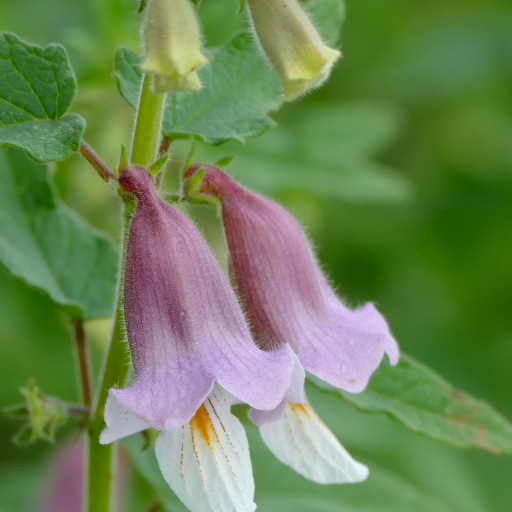
Plant Overview
Often called the "South African Foxglove," Ceratotheca triloba is a summer-flowering showstopper that mimics the look of traditional European foxgloves but thrives in much hotter, drier conditions. This elegant pioneer plant brings vertical drama to the garden, standing tall and proud while attracting bees and butterflies with its nodding, trumpet-shaped blooms. While it looks like a cottage garden classic, it is a rugged survivor from the summer-rainfall regions of Southern Africa.
🔍 How to Identify
- 🌸 The Flowers: Large, nodding, bell-shaped blooms that are usually a soft mauve, pink, or white, featuring delicate purple pinstripes inside the "throat" to guide pollinators.
- 🍃 The Foliage: Distinctive "triloba" leaves that are divided into three lobes, with a slightly fuzzy, grayish-green texture and soft, scalloped edges.
- 📏 The Stature: A tall, slender plant that can reach up to 6 feet (2 meters) in a single season, with flowers spiraling upward along architectural, square-shaped stems.
🏡 In Your Garden
- ☀️ Heat Hero: Unlike true European foxgloves that prefer cool shade, this beauty loves the baking sun and is exceptionally drought-tolerant once established.
- 🌱 The Taproot Trap: It develops a deep, sensitive taproot very quickly. This makes it difficult to transplant once it reaches a few inches tall, so it is best to sow seeds directly where you want them to bloom.
- 🌬️ Wind Support: Because it grows so tall and slender, it may need a bit of support or a sheltered spot to prevent it from bowing over during heavy summer thunderstorms.
⚠️ Safety & Toxicity
- ✅ Low Risk: It is important to distinguish this plant from the "True Foxglove" (Digitalis), which is famously heart-toxic. Ceratotheca triloba does not contain those same dangerous alkaloids.
- 🐾 General Precaution: While not considered highly toxic, the leaves are covered in fine hairs that can be a mild skin irritant to sensitive gardeners. As with any ornamental plant, keep pets and toddlers from munching on the foliage to avoid minor stomach upset.
✨ Fun Fact
- 🧬 The Sesame Connection: Despite its looks, this plant isn't related to the Foxglove family at all! It is actually a member of the Pedaliaceae family, making it a close cousin to the plant that gives us sesame seeds. If you look closely at the dried seed pods, they look almost identical to sesame capsules, but with two distinct "horns" at the top.

Detailed Care Instructions
To grow Ceratotheca triloba, also known as the foxglove or purple false foxglove, follow these steps:
- Purchase seeds or seedlings: You can buy Ceratotheca triloba seeds from a local nursery or online. Alternatively, you can look for seedlings, which are small plants that have already germinated.
- Prepare the soil: Ceratotheca triloba thrives in well-draining soil that is rich in organic matter. Prepare the soil by removing any weeds or rocks and loosening it with a garden fork or tiller. You can also add compost or well-rotted manure to improve the soil's fertility.
- Sow the seeds or transplant the seedlings: If you're planting from seeds, sow them directly into the prepared soil in spring after the last frost date. Plant the seeds about 1/4 inch deep and space them 12-18 inches apart. If you have seedlings, transplant them into the prepared soil at the same spacing.
- Water regularly: Keep the soil evenly moist but not waterlogged. Water the plants deeply whenever the top inch of soil feels dry to the touch. Be careful not to overwater, as excessive moisture can lead to root rot.
- Provide sunlight: Ceratotheca triloba requires full sun to grow well. Choose a location in your garden that receives at least 6-8 hours of direct sunlight per day.
- Mulch around the plants: Apply a layer of organic mulch, such as straw or wood chips, around the plants. Mulching helps retain moisture in the soil, suppresses weed growth, and protects the roots from extreme temperatures.
- Support the plants: Ceratotheca triloba can grow tall and benefit from support. As the plants grow, place stakes or install a trellis near them to provide support and prevent them from bending or breaking due to wind or rain.
- Prune and deadhead: Remove any yellow or dead leaves from the plant regularly to maintain its appearance and health. Deadheading, which involves removing spent flowers, can promote continuous blooming and prevent self-seeding.
- Fertilize occasionally: Feed your Ceratotheca triloba plants with a balanced fertilizer once or twice during the growing season. Follow the manufacturer's instructions for application rates and timing.
- Protect from pests and diseases: Monitor your plants for pests like aphids or spider mites and take appropriate actions to control them. Ceratotheca triloba is generally resistant to diseases, but if you notice any signs of disease, such as leaf spots or wilting, consult a local expert or extension service for appropriate treatments.
By following these steps, you can successfully grow Ceratotheca triloba and enjoy its attractive flowers in your garden.

Place in a bright room that is sun drenched almost all day. Or directly in a south-facing window.

Ceratotheca Triloba is a plant that requires regular watering to grow healthy and vigorous. It is important to water the plant deeply and evenly, allowing the soil to become moist but not waterlogged. To water the plant, you should first check the moisture level of the soil by sticking your finger about one inch into the soil. If the soil feels dry, it is time to water the plant.
You should use a watering can or hose with a gentle nozzle to water the plant. Aim the water at the base of the plant, trying to avoid getting water on the leaves as this can lead to fungal diseases. Water the plant until the water begins to run out of the drainage holes at the bottom of the pot or container.
It is important to water the plant regularly, especially during hot weather or if the plant is growing in a pot or container. However, be sure to allow the soil to dry out slightly between waterings, as overwatering can lead to root rot and other problems.
In addition to regular watering, you should also make sure that the plant is growing in well-draining soil and is not sitting in water. This will help to prevent waterlogged roots and other moisture-related problems. Finally, be sure to mulch around the base of the plant to help retain moisture and keep the soil cool.
- Begin by selecting a well-draining potting mix specifically formulated for container plants. Ensure that the mix is rich in organic matter.
- Before fertilizing, water the plant thoroughly to add moisture to the soil.
- Use a balanced, slow-release fertilizer with a ratio of 10-10-10 or 20-20-20. This balanced NPK (nitrogen, phosphorus, and potassium) formulation will provide essential nutrients for overall growth and development.
- Carefully follow the instructions on the fertilizer packaging. Generally, it is recommended to use about one tablespoon of fertilizer per gallon of soil.
- Sprinkle the fertilizer evenly on the surface of the soil, avoiding direct contact with the plant's stem or leaves.
- Gently work the fertilizer into the top layer of soil using a small hand trowel or your fingertips. Be cautious not to damage the plant's roots.
- After applying the fertilizer, water the plant thoroughly again. This will help to distribute the nutrients throughout the soil and prevent potential fertilizer burn.
- As a general guideline, aim to fertilize Ceratotheca Triloba once every 4-6 weeks during the growing season, which typically occurs in spring and summer.
- Maintain a consistent watering schedule to ensure the plant receives adequate moisture. This will help the plant effectively absorb and utilize the nutrients from the fertilizer.
- Monitor the plant's growth and adjust the fertilizing schedule accordingly. If the plant appears healthy and vigorous, reduced fertilization may be necessary. Conversely, if the plant shows signs of nutrient deficiencies or poor growth, slightly increase the frequency or amount of fertilizer applied.
Ceratotheca Triloba plant requires a well-draining soil that is rich in organic matter. It prefers a slightly acidic to neutral pH level of around 6.0 to 7.0. A mixture of loam soil, perlite, and sand is ideal for this plant. The loam soil provides nutrients and moisture retention while the perlite and sand ensure proper drainage. It is important to avoid using heavy clay soils as they can retain too much moisture and lead to root rot. Additionally, the plant prefers a moist but not waterlogged soil, so it is necessary to allow the soil to dry out slightly between waterings. Overall, a good quality potting mix with added perlite or sand can provide the ideal growing conditions for Ceratotheca Triloba.
Ceratotheca Triloba is a plant that belongs to the family Pedaliaceae. It is a herbaceous perennial plant that is native to Southern Africa. It is often grown for its attractive flowers and ornamental value. Propagating Ceratotheca Triloba can be done through several methods, such as seed propagation and vegetative propagation.
Seed propagation is a commonly used method to propagate Ceratotheca Triloba. To do this, harvest ripe seeds from the plant. Seeds are typically mature and ready for harvest when the seed pods turn brown and dry. Remove the seeds from the pods and ensure they are clean and free from any debris. Pre-soak the seeds in water for a few hours to help improve germination rates.
Prepare a well-draining seed tray or pots with quality seed-starting mix. Sow the seeds onto the surface of the soil, pressing them gently into the soil without covering them completely. Mist the soil with water to provide moisture but avoid over-saturating the soil. Place the seed tray or pots in a warm and well-lit area, preferably with indirect sunlight.
Keep the soil consistently moist but avoid waterlogging. Germination usually takes around 1 to 2 weeks, although it can sometimes take longer. Once the seedlings have developed several sets of true leaves, they can be transplanted into individual pots or a larger container. Be gentle when transplanting to avoid damaging the fragile young roots.
Vegetative propagation is another option for propagating Ceratotheca Triloba. This method involves taking cuttings from an established plant. Select a healthy stem that has not yet flowered and take a cutting that is around 4 to 6 inches long. Make a clean cut just below a node, ensuring there are at least two nodes on the cutting.
Remove the lower leaves from the cutting, leaving only a few nodes and leaves at the top. Dip the cut end of the cutting into a rooting hormone powder to promote root development. Insert the cutting into a pot filled with a well-draining rooting medium, such as a mix of perlite and peat moss. Firmly press the soil around the cutting to ensure good contact.
Place the cutting in a well-lit area with indirect sunlight. Mist the cutting regularly to keep the foliage hydrated and promote humidity. Avoid overwatering to prevent rotting. Over the following weeks, the cutting will develop roots and establish itself. Once the cutting has a strong root system, it can be transplanted into a larger container or planted outdoors in a suitable location.
Whether using seed propagation or vegetative propagation, it is important to provide the newly propagated plants with suitable growing conditions. Ceratotheca Triloba prefers full sun to partial shade and moist, well-draining soil. Regular watering and occasional fertilization throughout the growing season will help ensure healthy growth and abundant flowering.








