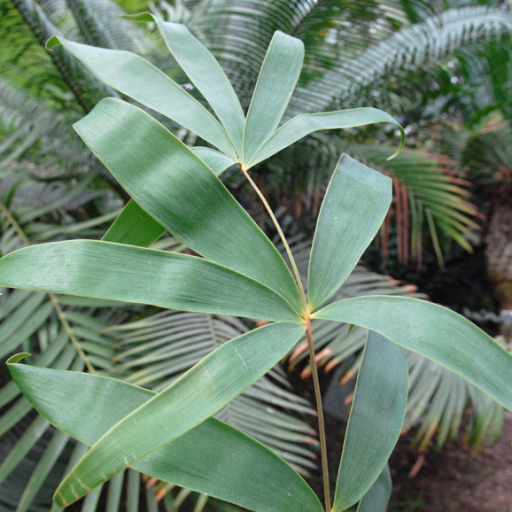
Plant Overview
Known affectionately as the Bamboo Cycad, this living fossil looks more like a designer fern than a typical cycad. Hailing from the mountainous cloud forests of Mexico, it brings a sophisticated, prehistoric aesthetic to any plant collection. It is highly prized by enthusiasts for its architectural "bow tie" leaflets and its ability to thrive in lower light than its sun-loving cousins.
🔍 How to Identify
- 🌿 "Bow Tie" Leaflets: Unlike most cycads with singular leaflets, these grow in distinct, crowded clusters (verticillate) that look like green butterfly wings or bow ties.
- 🎋 Arching Fronds: The leaves are long, slender, and slightly weeping, mimicking the airy elegance of bamboo stalks.
- 🪵 Subterranean Caudex: The main trunk is mostly underground and woody, meaning the plant appears to emerge directly from the soil as a cluster of green wands.
🏡 In Your Garden
- 🌥️ The Forest Floor Effect: Because it naturally grows under forest canopies, this plant prefers dappled shade or bright indirect light. Direct afternoon sun can easily scorch its delicate leaflets.
- 🪴 Potting & Drainage: This species is prone to root rot if left in standing water. It requires a very "chunky" potting mix—think orchid bark, perlite, and sand—to ensure the underground stem stays dry and aerated.
- 🌡️ Climate Needs: It enjoys high humidity and moderate temperatures. While it can handle a light, brief frost, it is much happier being moved indoors or into a greenhouse during harsh winters.
⚠️ Safety & Toxicity
- 🚫 Highly Toxic: Like all members of the cycad family, Ceratozamia hildae contains cycasin, which is dangerous if any part of the plant is eaten.
- 🐾 Keep Pets Away: The seeds and leaves are especially toxic to dogs and cats. Ingestion can lead to severe liver failure, so it is best kept on a high shelf or in a restricted area of the garden.
- 🧤 Handle with Care: The base of the leaves may have small prickles or sharp edges; wearing gloves during repotting is recommended.
✨ Fun Fact
This plant is considered a "Living Fossil." Its ancestors have remained largely unchanged for over 200 million years, meaning this plant’s lineage survived the mass extinction that wiped out the dinosaurs!

Detailed Care Instructions
| Humidity | Dry |
| Lighting | Part Sun |
| Difficulty | Medium |
| Hardiness Zones | 8 - 11 |
To grow Ceratozamia Hildae plants, you can follow these steps:
- Choosing the right location: Ceratozamia Hildae plants prefer bright, indirect light. Place them in a location where they will receive filtered sunlight or partial shade. Avoid exposing them to direct sunlight, as it may scorch the leaves.
- Selecting the right soil: Use well-draining soil that is rich in organic matter. A mix of peat moss, perlite, and sand can provide a suitable growing medium for Ceratozamia Hildae plants.
- Planting the seeds or seedlings: Ceratozamia Hildae plants can be grown from seeds or purchased as seedlings. If using seeds, soak them in water overnight before planting. Plant the seeds or seedlings in the prepared potting mix, making sure to cover the roots adequately.
- Watering: Keep the soil consistently moist but not waterlogged. Do not allow the soil to dry out completely between watering. Adjust the watering frequency according to the moisture needs of the plant and the climate of your region.
- Fertilizing: Feed Ceratozamia Hildae plants once a month during the growing season (spring and summer) with a balanced, slow-release fertilizer. Follow the manufacturer's instructions for dosage and application.
- Providing good air circulation: Ensure that there is sufficient air circulation around the plant to prevent the buildup of moisture, which can lead to fungal diseases.
- Controlling pests and diseases: Regularly inspect the plant for any signs of pests such as mealybugs or scale insects. Treat infestations promptly using an appropriate insecticide. Make sure to also monitor for any signs of diseases, such as brown spots on the leaves, and take necessary measures to control them.
- Repotting: As the Ceratozamia Hildae plant grows, you may need to repot it into a larger container every few years. Use fresh potting soil during repotting.
Remember, Ceratozamia Hildae plants are slow-growing, so patience is required. With proper care, these plants can thrive and beautify your indoor or outdoor spaces.

Place in a window with dappled sun or a spot in the middle of a room. Or directly in a window facing west or east.

To properly water this plant, use a watering can to pour room temperature, filtered or distilled water directly into the soil, avoiding getting water on the leaves or crown. Water when the soil around the plant feels dry to the touch, but do not let the soil dry out completely or become waterlogged as this can harm the plant. Depending on the climate, watering may be required once a week or every other week. It is important to not overwater, as this can lead to root rot or other issues. Also, do not use tap water as it may contain chloride or fluoride, which can damage the plant.
To fertilize this plant, use a balanced fertilizer with an NPK ratio of 20-20-20. Apply the fertilizer once a month during the growing season, which is typically from spring to fall. Mix the fertilizer with water according to the manufacturer's instructions and water the plant with the solution. Avoid fertilizing during the winter months when the plant is dormant. Over-fertilization can lead to damage, so it's important to follow the recommended dosage.
The ideal soil for the plant is acidic and well-draining. It should be made up of a mix of organic materials, such as peat moss, leaf mold, and compost, as well as coarse sand or perlite to promote drainage. The soil should not be compacted or heavy, as this can lead to root rot. A mixture of 3 parts peat moss, 1 part perlite, and 1 part sand is a good option. The plant prefers slightly moist soil but should not be kept constantly wet.
Ceratozamia Hildae is a type of cycad plant that can be propagated through several methods, including seed propagation and vegetative reproduction.
Seed propagation involves collecting mature seeds from a female plant and germinating them in a suitable growing medium. The seeds should be planted in a well-draining soil mix, with a layer of sand on top to help prevent fungal growth. The soil should be kept moist but not wet, and the seed tray should be placed in a warm, bright location with indirect sunlight. It may take several months for the seeds to germinate, and the seedlings should be transplanted into larger containers as they grow.
Vegetative propagation can be done through several methods, including division, removal of offsets, or by taking stem cuttings. Division involves carefully separating the root clumps of a mature plant and replanting them in individual containers. Removing offsets involves removing the small plantlets that grow from the base of the main stem and replanting them in separate containers. Stem cuttings can be taken from the main stem or from suckers that grow from the base of the plant. The cuttings should be planted in a well-draining soil mix and kept in a humid, warm location until they have rooted.
Propagation of Ceratozamia Hildae plants requires patience and care, but with the right techniques, it can be a rewarding way to expand your garden or share plants with friends.








