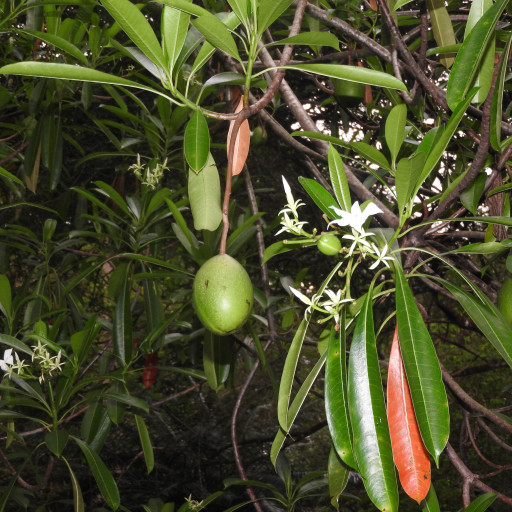
Plant Overview
Commonly known as the Sea Mango or Pink-eyed Cerbera, this coastal beauty is a master of deception. Native to the shores of the Indian and Pacific Oceans, it is often admired for its glossy foliage and jasmine-like fragrance. However, despite its inviting name and mango-like fruit, it carries a dark reputation as a "suicide tree" due to the potent toxins hidden within every part of the plant.
🔍 How to Identify
- 🌸 Star-Shaped Blooms: The flowers are waxy, snow-white, and possess five distinct petals. Look for a vibrant pink or reddish "eye" at the center, which distinguishes it from its close relative, Cerbera odollam.
- 🍃 Glossy Foliage: The leaves are dark green, leathery, and arranged spirally. They have a sleek, lance-like shape that helps the tree withstand salty coastal winds.
- 🥭 Deceptive Fruit: It produces smooth, egg-shaped fruits that turn from green to a bright, attractive red as they ripen. Inside, a thick fibrous husk allows the seed to float across oceans to find new shores.
🏡 In Your Garden
- 🌊 Salt Specialist: This plant is an evolutional marvel for coastal dwellers. It thrives in salty air and sandy soils where other plants might wither, making it a popular choice for seaside windbreaks.
- ☀️ Sun Seeker: While it can tolerate partial shade, it needs full sun to produce its signature heavy blooms. If you are growing it inland, ensure the soil is extremely well-draining, as it dislikes "wet feet" despite its coastal origins.
⚠️ Safety & Toxicity
- 🚫 Status: EXTREMELY TOXIC. This is one of the most dangerous plants in the world if ingested.
- 💀 The Details: Every part of the tree contains cerberin, a powerful cardiac glycoside that can stop a human heart. It is dangerous to pets, livestock, and children. Even the smoke from burning the wood can be toxic, so never use this tree for firewood or garden clearing.
✨ Fun Fact
The genus name Cerbera is derived from Cerberus, the multi-headed "hellhound" of Greek mythology who guarded the gates of the Underworld. It was named this by botanists specifically to warn people of its deadly, gate-keeping nature!

Detailed Care Instructions
| Lighting | Full Sun |
To successfully grow a Cerbera manghas plant, also known as the "Sea Mango" or "Suicide tree," follow these steps:
- Climate: Ensure that you are in a suitable climate for growing this plant. Cerbera manghas plants thrive in tropical or subtropical regions. They require warm temperatures, high humidity, and a lot of sunlight.
- Soil: Plant your Cerbera manghas in well-draining soil that is rich in organic matter. A sandy loam soil mix is ideal. This will ensure that the roots do not become waterlogged, which can cause root rot.
- Planting: Select a sunny spot in your garden where the plant will receive at least 6-8 hours of direct sunlight per day. Dig a hole that is slightly larger than the root ball of the plant. Place the plant in the hole, ensuring that the top of the root ball is level with the surrounding soil. Backfill the hole and gently firm the soil around the plant.
- Watering: Water your Cerbera manghas plant regularly, ensuring that the top few inches of the soil remain moist. Avoid overwatering, as this can lead to root rot. It is important to mimic the natural rainfall pattern of the tropical regions in which the plant is native.
- Fertilization: Feed your plant with a balanced, slow-release fertilizer every three months during the growing season. Follow the instructions on the fertilizer packaging for the correct application rate. This will provide the necessary nutrients for healthy growth.
- Pruning: Prune your Cerbera manghas plant to maintain its shape, remove dead or diseased branches, and encourage bushier growth. Pruning is best done during late winter or early spring.
- Pests and diseases: Monitor your plant for any signs of pests, such as aphids or mealybugs, and diseases like powdery mildew. If detected, treat the issue promptly using appropriate insecticides or fungicides.
- Safety precautions: It is essential to be cautious while handling Cerbera manghas plants as they are highly toxic. The seeds and sap of this plant contain a lethal cardiac glycoside called Cerberin, which can be fatal if ingested. Keep them away from children and pets.
Remember to research and comply with any local regulations or restrictions pertaining to the cultivation of Cerbera manghas plants, as they are considered invasive in some regions.

Place in a bright room that is sun drenched almost all day. Or directly in a south-facing window.

Cerbera Manghas plant requires regular watering, especially during the growing season. To water the plant properly, fill a watering can or bucket with room temperature water and slowly pour it over the soil until the top inch of the soil feels moist to the touch.
Be careful not to overwater the plant as this can lead to root rot. Allow the soil to dry out slightly between waterings, but do not let it completely dry out.
In addition to regular watering, Cerbera Manghas plant benefits from high humidity levels, so misting the leaves with water can also be helpful. Ensure the plant is placed in a well-draining pot and the excess water is able to escape from the drainage holes at the bottom of the pot.
During the dormant season, reduce the frequency of watering as the plant will require less moisture. Always check the soil moisture before watering and adjust accordingly.
To fertilize the plant, use a balanced fertilizer with equal parts nitrogen, phosphorus, and potassium, as well as trace minerals such as iron and magnesium. Apply the fertilizer every two weeks during the growing season, but reduce the frequency to once a month during the dormant phase. Be mindful not to over-fertilize, as it can cause root burn and damage to the plant. Additionally, always follow the manufacturer's instructions on how much fertilizer to apply, and never exceed the recommended amount.
The ideal soil for Cerbera Manghas is a well-draining, nutrient-rich soil with a pH between 6.0 and 7.5. Organic matter such as compost or manure can be added to improve soil fertility. It is important to avoid soils that are heavy in clay or sand as they do not retain water or nutrients well. The soil should also be free of any contaminants, such as heavy metals or pollutants, that could harm the plant. It is recommended to source soil from a reputable supplier or test the soil before planting.
To propagate this plant, you will need to start by gathering matured seeds from a healthy parent plant. Clean the seeds and soak them in water for a few hours. After that, you can sow them in a well-draining potting mix, and cover them with a thin layer of soil. Keep the soil moist and place the pot in a warm and sunny spot, but protect the seedlings from direct sunlight.
Once the seeds germinate, you will need to ensure that the seedlings receive adequate water and nutrients. You can fertilize them with a balanced fertilizer every few months to encourage healthy growth. When the seedlings are big enough, you can transplant them into larger pots or into your garden bed.
Another method of propagation is through stem cuttings. To do this, take cuttings from a healthy plant that has not blossomed yet. Remove the lower leaves from the cutting and dip it into rooting hormone. Then, plant the cutting in a well-draining soil mixture, and keep it in a warm and humid spot. You can cover the cuttings with a plastic bag to retain moisture and encourage growth. Once the cutting has rooted and starts showing new growth, you can transplant it to a larger pot or in the garden bed.
Overall, it is important to provide consistent care and attention to propagated plants, to ensure that they grow healthy and strong.








