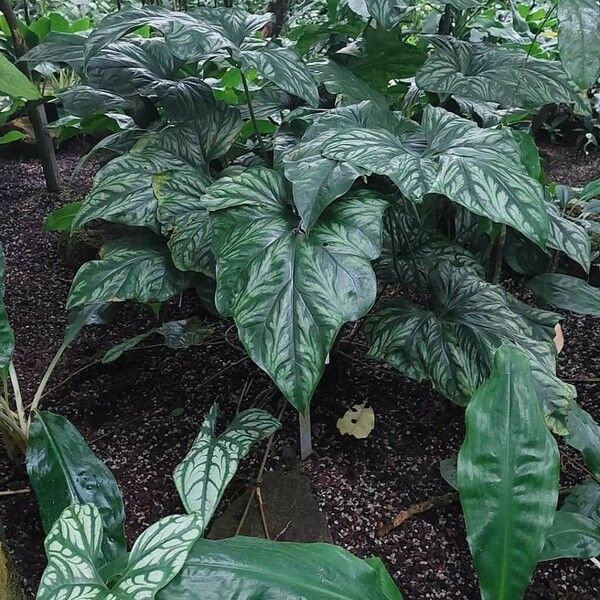
Plant Overview
Known as the African Embossed Plant, the Cercestis mirabilis is a living masterpiece of the tropical rainforest. This slow-growing climber is coveted by collectors for its stunning, silver-patterned foliage that looks almost three-dimensional, as if the veins were carefully stitched onto the leaf surface. Originating from the humid forests of West and Central Africa, it brings a dramatic, prehistoric aesthetic to any indoor jungle.
🔍 How to Identify
- 🌿 Leaf Pattern: The most striking feature is the intricate, silvery-white "embossed" variegation that follows the primary and secondary veins against a deep forest-green backdrop.
- 📐 Shape-Shifter: As a juvenile, the leaves are small and heart-shaped. As it matures and begins to climb, the leaves transform into a dramatic, elongated triangular or "sagittate" (arrowhead) shape.
- 🧗 Growth Habit: This is a hemiepiphytic climber, meaning it starts its life on the forest floor and eventually uses aerial roots to scale tree trunks toward the canopy light.
🏡 In Your Garden & Home
- ☁️ Humidity is Key: Because of its rainforest heritage, this plant is not a fan of dry air. It thrives in high-humidity environments; if the air is too dry, those beautiful embossed leaf tips may turn brown and crispy.
- 🧘 The "Slow" Lane: Do not expect rapid growth. Cercestis mirabilis is notoriously slow to establish. It dislikes being moved or repotted frequently, as its root system is sensitive to disturbance.
- 🌳 Support Needed: To see the plant reach its full "mirabilis" (miraculous) potential, provide it with a moss pole or wooden plank. Once it begins to climb, the leaves will increase in size and the silver patterning will become more pronounced.
⚠️ Safety & Toxicity
- 🚫 Toxic to Humans & Pets: Like many members of the Araceae family, this plant contains insoluble calcium oxalate crystals.
- 🐱 The Risk: If leaves are chewed or swallowed, they can cause immediate irritation of the mouth, tongue, and throat, leading to swelling and drooling in cats, dogs, and curious toddlers. It is best kept on a high shelf or in a dedicated plant cabinet.
✨ Fun Fact
The Cercestis mirabilis is a master of "heterophylly," a botanical term meaning the plant produces different leaf shapes at different stages of its life. If you don't provide it with something to climb, it may remain in its juvenile "heart-shaped" phase indefinitely!

Detailed Care Instructions
To grow Cercestis mirabilis, also known as the "chandelier plant," follow these steps:
- Obtain Cercestis mirabilis seeds or a small plant from a reputable nursery or online seller. You might also find it under the name "string of hearts."
- Choose a well-draining pot or hanging basket. The plant thrives in well-drained soil, so make sure the pot has drainage holes to prevent waterlogging.
- Fill the pot with a succulent or cactus mix. This type of soil provides good drainage and prevents the roots from rotting. You can also mix regular potting soil with some perlite or sand to improve drainage.
- Place the seeds or small plant on top of the soil and press them down slightly. If using seeds, sprinkle a thin layer of soil over them. Ensure that the seeds or plant are not buried too deeply.
- Water lightly. Cercestis mirabilis prefers dry conditions, so only water when the soil is completely dry. In the early stages, mist the soil lightly to prevent waterlogging. Avoid overwatering, as it can lead to root rot.
- Find a spot with bright, indirect light. Cercestis mirabilis thrives in bright, filtered light, but direct sunlight can scorch the leaves. Place it near a window with bright, indirect sunlight, or use a sheer curtain to filter the light.
- Maintain a temperature range of 60-80°F (15-27°C). The plant is sensitive to cold temperatures, so avoid placing it near drafts or in areas prone to cold air currents.
- Avoid fertilizing too frequently. Cercestis mirabilis doesn't require heavy feeding. Use a balanced, water-soluble fertilizer diluted to half strength during the growing season (spring and summer). Apply the fertilizer once a month.
- Monitor for pests and diseases. Although not commonly affected by pests, watch out for aphids or mealybugs. If you notice any infestation, gently wipe the leaves with a damp cloth or use an insecticidal soap.
- Trim and propagate the plant as desired. Cercestis mirabilis can grow long, trailing vines. If the plant becomes too leggy, you can prune it back to maintain a more compact shape. You can also propagate it by taking stem cuttings and placing them in well-drained soil or water until they develop roots.
Remember, every plant is unique, so adjust care and watering based on the specific needs of your Cercestis mirabilis.

Place in a window with dappled sun or a spot in the middle of a room. Or directly in a window facing west or east.

To properly water the Cercestis Mirabilis plant, it is important to understand its specific watering needs. This plant thrives in well-draining soils, which means that it should be watered when the top inch of soil becomes dry to the touch. Overwatering can cause root rot, so it is important not to water the plant too frequently or leave it sitting in standing water.
When watering the Cercestis Mirabilis plant, it is important to thoroughly saturate the soil but avoid getting water on the leaves. This can lead to leaf spotting or fungal growth. Watering from the base of the plant rather than the top can also help to prevent this issue.
In addition to watering, it is important to provide the Cercestis Mirabilis plant with adequate light and consistent temperatures to promote healthy growth. It should also be fertilized regularly during the growing season to provide necessary nutrients.
To effectively fertilize the Cercestis Mirabilis plant, follow the instructions below:
- Select a balanced, slow-release fertilizer with an N-P-K (nitrogen-phosphorus-potassium) ratio of 10-10-10 or similar.
- Begin fertilizing in the early spring when the plant starts actively growing.
- Dilute the fertilizer according to the package instructions in a watering can or bucket.
- Water the plant thoroughly before applying the fertilizer to ensure the soil is moist.
- Pour the diluted fertilizer mixture around the base of the plant, avoiding direct contact with the leaves or stems.
- Use the recommended quantity of fertilizer based on the size and age of the plant. Over-fertilizing can harm the plant, so always follow the guidelines.
- After applying the fertilizer, water the plant again to help the nutrients seep into the soil.
- Repeat the fertilization process every 4-6 weeks during the growing season, but avoid fertilizing during winter or dormancy.
- Monitor the plant's response to the fertilizer. If you notice yellowing, burning, or stunted growth, reduce the amount of fertilizer or frequency of application.
- Regularly observe the plant for signs of nutrient deficiencies or excesses, ensuring you adjust the fertilization accordingly.
- Always read and follow the instructions and recommendations provided by the fertilizer manufacturer, as different brands might have specific guidelines for application.
Remember, the Cercestis Mirabilis plant has specific needs, so it's essential to provide appropriate care and attention for its healthy growth.
Cercestis Mirabilis is a type of plant that requires a specific type of soil to grow at its best. A well-draining, nutrient-rich soil with a slightly acidic pH is ideal for this plant. Additionally, the soil should have good water retention, as Cercestis Mirabilis prefers consistent moisture levels. It is recommended that a high-quality, organic potting soil or garden soil be used as the base for planting this plant. Mixing in other organic materials such as compost or peat moss can also help improve soil quality and fertility for optimal growth and development. Avoid using heavy clay soils or those that are compacted or poorly drained, as these types of soils can impede the growth of Cercestis Mirabilis and lead to issues with root rot and other diseases.
Cercestis mirabilis is a perennial plant that can be propagated through several methods, including division and stem cuttings. Here is a detailed explanation of how to propagate this plant using these two methods:
- Division:
a. Start by selecting a healthy and mature Cercestis mirabilis plant that has developed a clump of stems.
b. Carefully dig up the plant, making sure to minimize damage to the roots as much as possible.
c. Gently separate the clump into smaller sections, ensuring that each section has an adequate amount of roots and stems.
d. Prepare a suitable planting location, such as a well-draining soil bed or pot filled with a mixture of potting soil and perlite.
e. Plant the divided sections, making sure to bury them at the same depth as they were previously growing.
f. Water the newly planted sections thoroughly, keeping the soil consistently moist but not waterlogged.
g. Place the newly planted divisions in a shaded area initially, gradually introducing them to more sunlight over time.
- Stem cuttings:
a. Select a healthy and vigorous stem from the Cercestis mirabilis plant. Choose a stem that is not too woody and has several sets of leaves.
b. Using a clean and sharp pair of pruning shears, cut a 4-6 inch (10-15 cm) section of the stem, ensuring that it includes at least two sets of leaves.
c. Remove the lower set of leaves from the stem, leaving only the top set of leaves intact.
d. Optionally, dip the base of the stem cutting into a rooting hormone powder or gel to enhance root development.
e. Prepare a rooting medium by mixing equal parts of peat moss and perlite or vermiculite. Moisten the medium, ensuring it is moist but not waterlogged.
f. Create a planting hole in the rooting medium using a pencil or a similar object, and insert the stem cutting into the hole.
g. Firmly press the medium around the stem cutting to secure it in place.
h. Place the potted cutting in a warm and bright location with indirect sunlight. Protect it from harsh direct sunlight and extreme temperatures.
i. Mist the cutting and cover it with a plastic bag or a propagator lid to create a humid environment that promotes rooting. Ensure proper ventilation to prevent mold growth.
j. Check regularly for signs of new growth and moisture levels in the medium. Keep the medium consistently moist during the rooting process.
k. Once the cutting has developed a strong root system and several sets of new leaves, it can be potted in a suitable potting mix or planted directly in the garden.
By following these propagation methods, you can successfully propagate Cercestis mirabilis and expand your plant collection.
Common pests of the cercestis mirabilis include Scale insect, mealybugs, spider mites, fungus gnats, thrips. Make a habit of checking your cercestis mirabilis frequently for pests so that any infestations can be caught and managed early.








