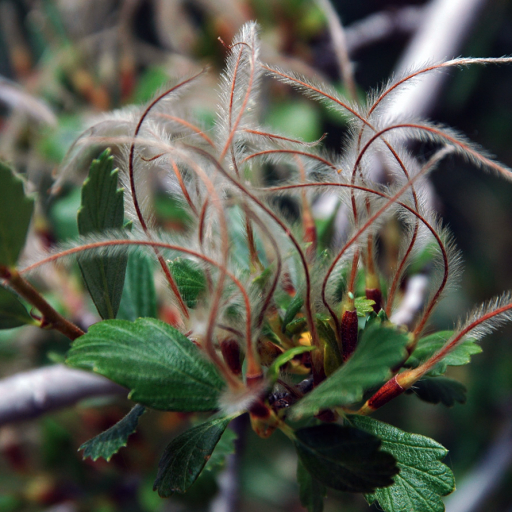
Plant Overview
Often called the Alder-leaf Mountain Mahogany, this rugged beauty is a true survivor of the American West. Despite its name, it isn't a true mahogany, but it earned the title because its wood is so incredibly dense and heavy that it actually sinks in water! In late summer, these shrubs transform into a shimmering spectacle as thousands of feathery, silver-tailed seeds catch the sunlight, making the entire hillside look like it’s covered in a soft, glowing mist.
🔍 How to Identify
- 🍃 Wedge-Shaped Leaves: The leaves are small, leathery, and dark green. Look closely at the tips—they are distinctly serrated (toothed) like a tiny saw, while the base remains smooth.
- 🥈 Silver Undersides: If you flip a leaf over, you’ll notice a soft, fuzzy, grayish-white underside, which helps the plant conserve moisture in dry climates.
- 🌀 The "Corkscrew" Seed: The most iconic feature is the fruit. It features a long, feathery plume (the style) that curls into a spiral. This plume acts like a drill, twisting as it dries and wets to literally screw the seed into the soil.
🏡 In Your Garden
- 🏜️ A Xeriscape Champion: This plant is a "set it and forget it" choice for dry, rocky landscapes. It has evolved to thrive on wind-swept ridges and sun-baked slopes, making it nearly impossible to kill with heat or drought once established.
- 🧪 Natural Soil Booster: Like a handful of special plants, it has a symbiotic relationship with soil bacteria that allows it to "fix" nitrogen. It actually improves the quality of the soil it grows in, making it a great neighbor for other garden plants.
- ⚓ Deep Roots: It develops a massive, deep taproot system very quickly. Because of this, it hates being moved! Be sure to choose its permanent "forever home" in your garden before planting.
⚠️ Safety & Toxicity
- ✅ Generally Safe: Cercocarpus montanus is considered non-toxic to humans, dogs, and cats.
- 🦌 Wildlife Favorite: While safe, be aware that it is "ice cream" for deer and elk. If you live in an area with heavy wildlife traffic, you may need to protect young plants with a cage until they are tall enough to survive the browsing.
✨ Fun Fact
The seeds are master engineers! When the feathery tail gets wet, it uncurls, and when it dries, it twists back up. This rhythmic mechanical motion helps the seed "walk" across the ground until it finds a crack in the dirt to bury itself in.

Detailed Care Instructions
Growing Cercocarpus Montanus, also known as mountain mahogany, can be challenging, but it is not impossible. Here are some steps you can follow to help facilitate its growth:
- Location: Choose a suitable location for planting. Cercocarpus Montanus prefers full sun to partial shade. Ensure the area has well-draining soil with good fertility.
- Planting: The best time to plant Cercocarpus Montanus is in spring or fall. Dig a hole that is twice as wide and deep as the root ball. Gently remove the plant from its container and place it in the hole. Backfill with soil and tamp it down lightly.
- Watering: Immediately after planting, water the plant thoroughly. After that, water it regularly for the first year to establish strong roots. Cercocarpus Montanus is drought-tolerant once established and does not require excessive watering.
- Mulching: Apply a layer of mulch around the base of the plant, but be careful to keep it away from the trunk. Mulch helps retain moisture, improve soil conditions, and suppress weed growth.
- Pruning: Prune Cercocarpus Montanus lightly to maintain its shape and remove damaged or diseased branches. Pruning in late winter or early spring, before new growth starts, is ideal.
- Fertilization: Cercocarpus Montanus generally does not require additional fertilization if planted in fertile soil. However, if the plant seems to be struggling or lacking nutrients, you can provide a balanced slow-release fertilizer in early spring.
- Pest and disease control: Cercocarpus Montanus is relatively resistant to pests and diseases. However, occasionally it may be susceptible to aphids, spider mites, or powdery mildew. Inspect your plant regularly and take appropriate measures if any issues arise.
Remember that patience is key when growing Cercocarpus Montanus, as it can take several years for it to establish and reach its full potential. Additionally, be sure to check with local nurseries or gardening experts for specific guidance tailored to your region and climate.

Place in a bright room that is sun drenched almost all day. Or directly in a south-facing window.

To properly water this plant, it is important to first understand its environmental needs and the soil type it prefers. Begin by inspecting the soil around the plant for dryness. If the soil appears dry, water the plant until the soil is moist but not waterlogged. It is important to avoid over-watering as this can lead to root rot. If the plant is in a container, ensure that the container has appropriate drainage holes for excess water to drain. Water the plant around its base rather than the foliage to avoid fungal growth. During summer months or periods of high temperatures, this plant may require more frequent watering to maintain its moisture levels.
To fertilize this plant, use a balanced, slow-release fertilizer with a N-P-K ratio of 10-10-10. Apply the fertilizer in early spring, before new growth begins, and again in mid-summer. Water the plant thoroughly before and after fertilizing to prevent burning the roots. Avoid fertilizing during periods of drought or extreme heat. Follow the instructions on the fertilizer label for proper application rates and methods.
Cercocarpus Montanus prefers well-drained soil that is slightly acidic to neutral. It grows well in sandy, loamy or rocky soils with a pH level between 6.0 and 7.5. This plant is also tolerant of poor soil conditions and dry conditions. The ideal soil should be rich in organic matter and have good drainage to prevent waterlogging. The addition of compost or organic fertilizers can improve soil fertility. It is recommended to avoid using heavy clay soils or soils prone to waterlogging, which can cause root rot.
To propagate the plant, select a healthy stem and take a cutting that is around 4-6 inches long. Remove the leaves from the lower part of the stem, leaving just a few at the top. Dip the cut end into a rooting hormone and plant it in a pot filled with a well-draining soil mix. Water the cutting thoroughly and cover it with a plastic bag to create a mini greenhouse. Place the pot in a warm and bright spot, but avoid direct sunlight. Keep the soil moist by misting it regularly. After around 4-6 weeks, you should start to see roots emerging from the bottom of the pot. Once the cutting has developed a strong root system, you can transplant it to a larger pot or to the ground if the conditions are appropriate.








