Plant Overview
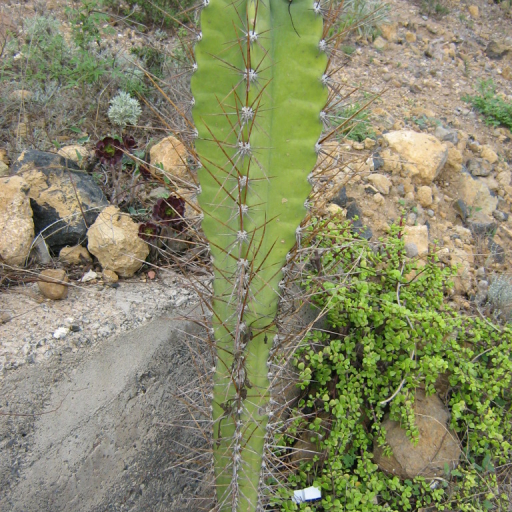
Often referred to as the "Midnight Lady" or "Blue Cereus," Cereus aethiops is a striking columnar cactus native to the arid regions of Argentina. It is beloved by collectors for its dramatic color palette, featuring dusky blue stems contrasted by fierce, jet-black spines. When night falls, this desert dweller puts on a spectacular show, unfurling massive, fragrant white blossoms that glow under the moonlight.
🔍 How to Identify
- 🎨 Stem Coloration: The stems are a distinct glaucous blue-green, often appearing almost metallic or waxy in bright sunlight.
- 🖤 Contrast Spines: It features prominent, needle-like spines that are dark brown to charcoal black, emerging from woolly white areoles along the ribs.
- 🌙 Night Blooms: The flowers are large, white, and trumpet-shaped, reaching up to 8 inches in length, but they only reveal their beauty between dusk and dawn.
🏡 In Your Garden
- ☀️ Light Requirements: To maintain its signature blue "bloom" (the waxy coating), this cactus needs plenty of direct sunlight. Without enough light, the new growth will be thin and green.
- 🏜️ Thirst Logic: Like most desert cacti, it is highly susceptible to root rot. It prefers a "soak and dry" method, where the soil is allowed to become bone-dry all the way to the bottom of the pot before being watered again.
- 🌬️ Air Circulation: In the garden or home, it thrives best where there is consistent airflow, which helps prevent fungal issues on its waxy skin.
⚠️ Safety & Toxicity
- 🌵 Physical Hazard: Cereus aethiops is not known to be chemically toxic to humans or pets if ingested.
- 🩹 Mechanical Injury: The primary danger is its rigid, sharp spines. These can cause deep puncture wounds and skin irritation, so it should be handled with thick leather gloves and kept away from high-traffic areas where children or pets play.
✨ Fun Fact
The species name aethiops is derived from a Greek word meaning "burnt" or "blackened," a direct reference to the scorched appearance of its dark spines against its pale blue flesh.

Detailed Care Instructions
To grow Cereus aethiops (also known as Fairy Castle Cactus), follow these steps:
- Choose the Right Pot: Select a clay or terracotta pot with good drainage holes. The pot should be slightly bigger than the root ball of the plant.
- Soil Mix: Cereus aethiops prefers well-draining soil. Use a cactus or succulent potting mix enriched with perlite, sand, or pumice for better drainage.
- Planting: Gently remove the plant from its current container, taking care not to damage the roots. Place it in the new pot and fill the spaces around the root ball with the prepared soil mixture. Press it lightly to ensure the plant is stable.
- Sunlight: Place the pot in a location that receives bright indirect sunlight for at least 4-6 hours a day. Cereus aethiops thrives in bright, filtered light.
- Temperature and Humidity: Ideally, keep the plant in a warm environment with temperatures between 60-85°F (15-29°C). This cactus variety is not very tolerant of cold temperatures, so protect it from drafts and frost.
- Watering: Cereus aethiops is drought-tolerant, so allow the soil to dry out completely between waterings. Water the plant only when the top inch of soil is dry. During winter, reduce watering further.
- Fertilizer: Use a balanced, water-soluble fertilizer formulated for cacti and succulents. Apply it once a month during the growing season (spring and summer) as per the package instructions.
- Pruning: Prune the plant to maintain its desired shape and to remove any dead or damaged branches. Use clean, sharp pruning shears and be cautious of the spines.
- Propagation: Cereus aethiops can be propagated through stem cuttings. Allow the cut ends to dry for a few days before planting them in a well-draining potting mix. Keep the soil lightly moist until new growth appears.
- Pests and Diseases: Watch out for common cactus pests like mealybugs or scale insects. If identified, treat with an appropriate insecticide or wipe them off with a cotton swab dipped in alcohol. Avoid overwatering to prevent root rot.
Remember, Cereus aethiops is a slow-growing cactus, so be patient with its growth. It can take several years for it to reach its full size and develop the distinctive fairy castle shape.
To effectively water Cereus Aethiops plant, you should consider a few key factors such as the plant's water requirements, the watering frequency, the method of watering, and the quality of water. Understanding these details will help ensure optimal care for your Cereus Aethiops plant:
- Water requirements: Cereus Aethiops prefers well-draining soil, so it is crucial not to overwater it. The plant should be allowed to dry out slightly between watering sessions to avoid waterlogged roots, which can lead to root rot.
- Watering frequency: The frequency of watering depends on several factors such as the season, temperature, and humidity. During the growing season (spring and summer), you may need to water the plant more frequently, approximately once every 10-14 days. In contrast, during the dormant season (fall and winter), reduce watering to once every 3-4 weeks, as the plant goes into a rest period.
- Method of watering: It is recommended to use the "soak and dry" method for watering Cereus Aethiops. This involves thoroughly watering the soil until water runs out of the drainage holes. Allow the excess water to drain completely to prevent waterlogging. Avoid misting or spraying the plant's leaves, as Cereus Aethiops prefers to receive water at the root level.
- Water quality: Ideally, use room temperature or lukewarm water for watering your Cereus Aethiops plant. Cold water may shock the plant and hinder its growth. Moreover, it is best to use non-chlorinated water. If your tap water contains high levels of chlorine or other chemicals, consider using filtered or distilled water.
Remember, these details provide a general guideline for watering Cereus Aethiops, but it is essential to observe your specific plant's needs. Factors such as pot size, humidity, and sunlight exposure can influence the plant's water requirements, so always monitor the plant's condition and adjust watering accordingly.
To fertilize the Cereus Aethiops plant, follow these instructions:
- Choose a balanced, water-soluble fertilizer suitable for cacti and succulent plants. Look for a formulation with equal or similar ratios of nitrogen (N), phosphorous (P), and potassium (K). Avoid fertilizers with high nitrogen content as they may promote excessive growth.
- Dilute the fertilizer according to the package instructions. It's important not to use a higher concentration than recommended, as cacti plants are sensitive to over-fertilization.
- Apply the diluted fertilizer to the soil around the plant's base, taking care not to get it on the plant itself. The recommended frequency and amount of fertilizer application may vary depending on the specific product, so refer to the fertilizer packaging for guidance. Generally, a monthly application during the growing season (spring and summer) is sufficient.
- Water the plant thoroughly after fertilizing to ensure the nutrients are absorbed by the roots. However, make sure to allow the soil to dry out between watering sessions to prevent overwatering, as this can lead to root rot.
- During the plant's dormant period (fall and winter), it's best to reduce or stop fertilization to mimic its natural growth cycle.
Remember, following a consistent fertilization routine is crucial to maintain the health and vitality of your Cereus Aethiops plant. Regular observation of the plant's growth and response to fertilization will help you adjust the feeding schedule if necessary.
When cultivating Cereus Aethiops plant, it is important to select a suitable soil type to fulfill its specific growth requirements. This plant thrives best in well-draining soil that allows water to flow through easily, preventing the roots from sitting in wet conditions for extended periods. A well-draining soil mixture helps prevent root rot and ensures healthy development.
The ideal soil type for Cereus Aethiops plants is a sandy or loamy soil. Sandy soils allow for excellent drainage and aeration, making it easier for the roots to access oxygen while preventing waterlogging. Loamy soils, on the other hand, provide a balance of water retention and drainage, creating optimal conditions for root development.
To enhance the soil's structure and drainage, incorporating organic matter such as well-rotted compost or aged manure can be beneficial. This improves the soil's fertility, nutrient content, and water-holding capacity, providing a favorable environment for the plant's growth.
It is important to note that Cereus Aethiops plants are native to arid and semi-arid regions, where the soil is usually low in nutrients. Therefore, excessive amounts of fertilizer are not recommended, as it may cause excessive vegetative growth and weakens the plant's overall structure. Instead, a well-balanced and diluted liquid fertilizer can be applied during the active growing season to provide essential nutrients.
Regularly monitoring the moisture level in the soil is crucial for the plant's well-being. Over-watering can lead to root rot and other fungal diseases, so it is recommended to allow the soil to dry out slightly between waterings. Proper watering practices combined with appropriate soil type can optimize the health and growth of Cereus Aethiops plants.
Cereus aethiops, a succulent plant native to South America, can be propagated through various methods. Here is a detailed guide on how to propagate this plant:
- Select a healthy parent plant: Choose a mature and healthy Cereus aethiops plant from which you will take cuttings for propagation. Ensure that the parent plant does not have any signs of disease or damage.
- Prepare the cutting tools: Use a sharp, sterilized knife or pruning shears to take the cuttings. Sterilizing the tools helps prevent the spread of diseases.
- Choose a cutting location: Identify a suitable spot on the parent plant from which you will take the cuttings. Look for healthy, non-flowering stems that are at least 4-6 inches long.
- Take the cuttings: Make a clean, angled cut just below a node or joint on the selected stem. This node is where the new roots will emerge. Ensure that the cutting is free from any foliage or flowers.
- Allow the cutting to callus: Place the cutting in a warm, dry location away from direct sunlight. Allowing the cut end to dry and form a callus helps prevent rot. This process usually takes several days.
- Prepare the potting mix: While the cutting calluses, prepare a well-draining potting mix. A suitable mix can include a combination of cactus or succulent potting soil, perlite, and coarse sand.
- Plant the cutting: Once the cutting has developed a callus, gently insert the cut end into the prepared potting mix. Make sure the node is buried in the soil to encourage root growth. Ensure the cutting stands upright, providing support if needed.
- Provide appropriate care: After planting, place the potted cutting in a warm location with bright, indirect sunlight. Ensure that the soil remains slightly moist but not overly saturated. Overwatering can cause rotting, so water sparingly and from the base of the pot.
- Monitor and wait for root development: Regularly check the cutting for signs of root growth. This typically takes a few weeks to months, depending on the environmental conditions and the cutting's health. Avoid disturbing the cutting during this time to allow the roots to develop fully.
- Transplanting: Once the cutting has established a healthy root system, it can be transplanted into a larger pot or garden bed. Ensure the new pot or location has well-draining soil and provides the required sunlight and temperature conditions for the Cereus aethiops plant.
By following these steps, you can successfully propagate Cereus aethiops and enjoy the growth of new plants from your original parent specimen.








