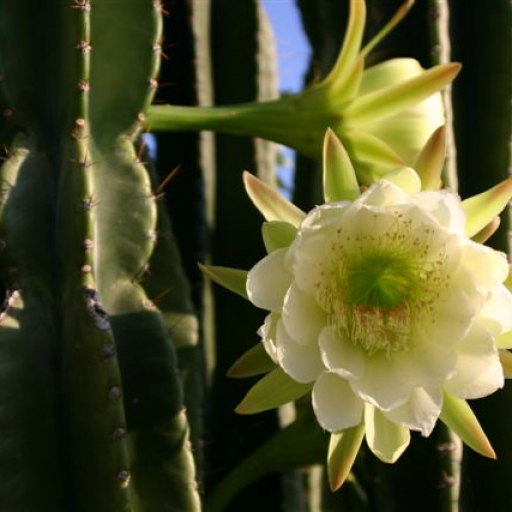
Plant Overview
Rising like a living skyscraper from the tropical landscapes of South America, the Cereus hexagonus—often called the "Lady of the Night"—is a true giant of the cactus world. Known for its majestic height and ghostly white, nocturnal blooms, this cactus adds a dramatic, architectural flair to any desert-scape or large indoor collection.
🔍 How to Identify
- 🌵 The Ribs: True to its name, this cactus typically features six prominent, deep ribs (though it can vary between 4 and 7), giving it a distinct hexagonal cross-section.
- 🎨 Skin Texture: The stems have a beautiful glaucous (waxy) blue-green finish, which helps the plant reflect intense sunlight and retain moisture.
- 🌸 Moonlit Blooms: It produces massive, funnel-shaped white flowers that can reach up to 10 inches in length. These blossoms open strictly at night and are gone by the next morning.
🏡 In Your Garden
- ☀️ Sunscreen Coating: That signature blue-grey "dust" on the skin isn't dirt; it’s a natural wax called epicuticular wax. It acts as a high-SPF sunscreen, so the more sun it gets, the more vibrant its blue hue becomes.
- 📏 Space Requirements: Unlike smaller barrel cacti, this species is a fast grower and can reach heights of 30 feet or more in the wild. If planting in a pot, ensure the container is heavy and stable, as the plant can become top-heavy very quickly.
- 💧 Winter Rest: During the colder months, the plant enters a dormant phase. It is highly sensitive to "wet feet" during this time, so watering should be almost entirely halted to prevent root rot.
⚠️ Safety & Toxicity
- 🌵 Status: Non-toxic but physically defensive.
- 🩹 Mechanical Injury: While not chemically poisonous to pets or children, the spines are sharp and can cause painful punctures or skin irritation. It is best placed in the "back of the border" where curious hands and paws won't stumble into it.
✨ Fun Fact
The Cereus hexagonus is a "bat-pollinated" specialist! Because its flowers only open in the dark, they are specifically designed to attract nocturnal visitors like bats and large hawk-moths with their bright white color and heavy, sweet fragrance.

Detailed Care Instructions
To grow Cereus hexagonus, commonly known as the "Queen of the Night" cactus, you can follow these steps:
- Purchase a healthy plant: Look for a healthy Cereus hexagonus plant at a local nursery or garden center. Alternatively, you can also buy seeds or cuttings online.
- Choose a suitable pot: Select a pot or container with good drainage holes to avoid waterlogging. The size of the pot should be proportional to the plant's size and allow for root growth.
- Soil preparation: Use a well-draining cactus or succulent potting mix. You can enhance the soil's drainage capabilities by adding perlite, sand, or pumice.
- Planting: Fill the pot with the prepared soil mixture and gently place the Cereus hexagonus plant in the center. Ensure the base of the plant is level with the soil surface. Pat down the soil gently to secure the plant in place.
- Light requirements: Cereus hexagonus requires bright, indirect sunlight. Place the plant near a window that receives adequate sunlight. Avoid placing it in direct sunlight, as the intense heat can scorch the plant.
- Temperature and humidity: These plants thrive in temperatures ranging from 70°F to 90°F (21°C to 32°C). They prefer average to high humidity levels. Mist the plant occasionally or place a humidity tray nearby to increase humidity.
- Watering: The Queen of the Night cactus is drought-tolerant and prefers infrequent watering. Allow the top few inches of soil to dry out between waterings. Water thoroughly but make sure excess water can drain away.
- Fertilization: Feed the Cereus hexagonus plant with a balanced, water-soluble fertilizer during the growing season (spring and summer). Follow the instructions on the fertilizer packaging for the correct dosage and frequency.
- Pruning and maintenance: Prune any dead or damaged stems to maintain the plant's shape and health. You can also prune to control the plant's size.
- Dormant period: Cereus hexagonus typically experiences a dormant period during the winter. Reduce watering and avoid fertilization during this time.
- Pests and diseases: Monitor the plant regularly for pests like mealybugs or spider mites. Treat any infestations promptly using appropriate insecticides or by using natural methods like wiping the pests with a cotton swab dipped in rubbing alcohol.
Remember to research specific care instructions for Cereus hexagonus to ensure the best growth and health for your plant.

Place in a bright room that is sun drenched almost all day. Or directly in a south-facing window.

Cereus Hexagonus is a succulent plant that requires moderate watering. Before watering, it is important to check the soil's moisture level by touching the top layer of soil. If it feels dry to the touch, it is time to water the plant. However, if the soil is still moist, it is best to hold off on watering for a few more days.
To water the plant, use a watering container with a spout to direct the water at the base of the plant rather than the leaves. This prevents the plant from getting wet and promotes healthy growth. Pour the water until the soil is moist, but not soaked. Overwatering can harm the plant and lead to root rot.
During the growing season, which usually occurs in the summer months, the plant may need to be watered more frequently. However, in the winter months, it is important to decrease the watering schedule to avoid waterlogging the soil.
Overall, it is important to maintain a consistent watering schedule for Cereus Hexagonus to prevent stress and ensure healthy growth.
To fertilize this plant, use a balanced fertilizer with an N-P-K ratio of 10-10-10 during the growing season (spring and summer). Dilute the fertilizer to half strength and apply it once a month to the soil around the plant. Do not fertilize during the dormant season (fall and winter). Make sure to water the plant thoroughly before and after fertilizing.
The recommended soil type for this plant is well-draining, porous soil that is rich in organic matter. It should have a slightly acidic pH level, ranging between 6.0-6.5. The soil should be able to hold some moisture but should not be waterlogged, as this can potentially rot the roots of the plant. A mix of perlite, sand, and peat moss is often recommended for this plant. Additionally, adding some slow-release fertilizer to the soil mix can provide beneficial nutrients for the plant.
The best method to propagate Cereus Hexagonus plant is through stem cuttings. First, choose a healthy stem from the parent plant and cut it using a clean and sharp knife. The cutting should be at least 4-6 inches in length. Remove any leaves or branches from the lower part of the stem, leaving only a few at the top.
Next, prepare a pot with high-quality, well-draining soil, and make a hole in the center using a pencil or a stick. Dip the cut end of the stem into rooting hormone powder, which will help it to form roots quickly. Then, carefully place the cutting into the prepared hole, making sure the soil is in good contact with the stem.
Water the cutting thoroughly and place it in a warm and bright location, but avoid direct sunlight. Keep the soil moist but not too wet. It may take a few weeks or even months for the cutting to establish roots, but once it does, you will notice new growth coming from the top.
After a few more weeks, you can transplant the new plant into a larger pot and continue to care for it as you would with an adult Cereus Hexagonus plant. With proper care and maintenance, your new plant will thrive and provide you with beautiful foliage for many years to come.
Common pests of the queen-of-the-night include Scale insect, mealybugs, spider mites. Make a habit of checking your queen-of-the-night frequently for pests so that any infestations can be caught and managed early.








