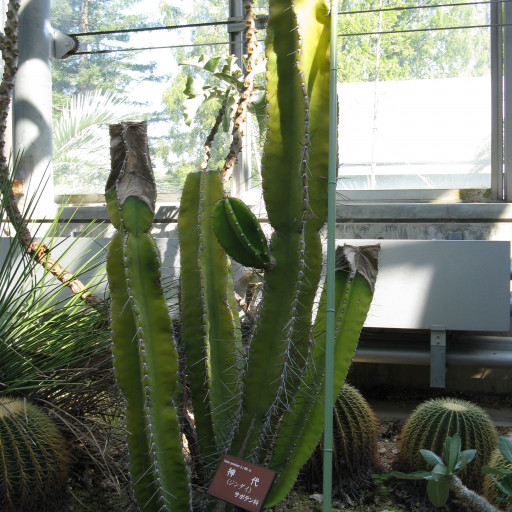
Plant Overview
Known as the Peruvian Apple Cactus, this towering desert giant is a favorite for those who want a "living sculpture" in their home or garden. While it looks like a classic cartoon cactus, it holds a delicious secret: it produces large, thornless red fruits that taste remarkably like a mild, crunchy dragon fruit. In its native South America, it can grow as tall as a four-story building, earning it the nickname "Hedge Cactus" for its ability to create living walls.
🔍 How to Identify
- 🌵 The Stem: A tall, columnar body that is typically grayish-green to blue-green. It features deep vertical ribs (usually 6 to 9) that allow the plant to expand like an accordion when it drinks water.
- 🌸 The Midnight Bloom: It produces massive, waxy white flowers with a touch of pink on the outer petals. These are "Night Bloomers," opening late in the evening and wilting by the first light of dawn.
- 🍎 The "Apple" Fruit: Unlike many cacti, its fruit is smooth and completely hairless/spineless. It turns a vibrant violet-red when ripe, filled with white pulp and tiny, crunchy black seeds.
🏡 In Your Garden
- ☀️ Sun Seeker: This cactus is a sun-worshipper. While it can survive indoors near a bright window, it truly thrives in direct, intense sunlight which encourages it to flower and fruit.
- 🏜️ Drainage is Key: Because it stores so much water in its trunk, it is highly susceptible to root rot. It requires "gritty" soil that allows water to pass through almost instantly. If the base feels soft or turns yellow, it’s a sign the roots are drowning.
- 🚀 Vertical Growth: Unlike many slow-growing succulents, the Peruvian Apple Cactus is a speedster. In the right conditions, it can grow a foot or more per year, so ensure it has plenty of overhead clearance!
⚠️ Safety & Toxicity
- 🟢 Status: Generally non-toxic and safe for humans and pets.
- 📌 Physical Hazard: While not chemically toxic, it is covered in sharp spines (areoles) along the ribs. These can cause painful punctures or skin irritation. Keep it away from high-traffic areas where children or pets might accidentally brush against it.
- 😋 Edible Fruit: The fruit is 100% edible and quite popular in some regions. However, always ensure the plant hasn't been treated with systemic pesticides before tasting!
✨ Fun Fact
The Peruvian Apple Cactus is a "chameleon" of the desert; when it is young, its skin often has a powdery blue "bloom" (waxy coating) that acts as a natural sunscreen to protect the tender tissues from the harsh UV rays.

Detailed Care Instructions
| Color | Green And Sometimes, Pale Green With Pink(Ish) Or White Flowers |
| Soil Ph | 6-7 |
| Humidity | Dry |
| Lighting | Full Sun |
| Soil Type | Well-Draining, Sandy Cacti Soil |
| Bloom Time | July - October |
| Difficulty | Easy |
| Plant Type | Cactus |
| Hibernation | Cold Period |
| Mature Size | Up To 30 Feet Tall Outdoors, 3-6 Feet Tall Indoors |
| Native Area | South America |
| Temperature | 16°C - 20°C |
| Sun Exposure | Full Or Partial Sun |
| Hardiness Zones | 8-11 |
To grow the Cereus Repandus plant, also known as the Peruvian Apple Cactus, you can follow these steps:
- Select a suitable location: Choose a spot with ample sunlight, preferably with at least 6-8 hours of direct sunlight each day. This plant can also tolerate some shade, but it thrives in full sunlight.
- Prepare the soil: Ensure the soil is well-draining and rich in organic matter. You can improve drainage by adding sand or perlite to the soil mix. Avoid heavy clay soils that retain water for extended periods.
- Planting: Dig a hole in the soil that is deep and wide enough to accommodate the plant's root ball. Carefully place the plant in the hole, ensuring it stands upright. Fill in the hole with soil and gently firm it around the base of the plant.
- Watering: Initially, water the plant thoroughly, allowing the water to reach the roots. After planting, water the plant whenever the top inch of soil feels dry. Cereus Repandus prefers slightly drier conditions, so ensure the soil is not overly waterlogged.
- Fertilizing: Apply a balanced, slow-release fertilizer during the growing season, typically in spring and summer. Follow the manufacturer's instructions for the correct amount and frequency of application.
- Pruning: If necessary, prune the plant to maintain its desired shape or remove any dead or damaged branches. Make clean cuts using sterilized pruning shears to prevent infections.
- Protection from frost: If you live in an area prone to frost, provide protection for the plant during colder months. Use frost cloth or blankets to cover the plant overnight or move it indoors to a warmer location.
- Pests and diseases: Cereus Repandus can be susceptible to spider mites and mealybugs. Regularly check for any signs of infestation, such as webbing or cottony masses, and treat accordingly with insecticidal soap or neem oil.
- Propagation: You can propagate Cereus Repandus from stem cuttings. Take a cutting from a healthy plant, allow it to dry for a few days to form a callous, and then plant it in a well-draining potting mix. Keep the soil slightly moist until new growth appears.
Remember to research and comply with any specific care requirements for your particular plant variety, as different cultivars may have slightly different needs.

Place in a bright room that is sun drenched almost all day. Or directly in a south-facing window.

1) Determine the watering needs of the plant by researching its natural habitat and preferred growing conditions.
2) Water the plant deeply but infrequently, allowing the soil to dry out slightly between waterings.
3) Use lukewarm water and avoid getting water on the leaves to prevent damage.
4) Consider using a watering can with a long spout to reach the base of the plant and avoid getting water on surrounding soil.
5) Adjust watering frequency and amount based on seasonal changes, growth rate, and overall health of the plant.
To fertilize this plant, use a balanced fertilizer with equal amounts of nitrogen, phosphorus, and potassium. Apply the fertilizer every two weeks during the growing season, and reduce fertilization during the winter months. Use a water-soluble fertilizer, mixing according to package instructions, and apply it to the soil around the plant, avoiding contact with the leaves or stem. Water the plant after fertilization to ensure the nutrients are absorbed.
The best type of soil to use for Cereus Repandus plant is a well-draining soil mixture that is high in organic matter, but also provides good aeration. The soil should be slightly acidic with a pH between 5.5 and 6.5. A mixture of sand, perlite, and peat moss works well for this plant. It is essential to avoid using heavy clay soils, as they do not provide adequate drainage, which can cause root rot and other problems. Additionally, the soil should not be too nutrient-rich, as this can lead to excessive growth and weak, spindly stems. A standard cactus soil mix is always a safe choice for this plant.
There are several ways to propagate the Cereus Repandus plant.
One method is to take cuttings from the stem of a mature plant. The stem should be at least 6 inches long and have several nodes or growth points. Remove any leaves or spines from the lower 2-3 inches of the cutting. Allow the cutting to dry for a few days in a dry and shaded location to prevent rotting before planting it in well-draining soil. The cutting should be watered sparingly until it begins to develop new growth, indicating that it has rooted.
Another method is to propagate the plant from seeds. Collect the seeds from fully-ripe fruit and allow them to dry for a few days before planting them in well-draining soil. Keep the soil evenly moist and in a warm location until the seeds germinate, which can take up to several weeks.
Propagation can also be done by layering. Bend a low-hanging stem towards the ground, and pin it down using a wire or a small stake. Cover the stem with soil, and keep it moist until it starts developing new growth. Once the roots have formed, separate the new plant from the parent plant and transplant it into its own container or location.
Common pests of the peruvian apple cactus include Scale insect, mealybugs, spider mites. Make a habit of checking your peruvian apple cactus frequently for pests so that any infestations can be caught and managed early.








