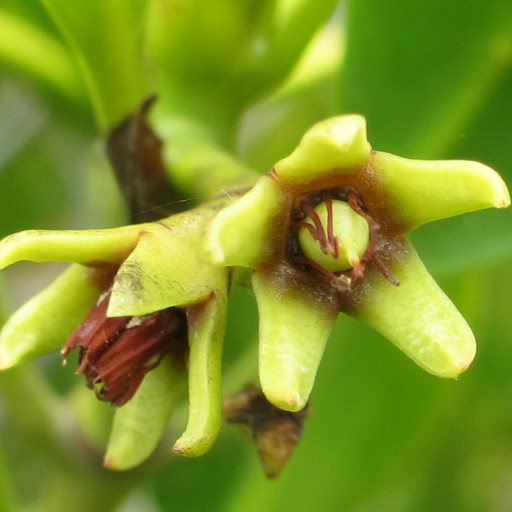
Plant Overview
Meet the "Spurred Mangrove," a resilient sentinel of the tropical shoreline often called the Yellow Mangrove for its distinctively sunny-hued foliage. This architectural marvel isn't just a tree; it’s a coastal engineer, holding the line between the ocean’s surge and the quiet mudflats of the Indo-Pacific. While it spends its life in the salt and silt, its elegant form has made it a fascinating specimen for high-end "mangrove-scape" aquariums.
🔍 How to Identify
- 🍃 Golden Foliage: The leaves are obovate (teardrop-shaped) and typically display a distinct yellowish-green tint, which helps distinguish it from the deeper green of its neighbors.
- 🦴 Knee Roots: Look at the base for its signature "spurs"—looped, knee-like roots that poke out of the mud like bent elbows to help the tree breathe during high tide.
- 🥖 Cigar Seedlings: It produces long, ribbed, greenish-brown "sticks" called hypocotyls that hang from the branches like oversized, hanging cigars before they drop.
🏡 In Your Garden (or Aquarium)
- 🌊 Salt Specialist: While most plants wither in salt, Ceriops tagal thrives in it. If growing it in a container or "paludarium," it requires very high humidity and brackish conditions to truly flourish.
- 🧱 Root Stability: It is a slow grower that prioritizes a strong foundation. Because it is adapted to shifting tides, it hates having its roots disturbed; once it "anchors" into its substrate, it’s best to leave it exactly where it is.
⚠️ Safety & Toxicity
- ✅ Low Risk: Ceriops tagal is generally considered non-toxic to humans and common pets.
- 🍂 Tannin Content: The bark and leaves are incredibly rich in tannins (historically used for tanning leather). While not poisonous, the sap may cause mild skin staining or very minor irritation for those with highly sensitive skin.
✨ Fun Fact
🎯 The Javelin Strategy: This tree is "viviparous," meaning the seeds germinate while still attached to the mother tree. When the seedling finally drops, its weighted, pointed end acts like a javelin, stabbing directly into the mud so it can start growing before the tide has a chance to wash it out to sea!

Detailed Care Instructions
To grow Ceriops tagal plants, you can follow the below steps:
- Obtain seeds or seedlings: You can purchase Ceriops tagal seeds or seedlings from local nurseries or online sellers. Make sure to choose healthy and viable seeds or seedlings.
- Prepare the planting container: Choose a container or pot with drainage holes, as Ceriops tagal plants prefer well-draining soil. Also, ensure that the container is large enough to accommodate the growing plant.
- Select the right soil: Ceriops tagal plants thrive in sandy or loamy substrate that is rich in organic matter. You can create a suitable soil mix by combining equal parts of sand, loam, and compost.
- Plant the seeds or seedlings: If starting from seeds, moisten the soil and sow the seeds about 1-2 centimeters deep in the container. Cover them lightly with soil and water gently. If using seedlings, create a hole in the soil large enough to accommodate the root ball, place the seedling in the hole, and fill it with soil, pressing it gently around the roots.
- Provide the right growing conditions: Ceriops tagal plants thrive in full sun to partial shade. Ensure they receive at least 6-8 hours of direct sunlight every day. Maintain a temperature between 20-30°C (68-86°F) for optimal growth. Water the plant regularly to keep the soil evenly moist, but avoid overwatering, as waterlogged soil can harm the roots.
- Fertilize periodically: Ceriops tagal plants benefit from occasional fertilization. Use a balanced slow-release fertilizer or a liquid fertilizer formulated for aquatic plants. Follow the instructions provided on the fertilizer packaging to determine the appropriate amount and frequency of application.
- Prune if necessary: As the Ceriops tagal plant grows, you can prune any dead or diseased branches to promote healthier growth. Pruning can be done during the growing season.
- Watch for pests and diseases: Keep an eye out for common pests like aphids, mealybugs, or scale insects. If any infestation is observed, treat it with appropriate insecticides or insecticidal soaps.
By following these steps, you can successfully grow Ceriops tagal plants and enjoy their unique beauty.

Place in a bright room that is sun drenched almost all day. Or directly in a south-facing window.

Ceriops Tagal plant should be watered regularly to maintain its health and growth. Proper watering is key to help ensure it develops a robust root system and a lush, full appearance. One way to ensure this plant receives adequate hydration is to keep the soil constantly moist, but not waterlogged. The ideal frequency of watering may be around once every three to four days, but this may vary depending on your plant's specific conditions and environment. Be sure to avoid overwatering or underwatering, both of which can damage the plant's delicate root system. It is essential to always check the moisture level of the soil before watering to determine if it is necessary. Additionally, humidity levels in the air are also crucial to this plant's overall health. A moist atmosphere in your home or growing area may help keep it happy and thriving.
To fertilize this plant, you should choose a balanced, slow-release fertilizer with a nitrogen, phosphorus, and potassium ratio of 20-20-20. Apply the fertilizer once every six months, following the instructions on the package. Avoid over-fertilizing, which can cause root damage and stunted growth. Water the plant before and after fertilizing to prevent fertilizer burn.
For optimal growth and health of the plant, it is recommended to use a nutrient-rich soil that is well-draining. The soil should have a pH between 6.0 and 7.5. A mixture of organic compost and sand or perlite can be added to improve soil structure and drainage. The plant also prefers soil with high organic matter content. It is important to ensure that the soil remains moist but not waterlogged, as excessive water can lead to root rot. Additionally, it is recommended to avoid using soil that is contaminated with pollutants or chemicals, as Ceriops Tagal is sensitive to environmental stressors.
To propagate this plant, you will need to collect fresh mature seeds from a healthy parent plant. These seeds should be gently cleaned and washed with water to remove any residue or dirt from the surface.
Once the seeds are clean, you can follow these steps to propagate the plant:
- Prepare a shallow container or seed tray with a well-draining potting mix. Make sure the mix is moist but not waterlogged.
- Place the seeds on the surface of the mix, spacing them out evenly. Do not bury them under the soil.
- Cover the seeds lightly with a fine layer of sand or vermiculite. This will help to retain moisture and protect the seeds from pests.
- Place the container or tray in a warm, bright location but away from direct sunlight. Keep the soil moist at all times, but be careful not to overwater.
- Germination should occur within 2-3 weeks, and you should see small seedlings poking through the surface. Once this happens, you can remove the cover and continue to care for the seedlings as normal.
- As the seedlings grow, you will need to thin them out so that they have enough space to develop. Gradually increase the amount of light the plants receive, but avoid exposing them to direct sunlight until they are strong enough to handle it.
- When the plants are large enough, you can transplant them into larger pots or containers, or even plant them directly into your garden. Be sure to choose a location with well-draining soil and plenty of sunlight.
With the right care and attention, your Ceriops Tagal plants should grow strong and healthy, providing a beautiful addition to your home or garden.








