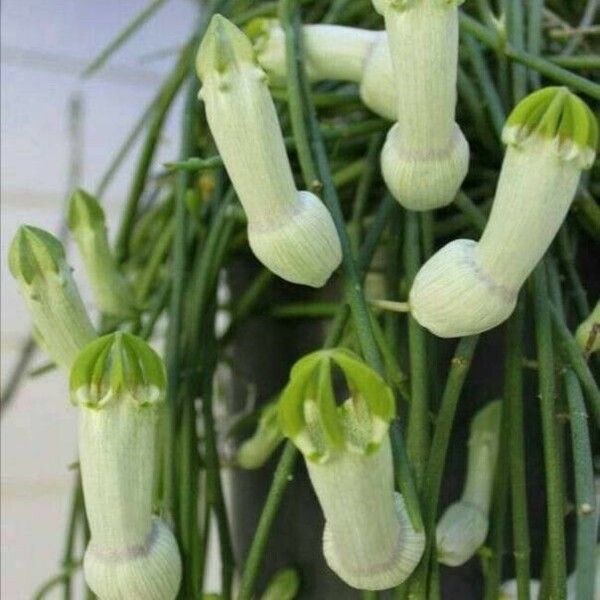
Plant Overview
Often called the Bushman's Pipe or the Horny Wonder, Ceropegia ampliata is a botanical curiosity that looks like it belongs on another planet. Native to the arid regions of Southern and Eastern Africa, this succulent climber swaps traditional foliage for bizarre, inflated flowers that resemble porcelain lanterns or smokers' pipes. It is a prized specimen for "weird plant" collectors who appreciate its translucent textures and effortless scrambling growth.
🔍 How to Identify
- 🌸 The "Pipe" Flower: Large, pale green or white tubular flowers (up to 7cm long) with a distinctively swollen base and a narrow neck that opens into a five-lobed "mouth."
- 🌿 Leafless Vines: The plant consists of thick, fleshy green stems that often appear leafless. Any leaves that do appear are tiny, heart-shaped, and usually drop off quickly to conserve water.
- 🎨 Intricate Veining: Look closely at the flower petals; they are often etched with delicate longitudinal green or purple stripes that glow when backlit by the sun.
🏡 In Your Garden
- 🧗 The Scrambler: Unlike many succulents that stay in neat rosettes, this species loves to climb. It uses its twining stems to scramble over rocks or up a trellis. In a home setting, it thrives in a hanging basket where its "pipes" can dangle at eye level.
- 🏜️ Drainage is King: Because it evolved in rocky, dry environments, its fleshy roots are highly sensitive to "wet feet." It prefers a gritty, cactus-leaning soil mix and hates being moved once it has established its delicate root system.
⚠️ Safety & Toxicity
- 🐾 Low Toxicity: Ceropegia ampliata is generally considered non-toxic to humans and pets, making it a safer alternative to many other exotic houseplants.
- 💧 Sap Sensitivity: While not poisonous, the clear or slightly milky sap can cause mild skin irritation for those with sensitive skin. It is always wise to wash your hands after pruning or taking cuttings.
✨ Fun Fact
- 🪰 The Gentleman's Kidnap: This plant is a master of "trap pollination." It lures small flies into its tube using a faint scent. Downward-pointing hairs inside the flower act as a one-way gate, trapping the fly overnight. Once the fly has successfully bumped into the pollen, the hairs wither, allowing the fly to escape and carry the pollen to the next "pipe."

Detailed Care Instructions
To grow Ceropegia ampliata, also known as the String of Hearts plant, follow these steps:
- Choose a suitable location: Find a spot in your home or garden that receives bright but indirect sunlight. This plant prefers moderate light conditions and can be sensitive to intense direct sunlight.
- Prepare the soil: Ceropegia ampliata prefers well-draining soil. Mix equal parts of regular potting soil, perlite, and sand to create a light and airy soil mix. This will prevent water from becoming stagnant and hampering root development.
- Propagate via cuttings: Since Ceropegia ampliata doesn't produce seeds regularly, the easiest way to propagate it is through stem cuttings. Cut a healthy stem section that includes at least two leaf nodes using sterilized pruning shears. Remove the lower set of leaves, leaving only two or three pairs on the cutting.
- Let the cuttings callus: Allow the cut end of the stem to dry out and callus for a few days. This helps prevent rotting when planted.
- Plant the cuttings: Fill a small pot or container with the prepared soil mix. Create a planting hole in the center, insert the callused end of the cutting, and gently firm the soil around it. Be careful not to bury the leaves.
- Watering: After planting, water the cutting gently until the soil is moist but not soggy. Ceropegia ampliata prefers slightly dry conditions, so allow the soil to dry out almost completely between waterings. Overwatering can lead to root rot.
- Provide humidity: Although Ceropegia ampliata doesn't require high humidity, providing a slightly more humid environment can help it thrive. You can mist the plant occasionally or place a tray of water nearby to increase humidity.
- Maintain temperature: This plant prefers temperatures between 60-80°F (15-27°C). Avoid exposing it to extreme cold or heat, as it can damage the foliage.
- Fertilize sparingly: Use a balanced, water-soluble houseplant fertilizer diluted to half strength during the growing season (spring and summer) once a month. Avoid fertilizing during the winter months.
- Pruning: Once the plant starts growing vigorously, you may need to trim back leggy or excessively long stems to maintain a compact and bushy appearance.
By following these steps and providing suitable growing conditions, you can successfully grow Ceropegia ampliata. Enjoy watching its trailing vines adorned with heart-shaped leaves!

Place in a window with dappled sun or a spot in the middle of a room. Or directly in a window facing west or east.

To water this plant, it is important to first check the soil moisture level by inserting your finger or a soil moisture meter about 2 inches deep into the soil. If the soil feels dry, then it is time to water. Use room temperature water and pour slowly onto the soil, avoiding getting water on the leaves or stems. Allow the excess water to drain out of the bottom of the pot. Avoid overwatering, as it can lead to root rot. Always water when the soil is dry, rather than on a set schedule.
To fertilize this plant, dilute a balanced liquid fertilizer to half strength and apply every two weeks during the growing season, which is typically from spring to fall. During the winter months, reduce fertilization to once a month or stop altogether if the plant goes dormant. Always follow the manufacturer's instructions for the specific fertilizer being used. Avoid over-fertilizing, as this can lead to root burn and other issues.
Ceropegia Ampliata plant prefers well-drained soil that is rich in organic matter. It grows well in loamy or sandy soil that has good drainage. The pH of the soil should be slightly acidic to neutral, ranging between 6.0 to 7.0. This plant should not be planted in heavy, clay soils or soil that retains too much water, as it can cause root rot. A mixture of potting soil, sand, and perlite can be used as well. The plant requires periodic fertilization during the growth season to remain healthy and grow well. It prefers a position with bright, indirect sunlight and moderate temperatures. The soil must be kept moist but not waterlogged.
To propagate this plant, you can take stem cuttings. Choose a healthy stem with at least one leaf node. Cut the stem just below the node using sterile scissors or a knife. Remove any lower leaves or flowers from the stem, leaving only one or two leaves at the top. Dip the cut end of the stem in rooting hormone powder and insert it into a pot of well-draining soil. Water the soil and cover the pot with a plastic bag to create a humid environment. Place the pot in a bright, indirect light and keep the soil moist. In a few weeks, the stem should start producing roots and new growth. Once the new plant has established roots and several leaves, it can be transplanted into a larger pot.








