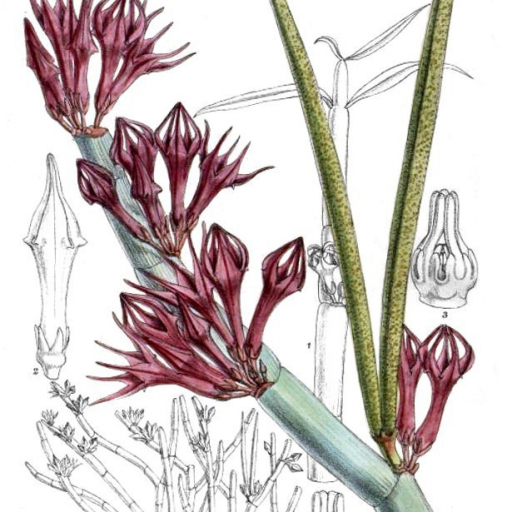
Plant Overview
Often called the Grey Ceropegia or Cardoncillo, this Canary Island native looks more like a collection of weathered driftwood or volcanic sticks than a typical houseplant. While it is a close relative of the popular "String of Hearts," it has traded delicate leaves for a rugged, architectural silhouette designed to survive the harsh sun of the Atlantic islands. It is a favorite among minimalist decorators and succulent collectors who appreciate its "alien" aesthetic.
🔍 How to Identify
- 🌵 Stem Structure: The plant consists of thick, cylindrical, succulent stems that appear almost leafless. They have a distinct dusty grey, olive, or reddish-brown hue, often resembling old bones or sticks.
- 🌸 Lantern Flowers: It produces striking, tubular flowers that are a deep chocolate-maroon or dark purple. These blooms have a unique "cage" or lantern shape at the top, typical of the Ceropegia genus.
- 📏 Growth Habit: It grows in an upright, clumping fashion. As the stems mature, they develop segments (nodes) that can easily be mistaken for bamboo or cacti joints.
🏡 In Your Garden
- ☀️ Sun Seeker: Unlike its trailing cousins, Ceropegia fusca craves high light. To maintain its deep coloring and prevent it from stretching (etiolation), place it in the brightest spot in your home or a sun-drenched patio.
- 🏜️ Mineral-Rich Soil: In the wild, it grows in volcanic cracks. It hates "wet feet," so avoid heavy potting soils. A mix of pumice, grit, and a small amount of coco coir ensures the roots stay dry and healthy.
- 💧 Drought Strategy: This plant is built for neglect. It stores water in its thick stems, so it’s better to underwater than overwater. Only hydrate it when the stems feel slightly less firm to the touch.
⚠️ Safety & Toxicity
- 🐾 Low Risk: Ceropegia fusca is generally considered non-toxic to humans and common household pets like cats and dogs.
- 🧪 Sap Sensitivity: While not poisonous, the milky sap inside the stems can be a mild skin irritant for some people. It is always wise to wash your hands after taking cuttings or pruning.
✨ Fun Fact
🪰 The Fly Prison: The flowers are actually sophisticated "pitfall traps." They use a temporary prison system to ensure pollination. Small flies are lured inside the tube by a scent; once inside, downward-pointing hairs prevent them from leaving until they have been thoroughly dusted with pollen. Only then do the hairs wither, allowing the fly to escape and visit the next flower!

Detailed Care Instructions
Ceropegia fusca, commonly known as the "bushman's pipe," is a unique and interesting plant to grow. Here are some tips to help you successfully grow Ceropegia fusca:
- Find a suitable location: Ceropegia fusca requires bright, indirect light. Place the plant in a location where it can receive a few hours of sunlight per day, but avoid direct sunlight as it can scorch the leaves.
- Watering: Water the plant thoroughly, allowing the soil to dry slightly between waterings. It is important not to overwater, as Ceropegia fusca prefers slightly drier conditions.
- Soil: Use a well-draining potting mix for your Ceropegia fusca. A mix of equal parts peat moss, perlite, and sand would be suitable. This will prevent waterlogging and root rot.
- Temperature and humidity: Ceropegia fusca prefers warm temperatures ranging from 65°F to 85°F (18°C to 29°C). It also prefers moderate humidity levels. Avoid placing it near drafts or cold areas.
- Propagation: Ceropegia fusca can be propagated through stem cuttings. Take a stem cutting with at least two nodes, remove the lower leaves, and plant it in a well-draining potting mix. Keep the cutting moist and warm, and roots should develop within a few weeks.
- Fertilizer: Feed the plant with a balanced, water-soluble fertilizer once a month during the growing season (spring and summer). Do not fertilize during winter when the plant is dormant.
- Pruning: Pruning is not usually necessary for Ceropegia fusca. However, you can trim any leggy or straggly growth to promote bushier growth.
- Pests and diseases: Keep an eye out for common houseplant pests, such as aphids, mealybugs, and spider mites. Treat any infestations promptly using insecticidal soap or neem oil.
Remember, Ceropegia fusca is a sensitive plant, so it may take some trial and error to find the ideal conditions for its growth. Patience and observation will help you create the best environment for this unique plant.

Place in a bright room that is sun drenched almost all day. Or directly in a south-facing window.

Ceropegia Fusca plant should be watered regularly but not excessively. It is important to ensure that the soil is moist but not waterlogged, as this can lead to root rot. It is recommended to water the plant once a week during the growing season, and less frequently in the winter months.
When watering the plant, it is best to use room temperature water and to avoid getting water on the leaves. Water should be directed to the base of the plant, around the roots. It is important to allow the soil to dry out slightly in between watering, as the plant does not like to sit in soggy soil.
If the leaves begin to wilt or turn yellow, this may be a sign that the plant is not getting enough water. On the other hand, if the leaves become mushy or show signs of mold, this may indicate that the plant is being overwatered.
In addition to regular watering, it is important to provide Ceropegia Fusca plant with adequate drainage and airflow, as this can help prevent issues with moisture and mold. Regularly checking the soil and adjusting watering frequency as needed can also help ensure the health and happiness of this unique and interesting plant.
To fertilize this plant, use a balanced, water-soluble fertilizer with an equal N-P-K ratio. Dilute the fertilizer to half strength and apply every two weeks during the growing season. Do not fertilize during the winter months when the plant is dormant. Be sure to water the plant thoroughly before and after fertilization to prevent root burn.
Ceropegia Fusca plant prefers a well-draining soil mix that is composed of a combination of perlite, sand, and peat moss. The soil should be rich in organic matter but should not contain too much clay as it can lead to soil compaction and poor drainage. A pH range of 6.0 to 7.5 is suitable for this particular plant species. It is important to ensure that the soil is kept moist but never waterlogged, as excess water can lead to root rot. Adding a layer of mulch on top of the soil can help retain moisture and prevent soil erosion while providing additional nutrients to the plant.
Propagation of this plant can be done by taking stem cuttings. Select a healthy stem and cut a section that is about 4-6 inches in length. Remove the leaves from the bottom 2 inches of the stem. Dip the cut end of the stem into a rooting hormone and insert into a pot filled with well-draining soil. Water the plant thoroughly and keep in a warm, bright location. In a few weeks, roots should start to appear and new growth will emerge from the top. Once the plant has established itself, it can be transplanted into a larger pot or into the ground.








