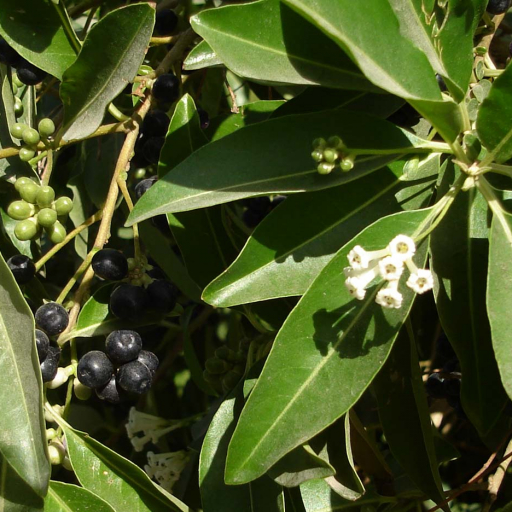
Plant Overview
Known as the "Day-blooming Jasmine" or "Day Jessamine," Cestrum diurnum is the sun-loving sibling of the famous Night-blooming Jasmine. Native to the West Indies, this evergreen shrub is a sensory delight, releasing a powerful, sweet fragrance that smells remarkably like white chocolate or cocoa butter during the heat of the day. It is a favorite for those who want a fragrant garden while they are actually awake to enjoy it!
🔍 How to Identify
- 🌿 Glossy Foliage: The leaves are long, oval, and have a bright, polished green sheen that stays vibrant throughout the year.
- 🎺 Tubular Blooms: It produces clusters of small, white, trumpet-shaped flowers that flare out at the tips, similar to tiny stars.
- 🌑 Inky Berries: After flowering, the plant produces small, glossy berries that turn from green to a deep, dark purple or near-black color.
🏡 In Your Garden
- 🦋 Pollinator Paradise: Because it blooms and scents during the day, it is a primary destination for honeybees and various butterfly species looking for a nectar-rich snack.
- ✂️ Vigorous Growth: This plant is a fast grower and can become quite "leggy" or tall. Regular pruning is essential to keep it as a tidy shrub rather than a sprawling, messy thicket.
- 🌱 Adaptable Nature: It is quite hardy and isn't picky about soil types, though it thrives best in well-draining spots with plenty of organic matter.
⚠️ Safety & Toxicity
- 🚫 High Toxicity: All parts of the Cestrum diurnum are toxic if ingested, especially the unripe green berries.
- 🐾 Pet & Livestock Warning: It contains a vitamin D-like substance that can cause severe calcium imbalances (hypercalcemia) in horses, cattle, and household pets. Keep it away from curious chewers and small children.
✨ Fun Fact
Unlike most "Jasmines," which belong to the olive family, the Day-blooming Jasmine is actually a member of the Solanaceae family—making it a distant, fragrant relative of the tomato, potato, and deadly nightshade!

Detailed Care Instructions
To grow Cestrum diurnum, also known as Day Blooming Jasmine, follow these steps:
- Location: Choose a sunny spot in your garden or a place with partial shade. This plant prefers a warm climate with temperatures between 70-90°F (21-32°C).
- Soil: Ensure the soil is well-draining and fertile. Cestrum diurnum can tolerate a variety of soil types, including clay, loam, and sandy soil. However, it prefers slightly acidic to neutral soil with a pH of 6.0-7.5.
- Planting: Dig a hole that is approximately twice the size of the plant's root ball. Place the plant in the hole and backfill with soil, gently firming it around the roots. Water thoroughly after planting.
- Watering: Keep the soil consistently moist but not waterlogged. Water deeply once or twice a week, especially during hot and dry periods. Reduce watering in cooler months, allowing the soil to dry out slightly between watering.
- Fertilization: Apply a balanced, slow-release fertilizer in early spring and mid-summer to provide essential nutrients. Follow the package instructions for the appropriate dosage and apply it evenly around the base of the plant. Water thoroughly after applying fertilizer.
- Pruning: Prune Cestrum diurnum in early spring to remove dead or damaged branches and shape the plant. This species responds well to pruning and can be trained as a shrub or a small tree. Regular pruning helps maintain a compact shape and encourages new growth.
- Mulching: Apply a layer of organic mulch around the base of the plant to help retain moisture, reduce weed growth, and maintain a stable soil temperature. Ensure the mulch does not touch the plant stems directly.
- Pests and diseases: Cestrum diurnum is generally resistant to pests and diseases. However, keep an eye out for aphids, spider mites, or whiteflies. If detected, treat affected areas with an appropriate insecticide or use natural remedies like neem oil or insecticidal soap.
- Propagation: Cestrum diurnum can be propagated by stem cuttings or from seeds. Take stem cuttings in spring or early summer, dip the cut end in rooting hormone, and plant them in well-draining soil. Provide bottom heat and keep the soil consistently moist until roots develop. Seeds can be sown in spring after the last frost.
- Winter protection: While Cestrum diurnum is typically hardy in USDA zones 9-11, it may require winter protection in cooler regions. Provide a thick layer of mulch around the base of the plant and consider covering it with a frost cloth during freezing temperatures.
Remember to research any specific requirements or considerations for your region to ensure successful growth.

Place in a bright room that is sun drenched almost all day. Or directly in a south-facing window.

To water this plant, it is best to use a watering can or hose with a gentle stream of water. The soil should be moist but not waterlogged, so watering once or twice a week should be sufficient. It is important to ensure that the water is not pooling around the base of the plant as this could lead to root rot. Checking the soil regularly to ensure it is not too dry or too wet is recommended. During hot or dry weather, it may be necessary to water more frequently.
To fertilize this plant, use a balanced fertilizer with equal amounts of nitrogen, phosphorus, and potassium. Apply the fertilizer once a month during the growing season, which is typically from spring to fall. It's important to dilute the fertilizer to half strength to prevent burning the roots. Water the plant thoroughly before and after fertilizing to help distribute the nutrients evenly. Avoid fertilizing during the dormant season (winter) when the plant is not actively growing.
The ideal soil type for Cestrum Diurnum plants is one that is well-draining and has good air circulation. This plant prefers soil that is rich in nutrients, with a pH level of 6.0 to 7.0. A mixture of sand, loam, and compost is recommended to enhance the nutrient content and improve drainage.
It is important not to overwater the plant, as this can lead to root rot and other fungal diseases. Therefore, the soil should be allowed to dry out between watering intervals to avoid waterlogging.
It is recommended to fertilize Cestrum Diurnum plants once a month during the growing season with a balanced soluble fertilizer. This will help support the plant's growth and encourage healthy foliage and blooms.
To propagate this plant, you will need to take cuttings from a mature and healthy plant. Select a stem that does not have any flowers or buds on it and cut it at a 45-degree angle using a pair of sharp pruning shears. The cutting should be around 4 to 6 inches long.
Remove the leaves from the bottom half of the cutting, leaving just a few leaves at the top. Dip the cut end of the stem in rooting hormone powder to encourage the growth of roots. Then, plant the cutting in a well-draining potting mix and water it thoroughly.
Cover the pot with a plastic bag or a clear plastic container to create a humid environment for the cutting. Place the potted cutting in a bright but indirect light location. Water the cutting regularly, making sure the soil is moist but not waterlogged.
Within a few weeks, you should start to see new growth on the cutting. Once the cutting has established roots and grown enough to fill the pot, you can transplant it to a larger container or into your garden.
Common pests of the day queen include Spider mites, aphids, larvae. Make a habit of checking your day queen frequently for pests so that any infestations can be caught and managed early.








