Plant Overview
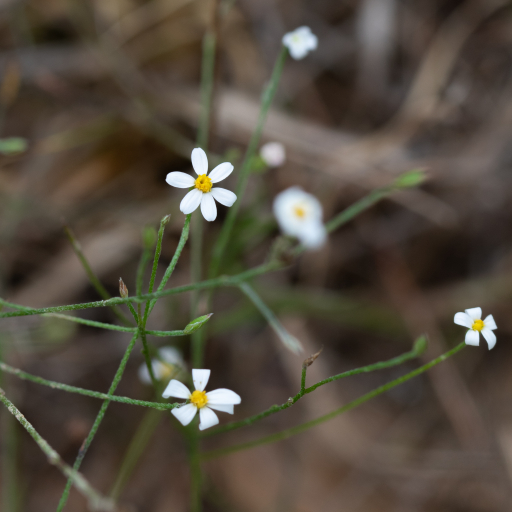
The Arkansas Leastdaisy, often called the "Tiny Aster," is a delicate but resilient wildflower native to the sandy prairies and rocky glades of the South-Central United States. Though it appears fragile, this miniature beauty is a survivalist, often thriving in harsh, dry soils where more pampered garden plants would perish. In the spring, these plants create a "stardust" effect across the landscape, covering the ground in a carpet of tiny, cheerful white blooms.
🔍 How to Identify
- 🌼 Petite Blooms: The flowers are remarkably small, often less than half an inch wide, featuring thin white to pale lavender petals (ray florets) surrounding a bright golden-yellow center.
- 🌿 Bristly Foliage: The stems and narrow, spoon-shaped leaves are covered in fine, stiff hairs, giving the plant a slightly textured, grayish-green appearance.
- 📏 Low Growth Habit: This is a true "least" daisy, typically standing only 2 to 10 inches tall, often branching out from the base to form a dainty, tufted mound.
🏡 In Your Garden
- ☀️ The Rock Garden Specialist: Because it naturally evolves in sandy or gravelly soils, the Arkansas Leastdaisy is perfect for xeriscaping or rock gardens. It requires excellent drainage and can actually "drown" or rot if planted in heavy, clay-rich potting soil.
- 🦋 Micro-Pollinator Hub: While too small for large birds, these flowers are high-value targets for native sweat bees and small butterflies. Planting them in clusters helps these tiny pollinators find a reliable nectar source during the mid-to-late spring.
⚠️ Safety & Toxicity
- ✅ Non-Toxic Status: Chaetopappa asteroides is generally considered non-toxic to humans, dogs, and cats. It is not known to contain any harmful alkaloids.
- 🧤 Sensitive Skin: Like many members of the Aster family (Asteraceae), the bristly hairs on the stems can occasionally cause very mild mechanical skin irritation for people with highly sensitive skin if handled frequently.
✨ Fun Fact
The genus name Chaetopappa comes from the Greek words chaite (long hair) and pappos (old man). This refers to the crown of hair-like bristles on the seeds, which act like tiny parachutes to help the wind carry them to new homes!

Detailed Care Instructions

Place in a bright room that is sun drenched almost all day. Or directly in a south-facing window.

Water-loving plants flourish in wet or sloppy soil and near ponds. The extensive root system enables these plants to absorb plenty of water. The surface of the soil should be kept moist at all times. Place your pot in a container filled with water to guarantee that plants get enough water. If the ground becomes dry, it is recommended that you water it well. Plants in smaller pots will need to be watered more frequently. Water the soil in which the plant is standing thoroughly using a watering can.








