Plant Overview
Known by the evocative name Southern Mountain Misery, this low-growing shrub is a rugged survivor of the California chaparral. Despite its name, it is a botanical wonder, creating a soft, fern-like carpet across rocky hillsides. It earned its "miserable" reputation from early pioneers and hikers who found its sticky, aromatic resin nearly impossible to scrub off their boots and clothes.
🔍 How to Identify
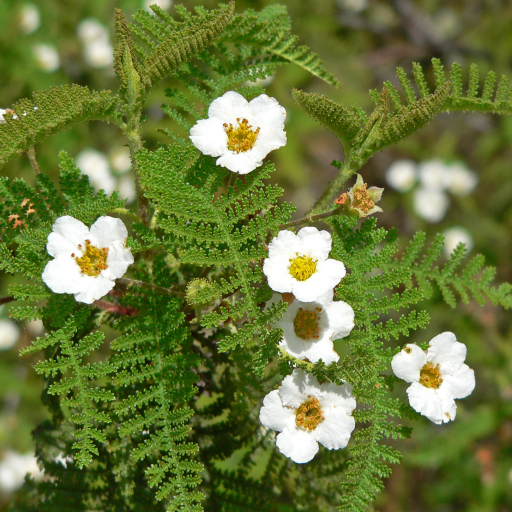
- 🌿 The Foliage: The leaves are finely dissected and look remarkably like miniature ferns. They are dark green and grow in dense, lace-like clusters.
- 🌸 The Flowers: As a member of the Rose family, it produces charming white flowers with five petals and a cluster of yellow stamens at the center, resembling tiny wild strawberry blooms.
- Sticky The Texture: If you touch the leaves, they feel tacky or resinous. This is due to glandular hairs that exude a strong, spicy, and medicinal scent that can linger in the air.
🏡 In Your Garden
- ☀️ Drought Warrior: This plant is exceptionally drought-tolerant and thrives in poor, rocky, or sandy soils where other plants might struggle. It’s a "set it and forget it" choice for xeriscaping.
- 🔥 Fire Resilience: In its native habitat, Southern Mountain Misery is a "resprouter." After a wildfire, it quickly regrows from its underground root system, often being one of the first plants to bring green back to a scorched landscape.
- 🌱 Groundcover Habit: Because it spreads via underground runners (rhizomes), it is excellent for stabilizing slopes and preventing erosion in dry, sunny areas.
⚠️ Safety & Toxicity
- 🧤 Status: Generally non-toxic, but the "Misery" is real for your laundry.
- 🐕 Details: While not known to be poisonous to pets or children, the resin is incredibly sticky. It can trap dirt and burrs, which can be a nuisance for long-haired dogs or outdoor gear. The scent is very potent and may be overwhelming to some people if planted right next to a window or doorway.
✨ Fun Fact
Southern Mountain Misery is an "actinorhizal" plant, meaning it has a symbiotic relationship with nitrogen-fixing bacteria in its roots. This allows it to "create its own fertilizer," helping it thrive in nutrient-poor soils where most other plants would starve!

Detailed Care Instructions
To grow Chamaebatia Australis, commonly known as the bush pea or greasewood, you can follow these steps:
- Choose the right location: Chamaebatia Australis prefers full sun and well-draining soil. Ensure that the area you select receives at least 6 hours of direct sunlight per day.
- Prepare the soil: This plant is adaptable to a variety of soils, but it thrives in loamy or sandy soil. Amend the soil with organic matter like compost or well-rotted manure to improve its fertility and drainage.
- Obtain plant materials: You can buy Chamaebatia Australis seeds or purchase young plants from a local nursery. If you choose to start with seeds, keep in mind that they may take longer to establish.
- Planting: If using seeds, sow them directly in the ground after the last frost of spring. Sow them at a depth of around 1/4 inch and keep the soil moist until germination. If using young plants, dig a hole slightly larger than the root ball and place the plant in it, backfilling with soil and gently firming around the base.
- Watering: Chamaebatia Australis is drought-tolerant once established, but it requires regular watering during its establishment period. Water deeply but infrequently, allowing the soil to dry between waterings. Once well-established, the plant will require minimal watering.
- Pruning: Regular pruning is not necessary for Chamaebatia Australis, but you can trim back any dead or damaged branches if necessary. This plant tends to have a naturally tidy appearance.
- Mulching: Apply a layer of organic mulch around the base of the plant to help retain moisture, suppress weed growth, and insulate the roots.
- Maintenance: Chamaebatia Australis is generally a low-maintenance plant. However, keep an eye out for any pests, diseases, or weeds. Remove any weeds promptly, and address pest and disease issues with appropriate organic solutions if necessary.
By following these guidelines, you should be able to successfully grow Chamaebatia Australis in your garden or landscape.

Place in a bright room that is sun drenched almost all day. Or directly in a south-facing window.

1. Identify the plant: Before you can water the plant, you need to make sure that you have correctly identified it.
2. Choose an appropriate watering method: The Chamaebatia Australis plant prefers deep, infrequent watering. One way to achieve this is by using a soaker hose or drip irrigation system that allows water to slowly soak into the soil.
3. Check the soil: Before watering, check the soil to determine if it needs moisture. Insert your finger about an inch into the soil to feel for moisture. If the soil feels dry, it’s time to water.
4. Water deeply: When watering, make sure to give the plant a deep soak. Water until the soil feels moist to a depth of at least 6 inches.
5. Avoid overwatering: Overwatering can cause root rot and other problems. Always allow the soil to dry out slightly before watering again.
6. Water at the right time: The best time to water your Chamaebatia Australis plant is in the morning or evening when temperatures are cooler. This will help avoid evaporation and ensure that the plant has time to absorb the moisture before the heat of the day.
7. Monitor the plant: Keep a close eye on the plant and adjust the watering as needed. If the leaves wilt or the soil feels overly dry, it may be time to water again.
To fertilize this plant, apply a balanced slow-release fertilizer in the spring before new growth appears. Use a fertilizer with equal or lower nitrogen content compared to phosphorus and potassium. Follow the manufacturer's instructions for application rate, and apply the fertilizer evenly around the base of the plant. Water thoroughly after fertilization. Avoid fertilizing in the fall as it can encourage new growth that may not have time to harden off before winter.
The recommended soil for Chamaebatia Australis should be well-draining and acidic in nature with a pH range of 4.5 to 5.5. It should also be rich in organic matter and have good moisture-retaining properties. The ideal soil texture should be loamy with a good mixture of sand, silt, and clay. The plant prefers a slightly sandy soil that is well-aerated and provides good drainage. Avoid using heavy clay soils as they tend to hold water and can lead to root rot. It is also important to ensure that the soil has good fertility levels so that the plant can grow and thrive. Adding compost or well-rotted manure to the soil will help improve its overall fertility.
To propagate this plant, you will need to take cuttings from a healthy, mature plant. Choose a stem that is several inches long and has several leaves. Using a sharp, sterilized knife, cut the stem at a 45-degree angle just below a node (a point where a leaf grows from the stem). Remove the leaves from the lower half of the stem, leaving at least two at the top.
Dip the cut end of the stem into a rooting hormone powder and then insert it into a pot filled with moist sand or soil. Water the cutting thoroughly and cover it with a clear plastic bag to maintain humidity. Place the pot in a warm, bright spot, but out of direct sunlight.
Check the cutting regularly to ensure the soil remains moist, but not overly wet. After a few weeks, you should start to see new growth on the cutting. Once the cutting has developed roots and new growth, you can transplant it into a larger pot or outdoors in a suitable location.








