Plant Overview
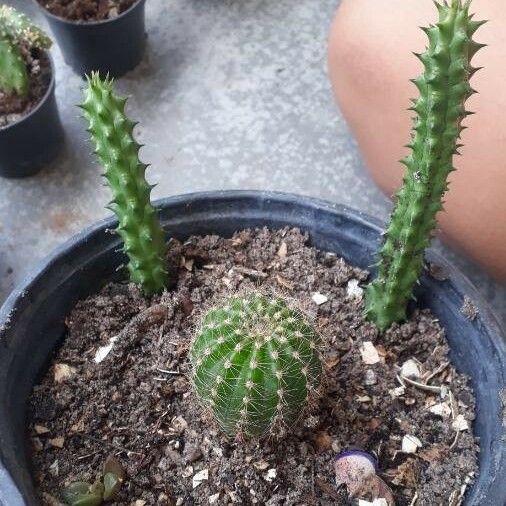
The Peanut Cactus is a quirky, fast-growing succulent that looks exactly like its namesake—clusters of finger-sized "peanuts" spilling over the sides of a pot. Native to the high-altitude mountain regions of Argentina, it has become a global favorite because it is nearly bulletproof and rewards even forgetful gardeners with a stunning floral show. It’s the perfect "starter cactus" for those who want big results with little effort.
🔍 How to Identify
- 🥜 The Stems: Features pale green, cylindrical branches that are about the size of a human thumb. These stems grow prostrate (laying down) and branch out rapidly to form dense, matted clumps.
- ☁️ The Spines: Covered in short, white, bristly spines. While they look soft and fuzzy from a distance, they are actual spines that can hitch a ride on your skin or clothing if handled roughly.
- 🔥 The Flowers: Produces massive, funnel-shaped blooms in a vivid "safety orange" or deep poppy-red. These flowers are surprisingly large compared to the small stems and usually appear in late spring.
🏡 In Your Garden
- 🧗 Growth Habit: Because of its creeping nature, this plant is best suited for hanging baskets or the edge of a rockery. It loves to "flow" over the sides of containers like a green, prickly waterfall.
- ❄️ The Winter Chill: To trigger those famous orange flowers, this cactus actually needs a cool, dry winter dormancy period. If kept in a cozy, warm living room all year, it will stay green but will likely refuse to bloom the following year.
- ✂️ Easy Multiplication: This is one of the easiest cacti to propagate. Any "peanut" that breaks off can simply be tucked back into the soil, where it will quickly grow its own roots.
⚠️ Safety & Toxicity
- 🐾 Non-Toxic: This plant is generally considered safe and non-toxic to cats, dogs, and humans.
- 🌵 Physical Irritant: While not poisonous, the tiny white bristles can easily lodge in the skin or paws, causing significant itching and irritation. It is best kept out of reach of curious pets who might try to bat at the dangling stems.
✨ Fun Fact
Because it is so prolific and easy to share, many Peanut Cacti found in home collections today are likely direct clones of the original specimens collected in Argentina over a century ago!

Detailed Care Instructions
To grow a Chamaecereus Silvestrii, also known as the peanut cactus, follow these steps:
- Choose a suitable location: Select a spot that receives bright, indirect sunlight. Chamaecereus Silvestrii prefers warm temperatures and does well in a temperature range of 60-85°F (15-29°C).
- Prepare the pot and soil: Use a well-draining pot with drainage holes. Fill the pot with a cactus mix or a well-draining soil mixture. You can also add some perlite or sand to improve drainage.
- Planting the cutting or seed: You can propagate Chamaecereus Silvestrii from cuttings or seeds. For cuttings, allow the cut end to dry for a few days before planting. For seeds, sow them in the soil and keep them slightly moist until germination.
- Watering: Water the plant thoroughly whenever the top inch of soil feels dry. Chamaecereus Silvestrii prefers to be slightly under-watered rather than over-watered. During winter, reduce watering and allow the soil to dry out between waterings.
- Fertilizing: Feed the plant with a balanced cactus fertilizer during the growing season (spring and summer) according to the package instructions. Avoid fertilizing during winter.
- Pruning: Chamaecereus Silvestrii usually doesn't require significant pruning. However, you can trim back any dead or damaged parts of the plant to maintain its shape.
- Pests and diseases: Watch out for common cactus pests like mealybugs and scale insects. Treat infestations with an appropriate insecticidal soap or neem oil.
- Propagation: If you wish to propagate your Chamaecereus Silvestrii, you can take stem cuttings and allow them to callus for a few days before sticking them into well-draining soil.
Remember, Chamaecereus Silvestrii can be slow-growing, so be patient and provide it with the necessary care.

Place in a bright room that is sun drenched almost all day. Or directly in a south-facing window.

To properly water the Chamaecereus Silvestrii plant, it is important to follow a few guidelines:
1. Understand the water requirements: Chamaecereus Silvestrii plants prefer moderate watering. They are succulents that can tolerate drought, so it is crucial not to overwater them. Too much water can lead to root rot and other fungal diseases.
2. Choose the right watering technique: The most effective way to water this plant is through the soak and dry method. This means thoroughly saturating the soil and allowing it to dry out completely before the next watering. Avoid misting or spraying the plant, as the water may not reach the roots properly.
3. Consider the pot and soil: Use well-draining soil specifically formulated for succulents. The pot should have drainage holes at the bottom to prevent the accumulation of excess water. This ensures that the roots do not sit in water, preventing rot.
4. Observe the plant and soil: Before watering, check the soil moisture level by inserting your finger about an inch deep into the soil. If it feels dry, it is time to water. However, if it still feels slightly moist, wait a few more days before watering.
5. Watering frequency: Generally, Chamaecereus Silvestrii plants require watering every 1-2 weeks during the growing season (spring and summer). However, this can vary depending on factors such as temperature, humidity, and sunlight. During the dormant season (fall and winter), reduce watering to once every 3-4 weeks.
6. Watering technique: When watering, pour water slowly and evenly around the base of the plant until it starts to flow out of the drainage holes. This ensures thorough hydration of the root system. Avoid wetting the foliage excessively.
7. Allow proper drainage: After watering, remove any excess water that accumulates in the saucer or tray beneath the pot. Discard this water to prevent the plant from sitting in it.
8. Adapt to seasonal changes: During winter, when the plant goes into a dormancy phase, reduce watering and allow the soil to dry out more between watering sessions.
Remember, every plant is unique, and factors such as the plant's size, pot size, and environmental conditions will influence its watering needs. By observing the plant and adjusting the watering schedule accordingly, you will help maintain the health and vitality of your Chamaecereus Silvestrii.
To fertilize your Chamaecereus Silvestrii plant, follow these instructions:
- Choose a balanced, water-soluble fertilizer with equal parts of nitrogen (N), phosphorus (P), and potassium (K). This is typically represented as NPK 10-10-10 or similar ratios.
- Dilute the fertilizer according to the instructions on the packaging. Typically, a dilution ratio of 1 teaspoon of fertilizer per gallon of water is recommended.
- Water the plant thoroughly prior to fertilizing to ensure the soil is moist.
- Slowly pour the diluted fertilizer solution around the base of the plant, avoiding getting it on the foliage.
- Ensure that the fertilizer is evenly distributed in the soil by gently mixing it with a small garden trowel or by watering lightly after application.
- Repeat the fertilization process once a month during the active growing season, which usually occurs from spring to early autumn.
- During the dormant period in winter, reduce or suspend fertilization to allow the plant to rest.
- Monitor the plant's response to the fertilizer. Adjust the amount or frequency of fertilization if necessary to avoid overfeeding, which can damage the plant.
- Always follow the specific instructions provided with your chosen fertilizer, as they may vary slightly between brands.
When cultivating the plant with the scientific name Chamaecereus Silvestrii, it is important to choose the appropriate soil to ensure optimal growth and health. This plant prefers a well-draining soil mix that consists of a combination of organic and inorganic materials.
A suitable soil mix for Chamaecereus Silvestrii can be achieved by blending equal parts of potting soil, perlite, and coarse sand. Potting soil provides essential nutrients and organic matter, promoting healthy root development and overall plant growth. Perlite and coarse sand help improve drainage, preventing excess moisture from accumulating around the roots, which can lead to root rot or other diseases.
Additionally, incorporating some peat moss into the soil mix can also be beneficial for Chamaecereus Silvestrii. Peat moss helps retain moisture in the soil while still allowing for proper drainage, ensuring that the plant's roots stay hydrated without becoming waterlogged.
To summarize, an ideal soil mix for Chamaecereus Silvestrii should consist of equal parts potting soil, perlite, and coarse sand, with the possible inclusion of peat moss. This combination provides the necessary nutrients, drainage, and moisture retention to support the healthy growth and development of the plant.
To propagate Chamaecereus Silvestrii, you can follow these steps:
- Begin by selecting a healthy and well-established parent plant. Ensure that it is free from any diseases or pests.
- Prepare a clean and sharp knife or pair of scissors. You may also need a clean gardening shears for larger sections.
- Choose the appropriate method of propagation based on the plant's characteristics and your preferences. Chamaecereus Silvestrii can be propagated through stem cuttings or offsets.
- For stem cuttings, carefully identify a healthy, non-flowering stem. Make a clean cut just below a pair of leaves or nodes. Remove any lower leaves to expose the nodes where roots will develop.
- Allow the cutting to dry for a day or two, which will help to prevent rotting during the rooting process.
- Next, prepare a well-draining potting mix suitable for cacti and succulents. You can use a combination of perlite, sand, and potting soil to create a suitable mixture.
- Gently insert the cutting into the potting mix, making sure that at least one node is buried in the soil.
- Place the pot in a warm and bright location with indirect sunlight. Avoid exposing the cutting to direct sunlight, as it may cause sunburn.
- Water the cutting sparingly, allowing the soil to dry out between waterings. Overwatering can lead to root rot, so it is important to exercise caution.
- After a few weeks, the cutting should start developing roots. You can gently tug on it to check for resistance, indicating that roots have formed.
- Once a healthy root system has developed, you can transplant the new plant into a slightly larger pot or its permanent location.
- For propagation through offsets, identify the small plantlets that develop alongside the parent plant. These can be detached and potted in a similar manner as the stem cuttings.
- Remember to provide the same care and conditions to the propagated plants as you would to the mature Chamaecereus Silvestrii, including well-drained soil, bright indirect light, and moderate watering.
Following these steps should help you successfully propagate Chamaecereus Silvestrii and expand your collection of these beautiful plants.
Common pests of the peanut cactus include Scale insect, mealybugs, spider mites. Make a habit of checking your peanut cactus frequently for pests so that any infestations can be caught and managed early.








