Plant Overview
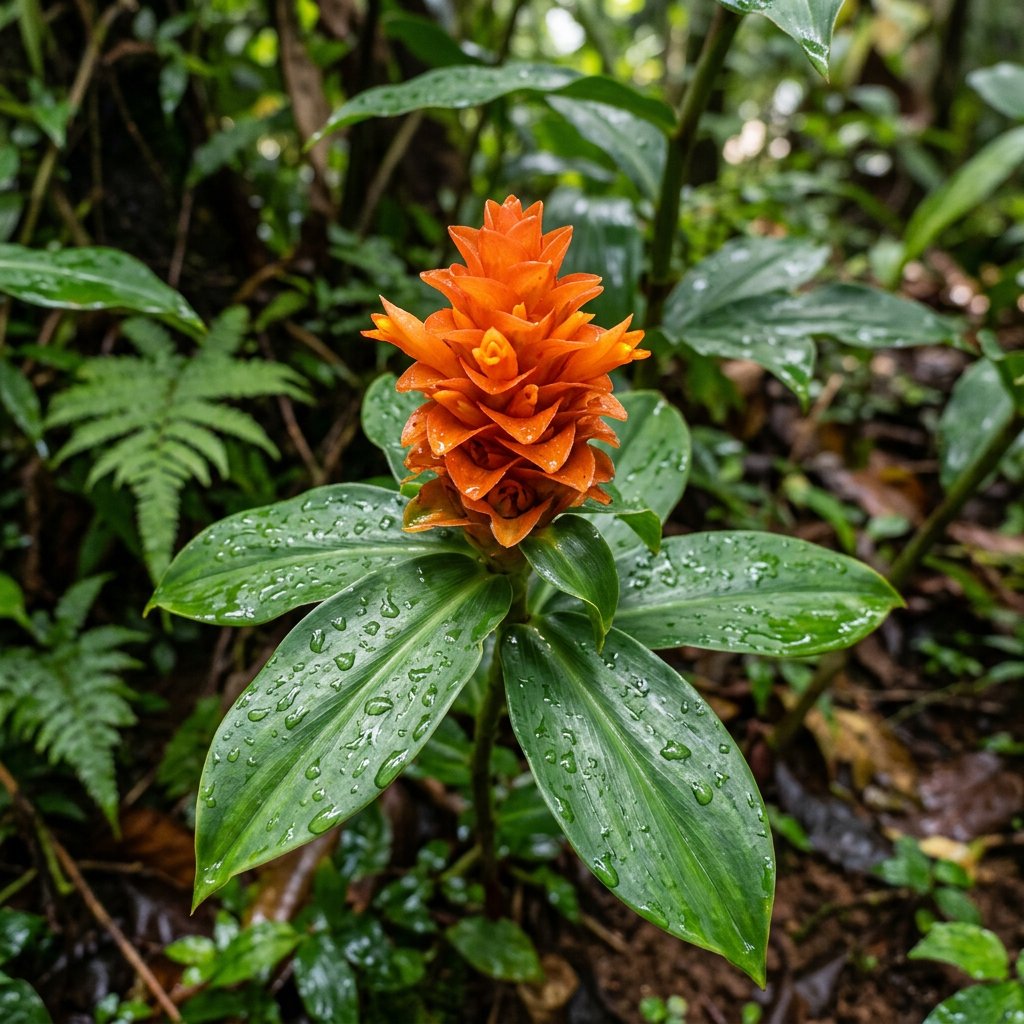
Widely known as the "Insulin Plant" or "Fiery Costus," this Brazilian native is a showstopper in any tropical collection. It earned its famous nickname from its traditional use in Ayurvedic medicine, where it is believed to help manage blood sugar levels. Beyond its medicinal reputation, it is beloved for its "stepped" spiral growth and vibrant, crinkled flowers that look like they were crafted from delicate orange tissue paper.
🔍 How to Identify
- 🌀 Spiral Foliage: The most striking feature is the way the leaves are arranged in a perfect, ascending spiral around the central stem, giving it a sculptural look.
- 🍃 Glossy Leaves: The leaves are large, oblong, and a rich, dark green with a smooth, almost succulent texture.
- 🔥 Crinkled Blooms: The flowers are bright orange, funnel-shaped, and appear to emerge from cone-like structures at the tips of the stems.
- 📏 Compact Stature: Unlike some of its taller ginger relatives, this species usually stays between 2 to 3 feet tall, making it an excellent choice for containers.
🏡 In Your Garden
- 💧 Thirsty Nature: Coming from the rainforest floor, this plant "drinks" more than your average houseplant. It prefers soil that stays consistently moist; if the soil dries out completely, the leaves will rapidly lose their turgor and droop.
- ☁️ Humidity is Key: It thrives in "sticky" air. If you are growing it indoors, placing it near a humidifier or on a pebble tray will prevent the leaf tips from turning brown and crispy.
- 🍳 Light Sensitivity: While it loves bright light to produce those fiery flowers, direct, mid-day summer sun can bleach the leaves. It performs best in "dappled" sunlight, mimicking the protection of a forest canopy.
⚠️ Safety & Toxicity
- 🐾 Pet Safety: Chamaecostus cuspidatus is generally considered non-toxic to cats and dogs, making it a safe addition to a pet-friendly household.
- 🩺 Medical Caution: Although it is traditionally consumed for its anti-diabetic properties, you should never use this plant as a substitute for prescribed medicine. Ingesting large quantities without medical supervision can lead to digestive upset or interfere with existing treatments.
✨ Fun Fact
The "Insulin Plant" is part of the Costaceae family, often called "Spiral Gingers." While they look like true gingers, they are a separate lineage that evolved their unique spiral stem as a clever way to ensure that the lower leaves aren't shaded by the ones above them!

Detailed Care Instructions
| Humidity | Normal |
| Lighting | Shade |
| Difficulty | Medium |
| Hibernation | Cold Period |
| Temperature | 18°C - 30°C |
| Hardiness Zones | 9 - 11 |
To grow Chamaecostus cuspidatus, also known as Fiery Costus or Spiral Ginger, follow these steps:
- Propagation: This plant can be propagated from seeds or root divisions. If you have access to a mature plant, you can divide the rhizomes and plant them separately. Otherwise, obtain seeds from a reputable source.
- Planting: Choose a well-draining pot or choose a suitable location in the garden with partial shade. The plant prefers warm, tropical climates. Ensure the soil is rich in organic matter, such as compost or well-rotted manure.
- Watering: Keep the soil consistently moist but avoid overwatering, as it can lead to root rot. Mist the leaves occasionally with water to increase humidity.
- Fertilization: Use a balanced, slow-release fertilizer during the growing season (spring to fall). Follow the instructions on the package for application rates.
- Temperature and humidity: Chamaecostus cuspidatus prefers a warm and humid environment. If growing indoors, maintain a temperature between 18-27°C (65-80°F) and place a humidity tray nearby or use a humidifier.
- Pruning: Remove dead or damaged leaves to maintain a tidy appearance. The plant produces new shoots from the base of the plant, so you can trim older stems to encourage new growth.
- Pests and diseases: Monitor the plant for common pests like aphids or spider mites. If infested, treat with a suitable organic insecticide. Watch out for fungal diseases and ensure good air circulation around the plant.
- Winter care: Chamaecostus cuspidatus is not frost-tolerant. If you live in a colder climate, move the potted plant indoors or provide protective cover. Reduce watering during winter when the plant enters a period of dormancy.
- Harvest: The plant produces attractive orange-red flowers, and the roots can be harvested after one year of growth. Harvest by lifting the rhizomes from the soil and cutting off the stems. Rinse and dry the roots for later use.
With proper care and maintenance, your Chamaecostus cuspidatus plant should grow well and provide you with its unique beauty and potential medicinal benefits.

Place in a window with dappled sun or a spot in the middle of a room. Or directly in a window facing west or east.

To water this plant, it is important to make sure the soil is evenly moist but not waterlogged. It is recommended to water the plant deeply and allow the top inch of soil to dry out before watering again. Be careful not to let the plant sit in standing water, as this can lead to root rot. Depending on individual environmental factors, watering frequency may vary, so it is important to monitor the plant closely and adjust watering as needed.
To fertilize this plant, use a balanced fertilizer with equal amounts of nitrogen, phosphorus, and potassium. Apply the fertilizer once a month during the growing season, which is usually from spring until fall. Be careful not to over-fertilize, as this can damage the plant. Water the plant before and after fertilizing to ensure the nutrients are absorbed properly.
Chamaecostus cuspidatus requires well-draining soil that is rich in organic matter and nutrient content. The ideal pH range for the soil is slightly acidic to neutral, with a recommended range of 6.0 to 7.5. The soil should be loose and friable, with a good balance of moisture retention and drainage. A soil mix consisting of peat moss, perlite, and vermiculite is often recommended for optimal growth. Additionally, incorporating composted manure or other organic matter into the soil can promote healthy root development and overall plant growth. It is important to avoid using soil with high clay content as this can lead to poor drainage and nutrient uptake. Regular soil testing and fertilization may be necessary to maintain optimal soil conditions for the plant.
To propagate this plant, you can start by selecting a healthy mature plant with strong roots. Using a sterilized sharp knife or scissors, cut a stem of your chosen plant carefully, making sure that it's at least 3-4 inches in length and has a few leaves attached.
Prepare a container by filling it with moist potting soil mixed with vermiculite or perlite. Dip the bottom end of the cutting in rooting hormone powder before planting it in the soil. Firmly press the soil around the stem to ensure it's stable and upright.
Water the cutting and cover the container with a clear plastic bag or dome. This will help retain moisture and create a humid environment for the plant to grow. Place the container in a warm and brightly lit area but not in direct sunlight.
Keep the soil moist but not waterlogged by misting it with water regularly. After a few weeks, the cutting should start to show signs of growth, which indicates that roots are forming. Once the plant establishes itself, you can transplant it into individual pots or outdoors in the ground.
Common pests of the insulin plant include Mealybugs, spider mites, aphids, thrips. Make a habit of checking your insulin plant frequently for pests so that any infestations can be caught and managed early.








