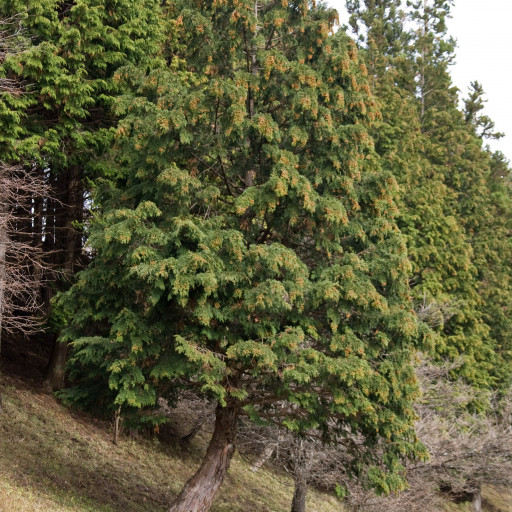
Plant Overview
Known as the Hinoki Cypress, this elegant evergreen is a true aristocrat of the plant world. In its native Japan, it is considered a sacred tree, historically used to build grand temples, shrines, and traditional "ofuro" (wooden bathtubs) due to its rot-resistant wood and divine citrus-like scent. Whether grown as a towering specimen or a tiny, twisted bonsai, the Hinoki Cypress adds a sense of ancient serenity to any space.
🔍 How to Identify
- 🌿 Fan-Like Foliage: The branches are arranged in flattened, horizontal "sprays" that look like delicate green fans or coral reefs.
- ⚪ White Markings: If you flip a leaf over, you will see distinct white "X" or "Y" shaped markings (stomata bands). This is the easiest way to tell it apart from its cousin, the Sawara Cypress.
- 🧶 Scale-Like Texture: The leaves are not needles but rather blunt, soft scales that feel smooth to the touch.
- ⚽ Small Cones: It produces tiny, globose cones about the size of a marble that turn from green to a rich, leathery brown.
🏡 In Your Garden
- 🌱 Patience is a Virtue: This plant is notoriously slow-growing. While this makes it expensive to buy at larger sizes, it also means it won’t outgrow its spot in your garden or container for many years.
- 💧 Humidity over Wet Feet: While it appreciates consistent moisture, it is highly sensitive to "wet feet." Ensure your soil is incredibly well-draining to prevent root rot. It thrives best in areas with high atmospheric humidity.
- 🛡️ Wind Protection: Hinoki Cypress dislikes harsh, drying winter winds, which can cause "winter burn" or browning on the delicate tips of the foliage.
⚠️ Safety & Toxicity
- 🟢 Non-Toxic: The Hinoki Cypress is generally considered non-toxic to cats, dogs, and humans. It is a popular choice for pet-friendly landscapes.
- 🧴 Skin Sensitivity: Though not poisonous, the resins and oils in the foliage can cause mild skin irritation or contact dermatitis in sensitive individuals. It is always a good idea to wear gloves when pruning.
✨ Fun Fact
For over 1,300 years, the Ise Grand Shrine in Japan—the most sacred Shinto shrine—has been completely demolished and rebuilt every 20 years using only Hinoki wood. This practice ensures the architectural techniques are passed down through generations.

Detailed Care Instructions
The Taiwan cypress (Chamaecyparis taiwanesis) is another cypress species that is closely related to the Japanese species. It has smaller cones, smaller scales, and leaves with a more acute apex.
Does Hinoki cypress lose its leaves?
It is an evergreen so it keeps its leaves. Some shedding of leaves is normal, in some years more than in others.
Is Hinoki cypress good for bonsai?
Dwarf varieties can be grown as bonsai. Their thick dense foliage makes them especially attractive as bonsai trees.
| Color | Non-Flowering |
| Soil Ph | 5.0 To 6.0 |
| Humidity | Dry |
| Lighting | Part Sun |
| Soil Type | Moist, Fertile, Well-Drained |
| Bloom Time | Non-Flowering |
| Difficulty | Medium |
| Plant Type | Shrub, Tree |
| Mature Size | 15 To 30 Feet Wide And Up To 115 Feet Tall |
| Native Area | Japan |
| Sun Exposure | Full Sun To Part-Shade |
| Hardiness Zones | 5-8 |
To grow Chamaecyparis Obtusa, also known as Hinoki Cypress, follow these steps:
- Choose a suitable location: Hinoki Cypress prefers full sun or partial shade. It can tolerate various soil types but prefers well-draining, slightly acidic soil.
- Prepare the soil: Before planting, amend the soil with organic matter like compost to improve drainage and fertility. Ensure there are no weeds or debris in the area.
- Planting: Dig a hole that is slightly wider and deeper than the root ball of the plant. Place the plant in the hole, making sure it is level with the ground. Backfill the hole with soil and firm it gently around the roots.
- Watering: Water the newly planted cypress thoroughly after planting and continue to provide adequate water for the first year to help establish the root system. After the first year, Hinoki Cypress is relatively drought-tolerant and only requires regular watering during dry periods.
- Mulching: Apply a layer of organic mulch around the base of the plant, but keep it a few inches away from the trunk. Mulching helps retain moisture, suppress weeds, and maintain a more consistent soil temperature.
- Pruning: Prune Chamaecyparis Obtusa sparingly, mainly to shape it or remove any dead or damaged branches. Late winter or early spring is the ideal time for pruning.
- Fertilizing: Fertilize the plant in early spring before new growth appears. Use a balanced slow-release fertilizer specifically formulated for evergreen plants and follow the package instructions.
- Protection: Hinoki Cypress is generally resistant to pests and diseases. However, monitor the plant for any signs of issues, particularly if grown in regions susceptible to certain pests or diseases.
- Winter care: In colder climates, protect young or newly planted Chamaecyparis Obtusa plants from harsh winter conditions by wrapping them with burlap or applying a layer of mulch around the base.
Remember, different regions may have slightly different requirements, so it's always good to consult with local gardening experts or extension services for specific guidance based on your location.

Place in a window with dappled sun or a spot in the middle of a room. Or directly in a window facing west or east.

To water this plant, ensure that the soil is dry to the touch before watering. When watering, use a watering can or hose with a gentle, steady stream to avoid damaging the foliage. Water the plant at the base, avoiding wetting the leaves as much as possible. Allow the water to soak into the soil deeply, but do not leave standing water around the roots. During periods of high heat or drought, water the plant more frequently to prevent the soil from drying out completely. Regular watering will help ensure healthy growth and foliage.
For best results, fertilize this plant in the spring before new growth begins and again in the fall before the temperatures drop. Use a balanced fertilizer with equal levels of nitrogen, phosphorous, and potassium. Apply the fertilizer evenly around the base of the plant and water thoroughly. Avoid over-fertilizing, as this can damage the roots and foliage. Always follow the manufacturer's instructions on the fertilizer label for application and dosage.
Chamaecyparis Obtusa plant prefers well-draining soils that are slightly acidic, with a pH range of 5.5 to 7.0. The soil should be rich in organic matter and have good moisture-retention capacity. The ideal soil type for this plant is loamy, which contains equal portions of sand, silt, and clay. Adding compost or well-rotted manure to the soil can help to increase its organic matter content and improve its texture. The plant also prefers soils with good aeration, as excessive moisture can lead to root rot. Additionally, it is important to ensure that the soil is free of weeds, debris, and any other contaminants that may affect the plant's growth and development.
Chamaecyparis Obtusa plant can be propagated through several methods. One of the most common methods is through stem cuttings. To propagate through cuttings, choose a healthy branch from the parent plant that has a few leaves and no flowers. Cut off a section of the branch, approximately 4-6 inches long, using a sharp, sterile pair of scissors or pruning shears. Remove the lower leaves from the cutting and dip the end in rooting hormone powder to encourage roots to develop. Place the cutting in a pot filled with moist soil and cover with clear plastic to create a humid environment. Keep the soil moist and place the pot in a bright, indirect location. After a few weeks, roots should form and the cutting can be planted in soil or a larger pot to grow into a mature plant. Other methods of propagation include layering, division, and grafting.








