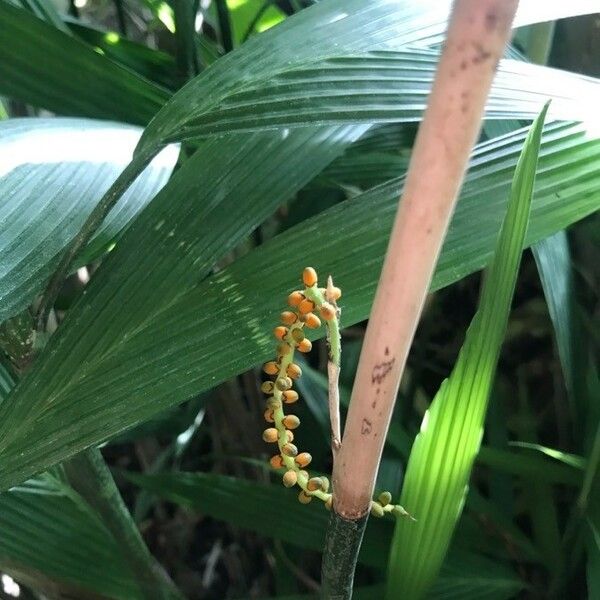
Plant Overview
Known as the "Scented Parlor Palm," this elegant species from the mist-shrouded Peruvian Andes is a rare gem among indoor greenery. While most palms are grown strictly for their foliage, this one earns its name by filling a room with a sweet, jasmine-like aroma when it blooms. It is a slow-growing, clustering beauty that brings the lush, tranquil vibe of a South American cloud forest into a modern home.
🔍 How to Identify
- 🍃 Fishtail Foliage: Unlike the feathery fronds of common palms, its leaves are "bifid"—meaning they are split only at the tip, resembling a whale’s tail or a pair of wide wings with a deep green, pleated texture.
- 🎋 Cane-like Stems: It grows in clusters of slender, green, reed-like stems that look remarkably like miniature bamboo as the plant matures.
- 🌼 Infructescence: It produces small, branched flower spikes that carry tiny yellow or orange blossoms. These are the source of its legendary fragrance, which is often compared to citrus or lily-of-the-valley.
🏡 In Your Garden
- ☁️ Humidity is Key: Because it originates from high-altitude rainforests, this palm thrives in high humidity. If your home is dry, it may develop crispy brown edges on those beautiful "fishtails," so a pebble tray or humidifier is its best friend.
- 🌑 Shadow Specialist: This is a true understory plant. It hates direct sunlight, which can bleach or burn its leaves in just a few hours. It is one of the best palms for lower-light corners where other plants might struggle.
- 🪴 Slow and Steady: It has a very delicate root system and grows slowly. It prefers to be slightly root-bound rather than placed in a massive pot, and it absolutely hates "wet feet," so well-draining soil is non-negotiable.
⚠️ Safety & Toxicity
- 🐾 Pet Friendly: Great news for cat and dog owners! This palm is non-toxic, making it a safe choice for curious pets who like to nibble on dangling leaves.
- 👶 Child Safe: Unlike many other palms (like the Sago Palm), Chamaedorea fragrans has no sharp spines or toxic seeds, making it perfectly safe for households with small children.
✨ Fun Fact
In its native Peru, the fragrance of this palm is so highly prized that the flowers are sometimes harvested and tucked into clothing or placed in small bowls to serve as a natural, living air freshener!

Detailed Care Instructions
To grow a Chamaedorea fragrans plant, also known as the Bamboo Palm, follow these steps:
- Select a suitable location: Choose a spot that receives bright, indirect sunlight. The plant can tolerate low light conditions but thrives in bright, filtered light.
- Choose the right pot: Pick a container with good drainage holes to prevent waterlogging. The pot size should match the current size of the plant with room for growth.
- Soil requirements: Use a well-draining potting mix that is rich in organic matter. A mix of peat moss, perlite, and compost works well.
- Watering: Water the plant thoroughly when the top inch of soil feels dry. Avoid overwatering or letting it sit in standing water, as this can lead to root rot. Ensure proper drainage by removing excess water from the saucer or pot tray.
- Humidity: Chamaedorea fragrans prefers high humidity levels. You can raise humidity by placing a tray of water near the plant or using a humidifier. Mist the leaves occasionally to mimic their natural rainforest environment.
- Temperature and environment: The plant thrives in temperatures between 60-85°F (15-29°C). Avoid exposing it to cold drafts or sudden temperature fluctuations. It can also tolerate slightly cooler temperatures during winter.
- Fertilizing: Apply a balanced houseplant fertilizer every 2-4 months during the growing season (spring and summer). Follow the instructions on the fertilizer packaging and avoid over-fertilizing, as this can lead to nutrient burn.
- Pruning and repotting: Regularly remove any yellow or dead leaves to maintain the plant's appearance. Repot the plant every 2-3 years or when it becomes root-bound, using fresh potting soil.
- Pests and diseases: Keep an eye out for common houseplant pests like spider mites, mealybugs, and scale insects. Treat any infestations promptly with appropriate insecticides, following the instructions carefully.
- Propagation: Chamaedorea fragrans can be propagated through division. Divide the plant by carefully separating the offshoots or side shoots from the main plant, ensuring each division has roots attached. Plant the divisions in separate pots with fresh potting soil, water thoroughly, and provide suitable care.
With proper care and suitable conditions, your Chamaedorea fragrans plant should grow and thrive, adding beauty to your indoor space.
The plant in question belongs to the family of Palm plants. It should be watered enough to keep the soil moist, but not too much as it can lead to root rot. Allow the top inch of soil to dry before watering again. Use room temperature water to avoid shock to the plant, and avoid getting water on the leaves as it can cause fungal diseases. The need for watering may vary depending on the environment, such as the amount of light and humidity.
To fertilize this plant, use a balanced fertilizer with equal amounts of nitrogen, phosphorous, and potassium. Apply the fertilizer once every three months during the growing season, which begins in spring and ends in early autumn. Apply the fertilizer to the soil around the base of the plant and water thoroughly afterwards. Be careful not to over-fertilize, as this can damage the roots and cause the plant to grow too quickly, which can lead to weak stems and other problems.
When choosing soil for this particular plant, it is important to consider its specific needs. The soil should be well-draining and rich in nutrients, with a pH level between 6.0 and 7.5. It is recommended to use a soil mixture that is high in organic matter, such as a peat-based mix. Additionally, adding perlite or vermiculite can help improve drainage and aeration. It is also important to ensure that the soil is not too dry or too wet, as this can cause problems for the plant. Overall, the soil should provide a stable and healthy environment for the plant's roots to grow and thrive.
The best way to propagate the Chamaedorea Fragrans plant is by division. First, choose a healthy mature plant that has several small offshoots growing from its base. Carefully remove the plant from its pot and gently separate the offshoots from the parent plant, ensuring that each offshoot has its own separate root system. Plant each offshoot in its own pot, using a high-quality potting soil and water thoroughly. Place the newly potted offshoots in a warm, humid area with bright, indirect light. Keep the soil moist but not waterlogged and in a few weeks, the offshoots will establish their own root systems and begin to grow. It's important to remember that the Chamaedorea Fragrans plant prefers warm, humid conditions and can benefit from occasional misting and fertilization.








