Plant Overview
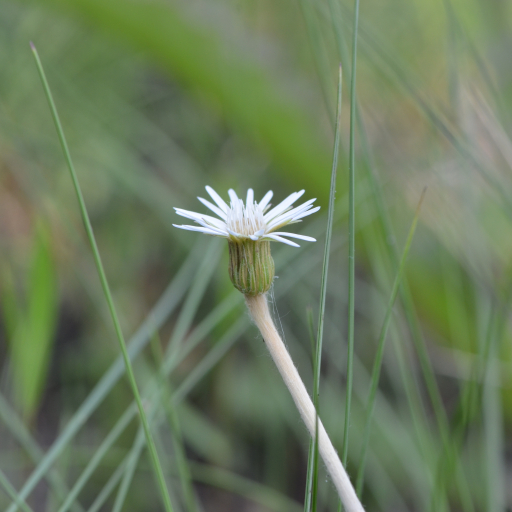
Often called the Woolly Sunbonnet or Pineland Daisy, this charming wildflower is a quiet star of the Southeastern United States. It earns its poetic nickname from the way its flower heads "nod" or droop toward the ground before fully opening, much like a shy child in a sunbonnet. In the wild, it acts as a silvery groundcover, signaling the presence of healthy, moist pine flatwoods.
🔍 How to Identify
- ☁️ Fuzzy Foliage: The leaves grow in a low rosette and are strikingly bi-colored—deep, smooth green on top and covered in a thick, silvery-white "wool" (tomentum) underneath.
- 🌼 Delicate Blooms: It produces a single daisy-like flower on a leafless, hairy stalk. The petals are usually white or tinged with a soft, purplish-pink on the underside.
- 👒 The "Nod": Before the flower fully matures or during the evening, the flower head bends sharply downward, hiding its face from the elements.
🏡 In Your Garden
- 💧 Boggy Preferences: This plant is a specialist of "wet feet." It thrives in acidic, sandy soils that stay consistently moist, mimicking its natural home in savannas and bog edges.
- 🌱 Root Sensitivity: The Woolly Sunbonnet develops a deep taproot to help it survive through seasonal changes. Because of this, it hates being transplanted; once you find a spot for it, it is best to leave it undisturbed.
⚠️ Safety & Toxicity
- ✅ Status: Generally considered non-toxic.
- 🐾 Details: There are no recorded toxic effects for cats, dogs, or horses. However, the fine "wool" on the underside of the leaves can occasionally trap dust or pollen, which might cause mild sneezing or irritation in particularly sensitive pets or humans.
✨ Fun Fact
The Woolly Sunbonnet is a "winter bloomer" in many parts of its range. While other flowers are waiting for the heat of spring, this hardy little daisy can often be found blooming as early as February, providing a vital early-season nectar source for the first emerging pollinators.

Detailed Care Instructions
To grow Chaptalia Tomentosa (woolly sunbonnets), you can follow these general guidelines:
- Select a suitable location: Choose a spot that receives full sun to partial shade. Chaptalia Tomentosa can tolerate a range of soil types as long as they are well-draining.
- Prepare the soil: Ensure that the soil is loose, well-drained, and slightly acidic. You can amend the soil with organic matter such as compost to improve its fertility and drainage.
- Planting: Chaptalia Tomentosa is typically propagated from seeds. Sow the seeds directly into the prepared soil or in small pots if you prefer to start them indoors before transplanting. Plant the seeds at a depth of about 1/4 to 1/2 inch (0.6-1.3 cm) and space them a few inches apart.
- Watering: Keep the soil consistently moist but not waterlogged. Water the plants regularly, especially during dry periods. Avoid overwatering, as it can lead to root rot.
- Mulching: Apply a layer of mulch around the plants to help retain moisture, suppress weed growth, and provide some insulation.
- Pruning: Chaptalia Tomentosa benefits from periodic pruning to maintain its shape and encourage bushier growth. Remove any dead or damaged leaves and trim back any leggy stems. You can also deadhead the flowers to encourage more blooms.
- Fertilizing: Chaptalia Tomentosa generally does not require heavy fertilization. However, you can apply a balanced, slow-release fertilizer once or twice a year to support the plant's growth.
- Pests and diseases: Chaptalia Tomentosa is generally resistant to pests and diseases. However, keep an eye out for common garden pests like aphids or slugs. Use appropriate organic pest control methods if needed.
- Propagation: Chaptalia Tomentosa can be propagated through division as well. Divide the plant in early spring or fall, making sure each divided section has roots. Replant the divisions in well-prepared soil.
- Cold protection: If you live in an area with cold winters, provide some winter protection to your Chaptalia Tomentosa plants. Applying a layer of mulch around the base of the plant can help insulate the roots.
Remember to consult local garden centers or expert gardeners for specific advice tailored to your region and climate for the best results.

Place in a bright room that is sun drenched almost all day. Or directly in a south-facing window.

To properly water the plant in question, it is important to consider its specific watering needs and characteristics. Begin by evaluating the soil moisture level and checking for any signs of underwatering or overwatering. If the soil feels dry to the touch, it may be time to water. However, if the soil feels consistently damp, it may be necessary to adjust the watering schedule or drainage conditions.
When watering, aim to apply water directly to the soil around the roots, avoiding contact with the leaves or stem. This can be accomplished using a watering can or hose with a gentle spray attachment. Water the plant deeply but infrequently, allowing the soil to dry out slightly between watering sessions.
It is important to note that the specific watering needs for the plant may vary depending on factors such as temperature, humidity, and sunlight exposure. Regularly monitoring the soil moisture and adjusting the watering schedule accordingly can help promote healthier growth and overall plant health.
To fertilize this plant, you should use a balanced fertilizer that has an equal ratio of nitrogen, phosphorus, and potassium. Fertilize every two weeks during the growing season, which is usually during the spring and summer. Be careful not to over-fertilize as this can harm the plant. Dilute the fertilizer in water according to the instructions on the package and apply it directly to the soil around the base of the plant. Water the plant thoroughly after fertilizing.
Chaptalia Tomentosa plant requires a well-draining soil that is rich in organic matter. The soil should have a balanced pH level, preferably between 6.0 to 7.5. The plant prefers sandy loam or clay loam soil with good fertility. It is important to ensure the soil is not too compact as it may lead to poor drainage and root rot. The addition of compost or other organic matter can help improve soil quality and provide nutrients for the plant. The soil should be kept moist but not waterlogged, allowing the roots to breathe and absorb water and nutrients. Overall, a light, well-draining soil that is rich in organic matter is ideal for Chaptalia Tomentosa plant growth.
To propagate this plant, you can start by collecting its seeds. Once you have gathered the seeds, you should spread them in a shallow, well-draining container filled with potting mix. Be sure to keep the mix moist and place the container in a warm, well-lit area.
If you have access to mature plants, you can also propagate by stem cuttings. Select a healthy, fully grown stem and cut it just below a node, or the point where a leaf attaches to the stem. Remove any leaves or flowers from the bottom inch of the cutting, leaving a few at the top to help the plant retain moisture.
Dip the cut end of the stem into rooting hormone and insert it into a pot filled with potting mix. Keep the mix moist and place the pot in a warm, well-lit area. Over time, the stem should develop roots and begin to grow into a new plant.
Another method of propagation is by division. If you have a mature plant with multiple stems, you can carefully separate them into smaller sections, each with its own root system. Replant these smaller sections in individual pots filled with fresh potting mix and keep them in a warm, well-lit area, keeping the soil moist.
With proper care and attention, your new Chaptalia Tomentosa plants should begin to grow and thrive.








