Plant Overview
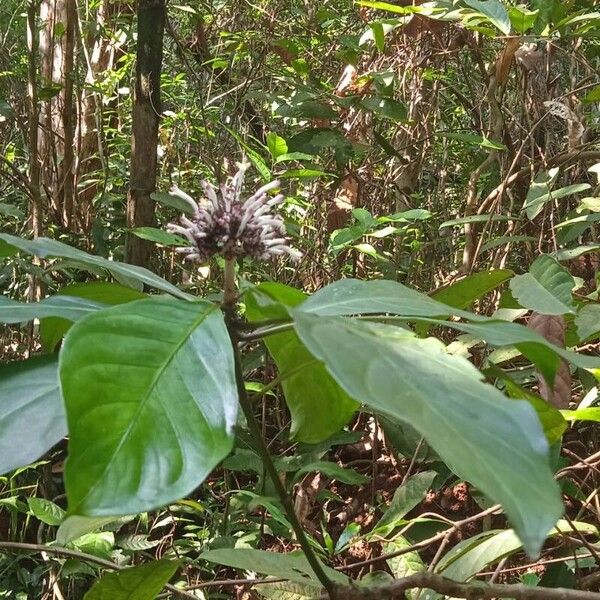
Known as the Curved Flower Woody-Chaff, Chassalia curviflora is a hidden gem of the Asian rainforest understory. It is most famous for its striking "neon" appearance, where vibrant pink or reddish stalks contrast sharply against waxy white flowers. Often found in the deep shade of tropical jungles, this plant looks like it belongs in a botanical sci-fi film rather than a garden.
🔍 How to Identify
- 🌸 The "Curved" Bloom: The flowers are tubular and distinctly arched or "curved," usually appearing in clusters with white or pale yellow tips.
- 💗 Vibrant Peduncles: One of its most identifying features is the bright pink to purplish flower stalks that remain colorful even after the blossoms have fallen.
- 🍃 Glossy Foliage: The leaves are large, lance-shaped, and a deep, glossy green with prominent veins, typical of the coffee family (Rubiaceae).
🏡 In Your Garden
- ☁️ Humidity is King: This plant thrives in high-humidity environments. If grown indoors, it requires frequent misting or a pebble tray to prevent the leaf tips from browning.
- 🌳 The Understory Effect: Because it naturally grows beneath giant forest canopies, it is highly sensitive to direct sunlight. It prefers "dappled" light or full shade, making it a great candidate for dim corners of a greenhouse.
- 💧 Thirsty Roots: It dislikes drying out completely. Keep the soil consistently moist but ensure the pot has excellent drainage to avoid "wet feet" and root rot.
⚠️ Safety & Toxicity
- 🐾 Mild Caution: While not listed as highly decorative or deadly, most members of the Rubiaceae family contain alkaloids that can cause stomach upset if ingested.
- 👶 Keep Away: The small, dark berries that follow the flowers can be tempting to children and pets; it is best to keep this plant out of reach to avoid accidental ingestion and digestive distress.
✨ Fun Fact
The bright pink stems of the Chassalia curviflora aren't just for show—they act as a permanent "landing strip" for pollinators and birds. Even after the white flowers are gone, the stems stay bright to guide birds toward the ripening fruits, ensuring the plant's seeds are spread far and wide!

Detailed Care Instructions

Place in a dark room with little light, like a dark bedroom or a spot far away from a window or directly in a north-facing window.

When the top few inches of soil dry out, water your plants. If the top few inches of soil are still moist, do not water your plant. Wait a few days, then poke your finger into the soil to see if anything has changed. Overwatering poses a disease risk, such as the development of fungal diseases in the roots. These plants have adaptations in there leaves that allow them to survive in low water supply.







