Plant Overview
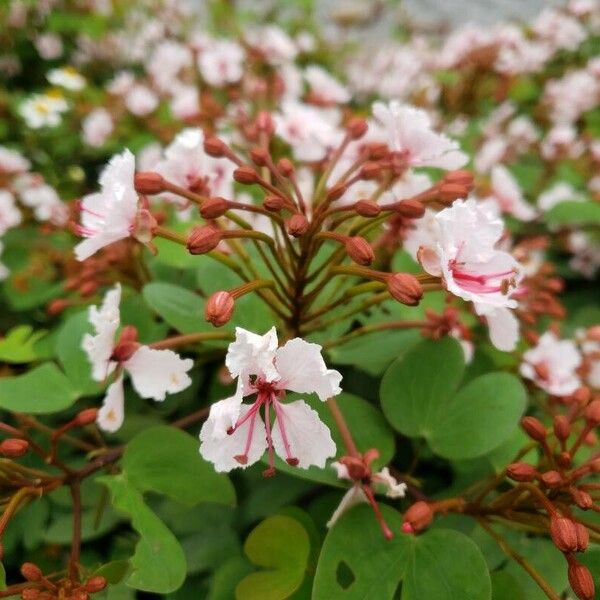
Known as the Butterfly Vine or Phanera, Cheniella corymbosa is a delicate, woody climber that captures the elegance of a wild orchid. Native to East Asia, this plant is beloved for its "camel-foot" leaves that fold together like the wings of a resting butterfly. It is a favorite for those looking to add a romantic, cascading feel to vertical spaces in tropical or subtropical gardens.
🔍 How to Identify
- 🦋 The Leaves: Small, deeply lobed leaves that are divided nearly to the base, creating a distinct heart or butterfly shape. They often have a soft, matte green finish.
- 🌸 The Flowers: Produces dense clusters (corymbs) of pale pink to white blossoms. Each flower features long, protruding stamens and delicate, ruffled petals that look remarkably like miniature orchids.
- 🌀 The Tendrils: Look for thin, wiry tendrils that curl around supports, helping the vine "hitchhike" its way up fences or trees.
🏡 In Your Garden
- 🧗 Support is Key: Because this is a climbing vine rather than a self-clinging one, it requires a trellis, arbor, or chain-link fence to thrive. It uses its tendrils to pull itself upward but may need a little "training" or tying when young.
- 💧 Drainage over Dampness: While it enjoys regular moisture, it is prone to root issues if left in standing water. It prefers light, loamy soil that allows the roots to breathe.
- ✂️ Pruning Style: It can become quite tangled if left to its own devices. Pruning after the flowering season helps maintain its shape and encourages more blooms for the following year.
⚠️ Safety & Toxicity
- 🌿 General Status: Cheniella corymbosa is generally considered non-toxic to humans and common household pets.
- 🧤 Skin Sensitivity: While not poisonous, the woody stems can become brittle and sharp when dry. It is always wise to wear gardening gloves when pruning to avoid scratches or minor skin irritation.
✨ Fun Fact
The unique twin-lobed leaf of this genus (formerly categorized under Bauhinia) was named in honor of the 16th-century Swiss botanists, the Bauhin brothers. The two lobes of the leaf represent the two brothers working together in the field of botany!

Detailed Care Instructions








