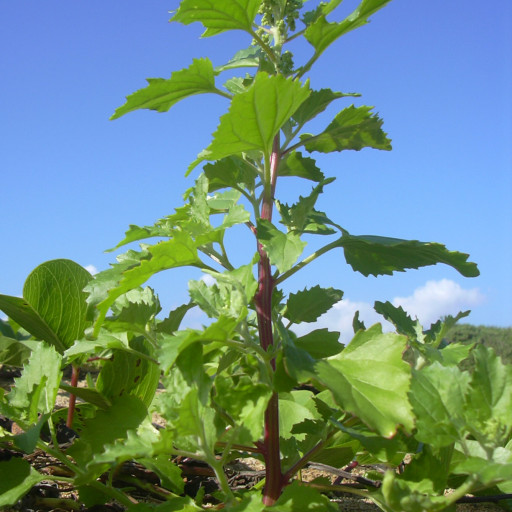
Plant Overview
Often called the Nettle-leaved Goosefoot or Sowbane, this hardy pioneer is a master of urban survival. While it might look like a stinging nettle at first glance, it is actually a non-stinging relative of spinach and quinoa. It has followed human civilization for centuries, thriving in the nutrient-rich soils of farmyards, garden edges, and even cracks in city sidewalks.
🔍 How to Identify
- 🌿 The Foliage: The leaves are triangular or diamond-shaped with irregular, sharp teeth along the edges. Unlike the "mealy" look of some cousins, these leaves are often a dark, glossy green.
- ❄️ The Coating: Younger stems and the undersides of new leaves often have a fine, whitish, flour-like powder (called farina), which feels slightly waxy to the touch.
- 🍇 The Flowers: It produces tiny, inconspicuous green flowers that grow in dense, branched clusters. These eventually turn into small, dark seeds that look like miniature versions of quinoa.
🏡 In Your Garden
- 🌱 Soil Indicator: If you find this plant volunteer-growing in your beds, it’s a sign that your soil is high in nitrogen. It loves "disturbed" ground where the earth has been recently turned or fertilized.
- ☀️ Resilience: It is incredibly drought-tolerant once established. While many gardeners pull it as a weed, it plays an ecological role by stabilizing loose soil and providing cover for small ground-dwelling insects.
⚠️ Safety & Toxicity
- 🥗 Edibility Note: While the leaves are technically edible and high in Vitamin C (similar to spinach), they contain oxalates. People prone to kidney stones should avoid consuming them.
- 🐾 Pet & Livestock Safety: In high-nitrogen soils, the plant can accumulate nitrates, which are toxic to cattle and sheep if eaten in large quantities. It is generally considered low-risk for household pets, though it may cause mild stomach upset if grazed upon.
✨ Fun Fact
The seeds of Chenopodiastrum murale are remarkably long-lived. Scientists have found that these seeds can remain dormant in the soil for several decades, waiting for the perfect moment—usually a tilled garden or a construction site—to finally sprout!

Detailed Care Instructions
To grow Chenopodiastrum murale plants, also known as the White Goosefoot or Annual Saltbush, follow these steps:
- Climate and soil: Chenopodiastrum murale plants prefer warm and dry climates. Ensure that the area receives full sun. The soil should be well-draining and preferably sandy or loamy.
- Seed propagation: Purchase seeds of the Chenopodiastrum murale plant from a reputable nursery or online store. Sow the seeds directly into the prepared soil in late spring or early summer when the soil temperature has warmed up to at least 60°F (15°C). Space the seeds about 6-8 inches (15-20 cm) apart.
- Germination: Keep the soil consistently moist during germination, which usually takes around 7-10 days. Provide a light misting of water as needed to prevent the soil from drying out.
- Watering: Once the plants have established, reduce watering as Chenopodiastrum murale plants are drought-tolerant. Allow the top inch of soil to dry out between watering sessions to prevent root rot.
- Fertilization: These plants generally do not require heavy fertilization. However, you can apply a balanced, slow-release fertilizer once or twice during the growing season to promote healthy growth.
- Maintenance: Weed the area regularly to prevent competition for nutrients and space. Mulching around the plants can help conserve soil moisture and suppress weed growth.
- Pruning: Chenopodiastrum murale plants do not require pruning, but you can pinch off the top growth occasionally to encourage bushier growth and prevent legginess.
- Pest and disease control: These plants are generally resistant to pests and diseases. However, keep an eye out for common garden pests such as aphids, spider mites, or caterpillars. If necessary, treat the affected plants with organic or chemical insecticides.
- Harvesting: If desired, you can harvest the young leaves of Chenopodiastrum murale plants for culinary use. The leaves have a mild, spinach-like flavor and can be used in salads, omelets, or cooked dishes.
By following these guidelines, you can successfully grow Chenopodiastrum murale plants and enjoy their ornamental and culinary benefits.

Place in a bright room that is sun drenched almost all day. Or directly in a south-facing window.

To water this specific plant, it is important to consider the soil's drainage and moisture level. The soil should be moist, but not waterlogged, as too much water can cause the plant to rot. Watering should be done thoroughly, ensuring that the soil is evenly moist. It is recommended to check the soil's moisture level before watering and avoid watering if the soil is already damp. Additionally, watering should be done in the morning or evening to prevent evaporation during the heat of the day. Proper watering techniques can help ensure the health and longevity of this plant.
To fertilize this plant, use a balanced fertilizer with equal levels of nitrogen, phosphorus, and potassium. Apply the fertilizer every two weeks during the growing season, which typically lasts from late spring to early fall. Be sure to follow the manufacturer's instructions for the recommended amount of fertilizer to use. Avoid over-fertilizing, which can lead to leaf burn and other problems.
Chenopodiastrum Murale plant prefers well-draining and moderately fertile soil that is rich in organic matter. The soil pH should be slightly acidic to slightly alkaline, ranging from 6.0 to 7.5. The soil should be loose and light to allow sufficient aeration. It should retain moisture well, but not be waterlogged or excessively wet. A sandy loam soil that is mixed with compost or well-rotted manure provides an ideal growing medium for this plant. Avoid using heavy or clay soils that may cause waterlogging or poor drainage. Proper soil preparation is important for the healthy growth and development of Chenopodiastrum Murale plant.
To propagate this plant, you will need to collect seeds from the existing plant. Wait for the flower buds to dry up and form seed heads, which will contain the small brown to black seeds. Collect the seed heads and place them in a paper bag to dry further. Once completely dry, shake the bag to remove the seed from the seed heads.
Prepare a pot with well-draining soil and moisten it slightly. Sow the seeds at a depth of 1/4 inch and cover lightly with soil. Water gently and place in a warm, bright location. The seeds should germinate within 7-14 days.
Keep the soil moist but not waterlogged and provide plenty of light. Once the seedlings have grown their first set of true leaves, you can transplant them into larger containers or into the ground. When transplanting, be sure to disturb the roots as little as possible and water in thoroughly.
Continue to provide the plant with adequate water and light as it grows. It should mature and produce its own seed heads within a few months.








