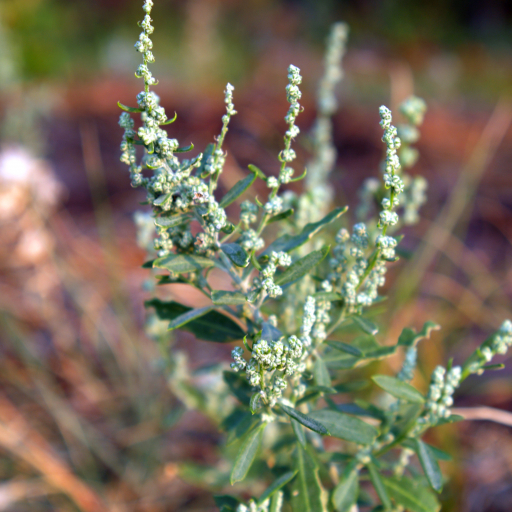
Plant Overview
Often referred to as Pitseed Goosefoot, this resilient North American native is a botanical time traveler. Long before corn and beans dominated the landscape, ancient civilizations cultivated this plant as a staple grain, much like its famous South American cousin, Quinoa. While often dismissed as a common "weed" today, it remains a nutritious "lost crop" with a rich archaeological history.
🔍 How to Identify
- 🦶 Leaf Shape: Look for the signature "goosefoot" shape—triangular or diamond-shaped leaves with coarsely toothed edges that resemble the webbed foot of a waterbird.
- ❄️ Mealy Texture: The undersides of the leaves and the developing flower clusters are often coated in a white, powdery substance called farina, which can make the plant look like it has been dusted with flour.
- 🌾 Flower Clusters: It produces dense, inconspicuous spikes of tiny green flowers that eventually turn into small, dark seeds with distinct "pitted" shells (hence the name Pitseed).
🏡 In Your Garden
- 🌱 The Pioneer Spirit: This plant is a "pioneer species," meaning it is often the first to arrive in disturbed soil. It doesn't mind poor conditions, but it thrives in gardens with high nitrogen levels, often acting as a living indicator of rich soil.
- ✂️ Growth Habit: It can grow quite tall and lanky if left unchecked. If you are growing the Mexican variety known as Huauzontle, regular harvesting of the broccoli-like flower heads will encourage a bushier, more productive shape.
⚠️ Safety & Toxicity
- 🥗 Safe for Foraging: The young leaves are edible and delicious when cooked like spinach, and the seeds can be harvested as a grain. However, always ensure the soil is free of heavy metals and pesticides.
- 🧪 Oxalates and Nitrates: Like spinach and beets, this plant contains oxalic acid. People prone to kidney stones should consume it in moderation. Additionally, it can accumulate nitrates from the soil, which may be harmful to livestock if the plant is grown in heavily over-fertilized areas.
✨ Fun Fact
- 🏺 Ancient Ancestry: Archeologists have found caches of Chenopodium berlandieri seeds in caves across the Ozarks dating back over 3,500 years, proving it was one of the primary crops of the "Eastern Agricultural Complex" long before the introduction of maize.

Detailed Care Instructions
To grow Chenopodium Berlandieri (also known as lambsquarters), follow these steps:
- Obtain seeds: Purchase seeds from a reputable seed supplier. Chenopodium Berlandieri seeds can be found online or at local nurseries.
- Timing: Sow the seeds in early spring or late summer/early fall when the soil temperature is around 50-68°F (10-20°C).
- Soil preparation: Choose a well-draining, loamy soil with a pH level between 6 and 7. Clear the planting area of any weeds or debris and loosen the soil to a depth of about 6 inches (15 cm).
- Sowing seeds: Scatter the Chenopodium Berlandieri seeds evenly over the prepared soil. Avoid sowing the seeds too densely, as it can lead to overcrowding. Lightly press the seeds into the soil surface, as the seeds prefer being near the surface of the soil.
- Watering: After sowing the seeds, water the area gently so as not to disturb the seeds. Keep the soil evenly moist throughout the germination and early growth period.
- Sun and temperature requirements: Chenopodium Berlandieri prefers full sun but can tolerate partial shade. The ideal temperature for this plant is around 68-86°F (20-30°C), but it can handle lower temperatures as well.
- Thin the seedlings: Once the seedlings appear, thin them out to provide adequate space for growth. Maintain a spacing of about 12-18 inches (30-45 cm) between each plant.
- Maintenance: Mulching around the plants is beneficial to retain moisture and prevent weed growth. Water the plants regularly, particularly during dry spells. Apply a balanced fertilizer (10-10-10) once every two weeks during the growing season.
- Harvesting: Chenopodium Berlandieri is a leafy green plant, and the leaves can be harvested when they are young and tender. You can start harvesting the leaves around 45-60 days after sowing.
Chenopodium Berlandieri is a prolific self-seeder, so if you want to control its spread, consider harvesting the seeds before they scatter. Remember to consult with local agricultural authorities or experts to ensure that growing Chenopodium Berlandieri is legal and suitable for your specific location.

Place in a bright room that is sun drenched almost all day. Or directly in a south-facing window.

To water this plant, first determine its watering needs based on factors such as the temperature, humidity, and soil moisture level. It is important to avoid over-watering, as this can lead to root rot and other problems.
Water the plant slowly and evenly to allow the soil to soak up the moisture. It is best to water the soil directly rather than the leaves, as wet foliage can promote fungal growth and disease.
Monitor the plant regularly to ensure that it is not developing any issues related to water or moisture levels. Adjust the watering schedule as needed, based on the plant's specific needs and the conditions of its environment. In general, it is better to provide this plant with slightly less water than too much, as it can tolerate moderate drought conditions.
To provide proper nutrients for this plant, it is recommended to use a balanced fertilizer with equal amounts of nitrogen, phosphorus, and potassium. The fertilizer should be applied at a rate of one tablespoon per square foot of soil, and should be worked into the soil to a depth of about one inch. Fertilizing should be done every two weeks during the growing season, beginning when the plant is actively growing. It is important not to over-fertilize, as this can lead to excess vegetative growth and reduced fruiting.
Chenopodium berlandieri plant prefers a well-draining soil that is rich in nutrients. A good soil mixture for this plant should be a combination of loamy soil, sand, and organic matter such as compost or leaf mold. Additionally, adding perlite or vermiculite can help improve drainage and aeration in the soil.
It is important to maintain a slightly acidic to neutral pH level in the soil for optimal growth of the Chenopodium berlandieri plant. Regularly testing the soil pH and making necessary adjustments with amendments like lime or sulfur can help ensure the plant's health and productivity.
Overall, a soil mixture that is loose, fertile, and well-draining will provide a suitable growing medium for the Chenopodium berlandieri plant to thrive. Regularly amending the soil with organic matter and nutrients will support the plant's growth and development, resulting in a healthy and productive harvest.
- Identify a mature Chenopodium Berlandieri plant that is healthy and disease-free.
- Collect mature seeds from the plant once they have dried and turned black.
- Store the seeds in a cool, dry place until ready to plant.
- Prepare a planting area by removing any weeds and loosening the soil.
- Sow the seeds in the prepared area, spacing them about 1 inch apart and covering them with a thin layer of soil.
- Water the seeds lightly and regularly to keep the soil moist.
- Germination should occur within a few days to a week, and the seedlings will start to emerge.
- Thin out the weaker or unwanted seedlings once they have grown to a few inches tall to allow the stronger ones to have room to grow.
- Continue to water and care for the plants as they grow.
- Once the plants have matured, you can harvest the seeds and repeat the planting process.








