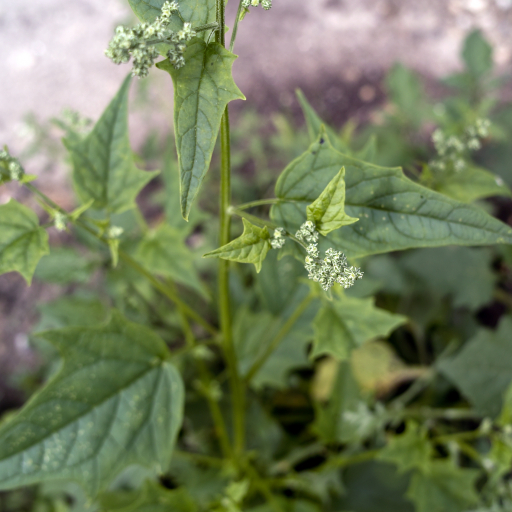
Plant Overview
Often called the Maple-leaved Goosefoot, this distinctive annual is a wild relative of garden favorites like spinach and quinoa. While many consider it a common weed, its striking, jagged leaves make it easy to spot in the shadows of woodlands or at the edges of your garden. It is most famous for its unique silhouette and a somewhat "funky" scent that helps it ward off hungry herbivores.
🔍 How to Identify
- 🍁 Leaf Shape: The most telling feature is the large, thin leaves with 2–4 broad, pointed teeth on each side, bearing a striking resemblance to a maple leaf.
- 🟢 Flower Clusters: It produces tiny, inconspicuous green flowers that lack petals, growing in loose, spreading clusters at the ends of stems.
- 📏 Growth Habit: This plant grows strictly upright, reaching anywhere from 1 to 4 feet tall, with smooth, light-green stems that often branch out near the top.
🏡 In Your Garden
- 🌱 Soil Preference: It thrives in "disturbed" soil—areas where the earth has been turned over or enriched with nitrogen. If it pops up in your garden, it’s often a sign of nutrient-rich ground.
- 🌓 Sun & Shade: Unlike many of its sun-loving cousins, the Maple-leaved Goosefoot is quite happy in the dappled light of forest floors or the shady corners of a backyard.
- 👃 The Scent Test: If you aren't sure of the ID, give the leaves a gentle rub; they often emit a faint, somewhat unpleasant odor reminiscent of stale sweat or old hay.
⚠️ Safety & Toxicity
- 🐾 Oxalate Alert: While not strictly "poisonous," the plant contains oxalates (like spinach, but in higher concentrations) and saponins. It is generally best kept away from curious pets and livestock.
- 👶 Kid & Human Safety: While some people historically used young leaves as a pot-herb, it is generally discouraged today due to the potential for concentrated nitrates from the soil, which can be harmful if consumed in large quantities.
✨ Fun Fact
Despite its weedy reputation, Chenopodium hybridum is a member of the Amaranth family, making it a distant botanical cousin to both the superfood Quinoa and the common garden Beet!

Detailed Care Instructions
To grow Chenopodium Hybridum plant, you can follow these steps:
- Select a suitable location: Choose a spot in your garden that receives full to partial sun, as Chenopodium Hybridum plants thrive in sunny areas.
- Prepare the soil: Ensure the soil is well-draining, fertile, and rich in organic matter. Amend the soil with compost or well-rotted manure to improve its quality.
- Sow the seeds: Chenopodium Hybridum plants can be started from seeds. Sow the seeds directly into the soil after the danger of frost has passed and the soil has warmed up in spring. Scatter the seeds and lightly cover them with a thin layer of soil.
- Watering: Keep the soil consistently moist but not waterlogged. Water the plants regularly, especially during dry spells, to encourage healthy growth.
- Provide support: If your Chenopodium Hybridum plants grow tall and tend to flop over, you can provide stakes or cages for support to keep them upright.
- Fertilization: Apply a balanced, all-purpose fertilizer once every 4-6 weeks to promote continuous growth and healthy foliage. Follow the instructions on the fertilizer packaging for the proper dosage.
- Weed control: Regularly weed around the plants to prevent competition for nutrients, water, and sunlight.
- Pest and disease management: Monitor the plants regularly for any signs of pests or diseases. Potential pests could include aphids, caterpillars, or flea beetles. Use insecticidal soap or neem oil to control pests, if necessary. Additionally, provide adequate air circulation and avoid overwatering to minimize the risk of fungal diseases.
- Harvesting: Harvest the leaves of Chenopodium Hybridum plants when they are young and tender. You can use the leaves in salads, soups, or stir-fries. Avoid over-harvesting to ensure the plant continues to grow and produce new leaves.
- Winter care: Chenopodium Hybridum plants are annuals, so they will die off naturally at the end of the growing season. If you want to save seeds for the next year, allow the plants to flower and go to seed. Collect the seeds once they have turned brown and store them in a cool, dry place until the next growing season.
By following these steps, you should be able to successfully grow Chenopodium Hybridum plants in your garden.
To properly water this plant, make sure to give it a thorough watering, allowing the soil to become fully saturated. It is important to give the plant enough water without over-watering, which can lead to root rot and other issues. Carefully monitor the soil moisture level, and water as needed to keep it consistently moist but not waterlogged. Be sure to use a well-draining soil mix to avoid excess moisture retention, and avoid water sitting in the saucer beneath the pot. When watering, apply water directly to the soil rather than over the foliage to minimize the risk of disease and pest issues. Finally, adjust watering frequency based on the plant's individual needs and environmental conditions throughout the year.
To fertilize this plant, choose a fertilizer with a balanced NPK ratio. Apply the fertilizer to the soil around the plant's base in early spring when new growth appears, and then again in mid-summer. Avoid getting fertilizer on the leaves or stem of the plant as it may cause damage. Water the plant well after fertilizing to ensure the nutrients reach the roots.
The ideal soil for the Chenopodium hybridum plant should be well-draining and nutrient-rich. It should have a pH level of 6.0 to 7.5, which means it should be slightly acidic to slightly alkaline. The soil should be moist but not waterlogged, as the plant can easily develop root rot in overly wet soil. A sandy loam soil is suggested for best growth and development of the plant. It is recommended to test the soil before planting to ensure that it meets the plant's requirements. The addition of organic matter, such as compost or aged manure, can also enhance the soil's fertility and structure, promoting healthy growth and yield of the Chenopodium hybridum plant.
To propagate the plant, select a healthy mature specimen with cuttings of at least 3 inches long. Strip the leaves from the bottom 1 inch of the cutting and dip the cut end into rooting hormone. Plant the cuttings into moist soil mix and keep the soil moist, but not soaked. Maintain high humidity around the cuttings by covering them with a clear plastic bag. Place the container in a bright and warm area, but not in direct sunlight. Wait for the cuttings to root, which should take about 2-3 weeks. Once the cuttings have rooted, transplant them into individual pots or plant them outdoors in well-draining soil. Water the newly planted cuttings thoroughly and maintain regular watering as needed until they become established in their new location.








