Plant Overview
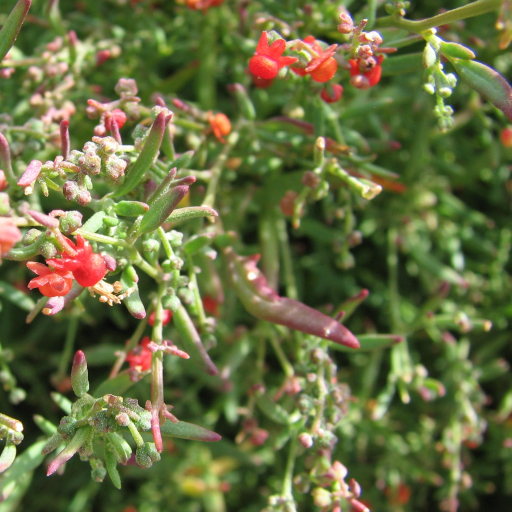
The Climbing Saltbush, scientifically known as Chenopodium nutans (or Einadia nutans), is a resilient Australian native that acts like nature’s own groundcover lace. While its name suggests a mountaineer, it is actually a "scrambler," delicately weaving itself through taller shrubs or over rocky outcrops. It is beloved by suburban gardeners for its ability to thrive in harsh, salty conditions where other plants might wither.
🔍 How to Identify
- 🏹 The Foliage: Look for small, semi-succulent leaves shaped like tiny arrowheads (hastate). They are usually a soft lime to forest green, sometimes with a dusty, silvery sheen.
- 🍓 The Berries: Its most striking feature is the clusters of tiny, fleshy berries. They transition from green to a vibrant, "nodding" bright red or orange as they mature.
- 🌿 Growth Habit: It doesn't have tendrils to grip surfaces; instead, it leans and weaves its thin, flexible stems through neighboring branches to reach the sunlight.
🏡 In Your Garden
- 🛡️ Hardiness Hero: This plant is a "survivor" species. It is exceptionally drought-tolerant and can handle saline (salty) soils, making it a perfect choice for coastal gardens or low-maintenance rockeries.
- 🦎 Wildlife Magnet: If you want to see more life in your yard, this is the plant to grow. Its dense, scrambling form provides excellent cover for small lizards, while native birds are frequently seen snacking on the salty-sweet berries.
⚠️ Safety & Toxicity
- 🟢 General Safety: The Climbing Saltbush is generally considered non-toxic to humans and is even historically noted as a bush-tucker plant (the berries are edible, though quite small and salty).
- 🐾 Pet Caution: While not high-risk, plants in the Chenopodium family can accumulate nitrates if grown in heavily fertilized soils. If your dog or cat has a habit of "grazing" on garden greens, it’s best to keep an eye on them to prevent mild stomach upset.
✨ Fun Fact
Indigenous Australians traditionally used the leaves of the Saltbush much like spinach, boiling them to remove excess salt, while the tiny red berries provided a quick, Vitamin C-rich snack on the trail!

Detailed Care Instructions
To grow Chenopodium Nutans, also known as Nuttall's goosefoot or nodding goosefoot, you can follow these steps:
- Determine the best time for planting: Nuttall's goosefoot is a warm-season annual plant. It is generally best to start seeds indoors 6-8 weeks before the last frost date in your area or sow directly in the garden after the last frost.
- Choose an appropriate location: Select a location with well-draining soil and full sun to partial shade. Nuttall's goosefoot can tolerate a wide range of soil conditions but prefers loamy or sandy soil.
- Prepare the soil: Remove any weeds or grass from the planting area. Loosen the soil and mix in compost or well-rotted manure to improve its fertility and drainage.
- Sow the seeds: If starting indoors, sow the seeds in small pots or trays filled with seed starting mix. Sprinkle the seeds lightly on the soil surface, and then cover them with a thin layer of soil. Keep the soil consistently moist but not waterlogged.
- Transplant or thin seedlings: Transplant the seedlings outdoors in 2-4 weeks when they have grown a few inches tall and the weather has warmed up. Space the plants about 12-18 inches apart. If you directly sowed the seeds in the garden, thin the seedlings to the appropriate spacing.
- Watering and care: Water the plants regularly to keep the soil moist but not overly saturated. Mulching around the plants can help conserve moisture and suppress weeds. Nuttall's goosefoot is generally low-maintenance and doesn't require extensive care.
- Harvesting: Nuttall's goosefoot is typically harvested for its edible leaves, which can be used in salads or cooked like spinach. Harvest the leaves when they are young and tender for the best flavor.
- Pest and disease control: Nuttall's goosefoot is generally pest and disease resistant. However, keep an eye out for common garden pests such as aphids or caterpillars. If any issues arise, you can use organic pest control methods like handpicking or spraying with a mild soap-water solution.
Remember to check your local regulations and restrictions before growing Chenopodium Nutans, as it may be considered invasive in some areas.

Place in a bright room that is sun drenched almost all day. Or directly in a south-facing window.

To properly water Chenopodium Nutans plant, maintain a moderate moisture level in the soil without causing excessive wetness. Follow these guidelines for watering:
1. Observe the soil: Check the moisture level of the soil regularly by inserting your finger into it, about an inch deep. If the soil feels dry, it is an indication that watering is required.
2. Watering method: Use a watering can or a hose with a gentle spray nozzle to water the plant. This helps in preventing over-watering and inhibiting the plant's roots from getting damaged.
3. Watering frequency: Water the Chenopodium Nutans plant when the top inch of soil feels dry. Avoid letting the soil stay completely dry for prolonged periods as it may affect the plant's health.
4. Watering amount: Provide enough water to moisten the soil thoroughly, but avoid waterlogging or creating standing water. Ensure water penetrates deep into the soil, reaching the roots.
5. Drainage: Ensure proper drainage by using well-draining soil and pots with drainage holes. This prevents the accumulation of excess water, which can lead to root rot or other issues.
6. Time of day: Water your Chenopodium Nutans plant early in the morning or late in the afternoon when temperatures are lower. This allows the plant to absorb the moisture before it evaporates due to heat and sunlight.
7. Leaf watering: Avoid directly watering the leaves of the plant, as this can lead to fungal diseases. Instead, focus on watering the soil around the base of the plant.
8. Adjust during seasons: Adjust the watering regimen according to seasonal changes. During warmer months or when the plant is actively growing, it may require more frequent watering compared to cooler months or periods of dormancy.
Remember, it is essential to consider the specific needs of your Chenopodium Nutans plant, such as light requirements and temperature preferences, which can impact its watering needs. Regularly monitor the soil and observe how the plant responds to ensure it receives appropriate hydration.
To fertilize Chenopodium Nutans plants, follow these instructions:
- Choose a balanced, water-soluble fertilizer with an N-P-K ratio of 10-10-10 or 20-20-20. This means it contains equal percentages of nitrogen (N), phosphorous (P), and potassium (K).
- Dilute the fertilizer according to the manufacturer's instructions. This usually involves mixing a specified amount of fertilizer with a certain volume of water in a watering can or sprayer. Make sure to wear gloves and protect your skin and eyes when handling fertilizers.
- Water the plant thoroughly before applying the fertilizer to avoid burning the roots. Allow the soil to drain for a few minutes.
- Apply the diluted fertilizer solution evenly around the base of the plant. Alternatively, you can use a foliar spray to apply the fertilizer directly to the leaves. Make sure to cover both sides of the leaves.
- Use the fertilizer solution once every two to four weeks during the growing season, which is usually spring to early fall. Adjust the frequency according to plant response and fertilizer concentration.
- Avoid fertilizing during winter or the plant's dormant period.
- Following the fertilization, water the plant again to help the nutrients penetrate the soil. This will also prevent fertilizer burn.
Remember, it is important not to exceed the recommended fertilizer concentration, as over-fertilization can harm the plant. Always read and follow the instructions provided by the manufacturer.
To promote optimal growth and provide suitable conditions for the Chenopodium Nutans plant, it is recommended to use a specific type of soil. This plant thrives in well-draining soil that is rich in organic matter. The soil should have good water retention capabilities while still allowing excess moisture to drain freely.
The ideal pH range for this plant is slightly acidic to neutral, typically ranging from 5.5 to 7.0. It is important to ensure that the soil is loose and friable, allowing the plant's roots to penetrate easily. Loose soil will also facilitate the circulation of air around the root system.
To enhance the quality of the soil, adding compost or well-rotted organic matter is beneficial. This will improve the soil structure, increase nutrient availability, and enhance water-holding capacity.
Avoid using heavy, compacted, or clayey soils as they may hinder proper root development and drainage. Additionally, sandy soils should be amended with organic matter to help retain moisture and nutrients.
Regularly monitoring and maintaining the moisture levels in the soil is crucial for the thriving of Chenopodium Nutans. Over-watering should be avoided, as it can lead to root rot, while insufficient watering may cause stress. Striking a balance and maintaining even moisture levels will support healthy growth.
It is important to note that while this plant is relatively tolerant of a range of soil conditions, providing it with well-suited soil will significantly contribute to its overall health and vitality.
To propagate Chenopodium Nutans plants, you can follow the following steps:
- Identify a healthy and mature Chenopodium Nutans plant from which you would like to propagate. Look for a plant that shows signs of vigor and has no signs of disease or pest infestation.
- Prepare a clean and sterile growing medium, such as a well-draining seed-starting mix or a combination of peat moss and perlite. Ensure the medium is moist but not overly wet.
- Carefully remove a healthy stem cutting from the Chenopodium Nutans plant. Choose a stem that is about 4-6 inches long and free from any flowers or inflorescences. Use clean and sharp gardening shears or a knife to make a clean cut just below a node.
- Remove the lower leaves from the stem cutting, leaving only a couple of leaves at the top. This helps to prevent excessive transpiration and encourages the cutting to focus on root development.
- Optionally, you can dip the bottom end of the cutting in a rooting hormone powder or gel to increase the chances of successful root formation. This step is not essential but can expedite the rooting process.
- Make a small hole in the prepared growing medium and gently insert the bottom end of the cutting into the hole. Ensure that at least one node is buried in the medium. Press the medium around the cutting to provide support.
- Place the potted cutting in a location that receives bright, indirect sunlight. Avoid exposing it to direct sunlight as this can cause stress or damage to the cutting.
- Maintain a consistently moist but not overly wet growing medium. Check the moisture levels regularly and water when necessary. Avoid overwatering, as it can lead to root rot and other fungal diseases.
- Monitor the cutting for signs of growth and root development. It may take several weeks for roots to form. Keep an eye out for new leaves emerging from the cutting, indicating successful propagation.
- Once the cutting has established a healthy root system and several new leaves, it can be gradually acclimated to outdoor conditions. Hardening off the plant involves gradually exposing it to outdoor temperatures, starting with a few hours per day and gradually increasing exposure over the course of a week.
- When the plant is well-established and sturdy, you can transplant it into a larger pot or directly into the garden bed, following the specific care requirements for Chenopodium Nutans plants.
Remember to provide adequate care and attention to the propagated plants to ensure their successful growth and development.








