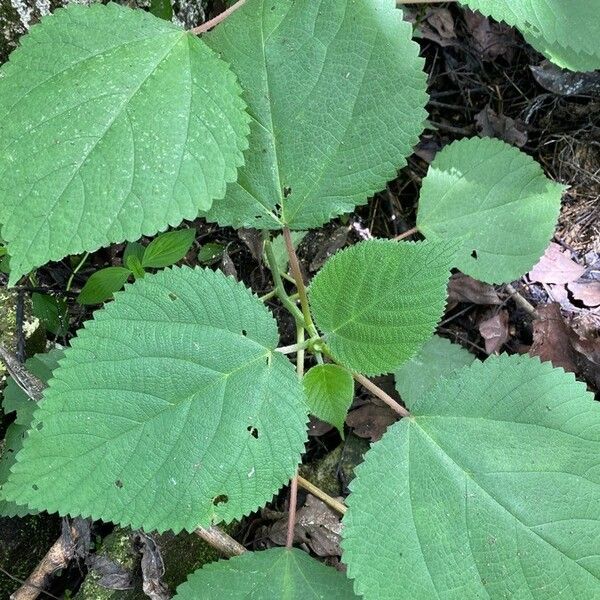
Plant Overview
Known as the "Colossal Stinger" or simply Chichicaste, this plant is a majestic but formidable giant of the Central American highlands. While its massive, velvety leaves and clusters of bell-shaped violet flowers might tempt you to reach out, this plant guards itself with a fierce defensive mechanism. In its native regions, it is respected as a natural boundary marker—a plant that demands distance and respect.
🔍 How to Identify
- 🍃 Massive Foliage: The leaves are broad, heart-shaped, and can grow to be truly enormous, often exceeding 12 inches in width with a deeply textured, rugose surface.
- 🪻 Vibrant Blooms: It produces striking, coiled clusters of bell-shaped flowers that range from a delicate lavender to a rich, deep violet, which are highly attractive to pollinators.
- 🪡 Stinging Trichomes: The most defining feature is the coat of fine, silver-white hairs covering the stems and leaves. These are actually "stinging hairs" that inject irritants upon the slightest touch.
🏡 In Your Garden
- ☀️ Space and Sun: This is not a plant for a small indoor corner; it is a rapid grower that thrives in full sun and well-draining volcanic or loamy soil. It is often used in large landscapes as a dramatic "architectural" centerpiece.
- 💧 Establishment Nuance: While it is relatively drought-tolerant once mature, it has brittle stems and a sensitive root system. It "hates" being relocated, so choose its permanent home carefully to avoid transplant shock or breakage.
⚠️ Safety & Toxicity
- 🚫 SEVERE IRRITANT: Do not handle this plant with bare skin. The microscopic hairs function like hypodermic needles, injecting a chemical cocktail that causes intense burning, itching, and red welts.
- 🐾 Children & Pets: It is unsuitable for gardens with curious pets or small children. The stinging sensation is immediate and painful, and in some sensitive individuals, it can cause prolonged skin irritation or allergic reactions.
✨ Fun Fact
In certain indigenous cultures of the Guatemalan highlands, the stinging leaves of the Chichicaste were historically used in traditional rituals and "cleansings" (limpias) to physically and spiritually stimulate the body!

Detailed Care Instructions








