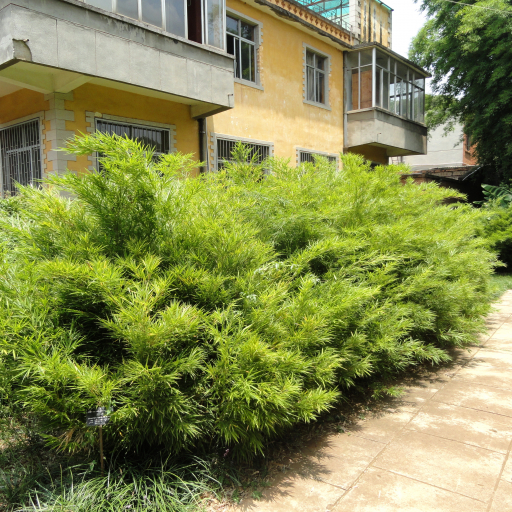
Plant Overview
Often called the Walking Stick Bamboo or "Qiongzhuea," this species is one of the most visually striking and architecturally unique bamboos in the world. Hailing from the misty, high-altitude forests of Southwest China, it is famous for its dramatic, "swollen" joints that look like stacked cymbals or flying saucers. For centuries, its sturdy and knobby culms have been harvested to create elegant canes for scholars and travelers, giving the plant its charming common name.
🔍 How to Identify
- 🎋 The Nodes: The most defining feature; the joints (nodes) are significantly wider than the stem, forming prominent, disk-like rings that look like they’ve been squeezed.
- 🌿 The Foliage: Delicate, narrow, and paper-thin leaves hang in graceful, weeping plumes from the tops of the slender branches.
- 🎨 The Culms: The stems (culms) typically emerge in a soft green but can transition into a sophisticated matte yellow or purple-tinted hue as they age.
🏡 In Your Garden
- 🏃 Space Management: This is a "running" bamboo, meaning it spreads via underground rhizomes. To keep your garden from becoming a bamboo forest, it is best grown in large containers or within a sturdy root barrier.
- ☁️ Microclimate Needs: Unlike many sun-loving bamboos, the Walking Stick Bamboo thrives in dappled shade and high humidity. It struggles in dry, windy spots or intense afternoon sun, which can scorch its delicate leaves.
- 💧 Soil Preference: It prefers rich, organic soil that stays consistently moist but never waterlogged. It’s a "thirsty" plant that will let you know it's unhappy by curling its leaves tightly.
⚠️ Safety & Toxicity
- ✅ Status: Generally non-toxic and safe.
- 🐾 Details: This bamboo is considered safe for cats, dogs, and children. However, because the young shoots are very vigorous and the nodes are hard, take care when pruning to avoid skin abrasions from the woody texture.
✨ Fun Fact
In ancient China, the culms of Chimonobambusa tumidissinoda were so highly valued for their natural "grip" that they were reserved for the canes of royalty and high-ranking officials. It was even mentioned in the Records of the Grand Historian (1st century BC) as a prized trade item!

Detailed Care Instructions
To successfully grow Chimonobambusa Tumidissinoda plant, follow these steps:
- Location: Choose a suitable location for planting the plant. Chimonobambusa Tumidissinoda prefers partial shade to full shade. Ensure the location has well-draining soil.
- Soil preparation: Prepare the soil by adding organic matter like compost or well-rotted manure. This will help improve soil fertility and drainage.
- Planting: Dig a hole that is slightly larger and deeper than the plant's root ball. Place the plant in the hole and backfill with soil, pressing gently to eliminate air pockets. Ensure the plant is at the same level it was growing in the previous pot.
- Watering: Water the plant thoroughly after planting to ensure the soil is evenly moist. Provide consistent watering, especially during dry spells, but avoid waterlogged conditions.
- Mulching: Apply a layer of organic mulch around the base of the plant to retain moisture and suppress weed growth. Keep the mulch a few inches away from the plant's stem to prevent rot.
- Fertilization: Fertilize the plant regularly during the growing season with a balanced, slow-release fertilizer. Follow the label instructions for dosage and application.
- Pruning: Prune Chimonobambusa Tumidissinoda in early spring to remove any dead or damaged canes. This will promote new growth and maintain the plant's shape.
- Protection: Protect the plant from extreme cold by covering it with frost cloth or straw during winter, especially if you live in a colder climate.
- Maintenance: Regularly monitor the plant for pests like aphids or scale insects, and take appropriate measures to control them. Additionally, remove any weeds or debris that may accumulate around the plant.
By following these steps and providing proper care, your Chimonobambusa Tumidissinoda plant should thrive and grow successfully.

Place in a window with dappled sun or a spot in the middle of a room. Or directly in a window facing west or east.

The Chimonobambusa Tumidissinoda plant should be watered regularly to maintain healthy growth. The soil should be kept moist, but not saturated, and it is important to avoid allowing the soil to dry out completely. It is recommended to water this plant deeply once or twice a week, depending on the humidity and temperature of the environment. It is also important to ensure that water is able to drain freely from the soil to avoid waterlogging, which can cause root rot and lead to the death of the plant. In addition, it is recommended to avoid getting water on the leaves, as this can cause fungal infections. Instead, water the soil directly at the base of the plant.
When watering, consider factors such as the plant's size, the size of the container, and the environment. Be sure to monitor soil moisture levels regularly, and adjust the watering schedule accordingly. In general, this plant prefers consistently moist soil, but can tolerate brief periods of dryness. By following these watering guidelines, you can help ensure that your Chimonobambusa Tumidissinoda plant thrives and remains healthy.
To fertilize the Chimonobambusa Tumidissinoda plant, follow these instructions:
- Choose a balanced, slow-release fertilizer specifically formulated for bamboo plants. Look for a fertilizer with an N-P-K ratio of around 10-10-10 or similar.
- Apply the fertilizer during the plant's active growing season, which is typically spring and summer. Avoid fertilizing during the plant's dormant period in winter.
- Begin by watering the plant thoroughly to ensure the soil is moist before applying fertilizer.
- Follow the manufacturer's instructions on the fertilizer package to determine the appropriate amount to use based on the size and age of the plant. Generally, you can sprinkle the fertilizer granules evenly around the base of the plant, keeping it a few inches away from the stem.
- Gently work the fertilizer into the top few inches of soil using a hand tool or rake. Be careful not to damage the plant's roots.
- After applying the fertilizer, water the plant again to help distribute the nutrients and prevent potential root burn. Ensure the water penetrates the soil deeply.
- Monitor the plant's response to the fertilizer over the next few weeks. If the foliage starts to yellow or shows signs of nutrient deficiency, you may need to adjust the fertilizer application or increase the frequency.
- Avoid over-fertilization, as excessive amounts can cause damage to the plant and impact its overall health. Always follow the recommended dosage on the fertilizer package.
Remember, it's essential to observe the specific needs of your Chimonobambusa Tumidissinoda plant, including environmental conditions and soil quality, to provide optimal care and meet its nutritional requirements.
The best soil for this plant should be well-drained and loose, with a slightly acidic to neutral pH. It should be rich in organic matter and have good water retention capabilities. Avoid using heavy clay soil that can cause root rot. The soil should also have good aeration and not be too compacted, as this can restrict the growth and development of the plant's underground root system. Additionally, it is recommended to mix in some coarse sand or perlite to improve drainage and prevent waterlogging.
Chimonobambusa Tumidissinoda is a plant species native to a specific region. It belongs to the bamboo family and is known for its unique features and growth habit. Propagating this particular species can be achieved through several methods, including division, rhizome cuttings, and seed germination. Below, we will discuss each method in detail:
- Division: This propagation method involves separating an established clump of Chimonobambusa Tumidissinoda into smaller divisions, which can then be replanted. To propagate using division, follow these steps:
a. Choose a healthy and mature clump of Chimonobambusa Tumidissinoda.
b. Dig around the clump to expose the rhizomes (underground stems).
c. Gently separate the clump into smaller sections, ensuring each section has a sufficient number of rhizomes and shoots.
d. Replant the divided sections into prepared soil, ensuring they are placed at the appropriate depth, similar to the original planting depth.
e. Water the newly divided sections thoroughly to promote root development and establishment.
- Rhizome Cuttings: This method involves cutting a portion of the rhizome and planting it to develop into a new plant. Follow these steps to propagate Chimonobambusa Tumidissinoda using rhizome cuttings:
a. Select a healthy and mature bamboo plant.
b. Using a sharp and clean knife or gardening tool, cut a section of the rhizome. Ensure the cutting has several nodes (swollen sections) present.
c. Prepare a planting container or a well-draining pot filled with a suitable growing medium, such as a mixture of peat moss and perlite.
d. Place the rhizome cutting horizontally into the prepared medium, covering it with a thin layer of soil.
e. Maintain a consistently moist environment by misting the cutting and covering the container with a plastic bag or using a propagator.
f. Place the container in a warm and well-lit area without direct sunlight.
g. After a few weeks, new shoots should emerge from the cutting. At this stage, the rhizome cutting can be transplanted into a larger container or into the ground.
- Seed Germination: While less common, Chimonobambusa Tumidissinoda can also be propagated from seeds. Here's how to propagate using this method:
a. Collect fresh seeds from mature Chimonobambusa Tumidissinoda plants.
b. Fill a seed tray or planting pots with a well-draining soil mix.
c. Sow the seeds on the soil surface and lightly press them down.
d. Cover the seeds with a thin layer of soil or vermiculite.
e. Water the tray or pots thoroughly, ensuring the soil remains moist but not waterlogged.
f. Place the tray or pots in a warm and well-lit area, preferably with indirect sunlight.
g. Germination may take several weeks to months, so be patient. Once the seedlings have grown to a suitable size, they can be transplanted into separate containers or directly into the ground.
Remember to provide adequate care and maintenance to your Chimonobambusa Tumidissinoda plants, such as regular watering, appropriate sunlight exposure, and suitable soil conditions, to ensure their healthy growth and establishment.








