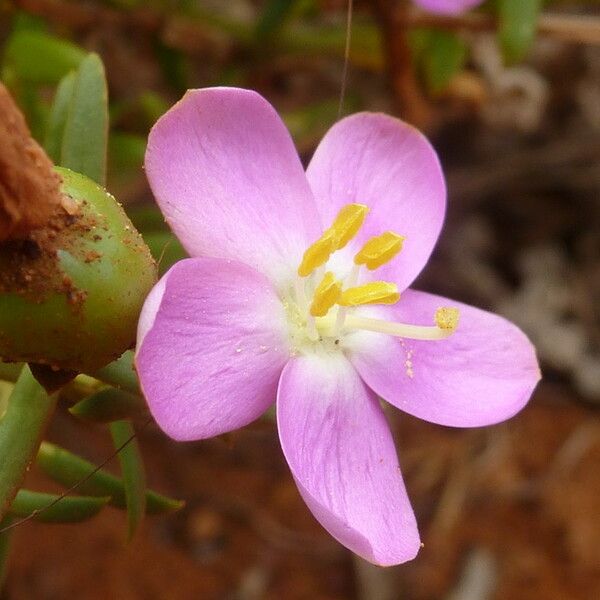
Plant Overview
Known as the Flax-leaf Chironia or sometimes the Bitter-bush, this South African beauty is a standout member of the Gentian family. It captures the essence of the Cape floral kingdom with its vibrant, starry blooms that seem to glow against its sparse, needle-like foliage. Historically, it was a staple in traditional medicine chests, prized for its intense bitterness and healing properties.
🔍 How to Identify
- 🌸 The Bloom: Striking five-petaled flowers in shades of vivid magenta or hot pink. The center features bright yellow anthers that often twist spirally as they age.
- 🌿 The Foliage: True to its name (linoides means "like flax"), the leaves are narrow, linear, and somewhat fleshy, arranged in opposite pairs along the stems.
- Stem The Growth: A small, multi-stemmed perennial that can appear slightly "leggy" or scrambling, reaching about 15–30 inches in height.
🏡 In Your Garden
- ☀️ Sun Seeker: This plant is a true child of the sun. It requires a bright, open position to thrive and will become weak and "floppy" if tucked away in the shade.
- 🏖️ Coastal Warrior: Because it naturally grows in sandy coastal flats, it is incredibly salt-tolerant and wind-resistant. It’s a perfect choice for seaside gardens where other plants might wither from the spray.
- 💧 Drainage is Key: It hates "wet feet." To mimic its native fynbos habitat, ensure your soil is sandy or gravelly. It is remarkably drought-tolerant once its root system is established, making it a low-maintenance gem for water-wise landscapes.
⚠️ Safety & Toxicity
- 🟢 Status: Generally considered non-toxic to touch, but its leaves are famously bitter.
- 🐾 Pets & Kids: While there are no widespread reports of severe poisoning, it contains bitter glycosides. If ingested in large quantities, it may cause stomach upset or nausea. It is best kept as an ornamental plant rather than a culinary one.
✨ Fun Fact
The genus name Chironia is named after Chiron, the wise Centaur of Greek mythology. Chiron was renowned for his knowledge of herbs and medicine, reflecting this plant's long history as a traditional remedy for everything from fevers to skin irritations.

Detailed Care Instructions

Place in a bright room that is sun drenched almost all day. Or directly in a south-facing window.

Some plants require more regular watering than others, which should be done every few days. It's critical to maintain the soil moist all of the time. The water requirements of the same plant placed in pots with varying sizes will differ. Because the water in the smaller pot evaporates faster than the water in the larger pot, it will require more watering. Regardless of pot size, the surface should constantly be maintained moist.








