Plant Overview
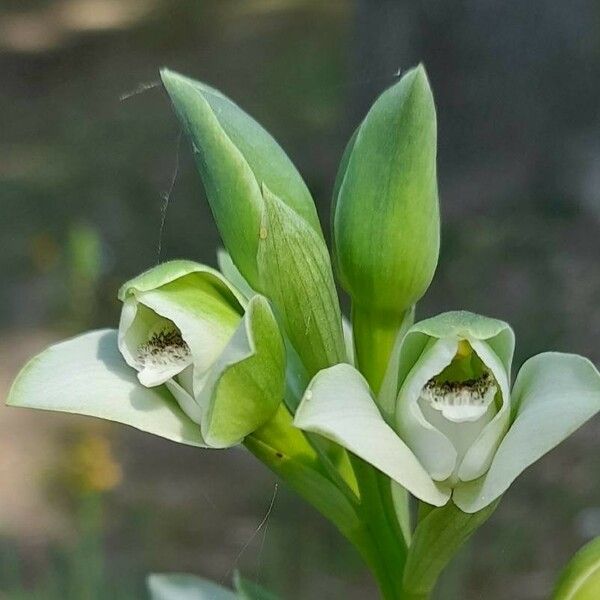
Known as the "Orquídea de las Vizcacheras" in its native South America, Chloraea membranacea is a hauntingly beautiful terrestrial orchid. Unlike the flashy tropical orchids that cling to trees, this hardy species emerges directly from the grassy earth, appearing like a delicate ghost in the wild pampas. Its petals are famous for their translucent, parchment-like texture, giving the plant an ethereal, fragile appearance.
🔍 How to Identify
- 🌸 Translucent Blooms: The flowers are a pale, milky white with striking emerald-green veins that look like delicate pinstripes running through the petals.
- 📏 Stately Spikes: It produces a tall, upright flower stalk (raceme) that can hold a cluster of 5 to 15 intricate blossoms, standing out clearly against green meadow grass.
- 🍃 Basal Rosette: Before the flower spike emerges, the plant sits as a cluster of fleshy, lance-shaped green leaves that hug the ground closely.
🏡 In Your Garden
- 🍄 The Fungal Bond: This orchid has a "secret" relationship with specific soil fungi (mycorrhiza) to get its nutrients. Because of this complex underground partnership, it is notoriously difficult to transplant and usually fails to survive if moved from its original spot.
- ☀️ Meadow Dweller: In its natural habitat, it loves open, sunny spaces with well-drained soil. It is often found in "Vizcacheras"—areas near the burrows of large rodents—where the soil is naturally aerated and fertile.
⚠️ Safety & Toxicity
- ✅ Non-Toxic: Chloraea membranacea is generally considered safe and is not known to be poisonous to humans, cats, or dogs.
- 🛑 Wild Conservation: While safe to touch, you should never pick these orchids in the wild. They are increasingly rare due to habitat loss, and because they rely on specific soil microbes, they cannot survive being taken home as "bouquets."
✨ Fun Fact
Chloraea membranacea is a master of the "disappearing act." During the dry or cold seasons, the entire plant retreats underground, surviving only as a system of thick, fleshy roots. It can remain completely invisible for months until the first spring rains signal it to shoot upward!

Detailed Care Instructions
To grow Chloraea Membranacea (also known as the Onion Orchid), you can follow these steps:
- Climate: Chloraea Membranacea is native to regions of South America, particularly Chile and Argentina. It requires a cool Mediterranean climate with mild summers and cool winters. If you live in a different climate, you can try to create similar conditions.
- Light: Place the plant in a location where it can receive bright but indirect light. Avoid direct sunlight, as it can scorch the leaves.
- Temperature: Ideal temperatures for the Onion Orchid range from 60°F (15°C) to 75°F (24°C) during the day. In the winter, a cooler temperature of around 50°F (10°C) is recommended to mimic its natural environment.
- Watering: Water the plant regularly during the growing season, keeping the soil consistently moist but not waterlogged. Check the moisture level of the soil before watering to prevent overwatering.
- Humidity: Chloraea Membranacea prefers a humid environment. You can increase humidity by placing a tray of water near the plant or using a humidifier.
- Potting mix: Use a well-draining potting mix that retains moisture but doesn't become waterlogged. A mix of orchid bark, sphagnum moss, and perlite can work well.
- Fertilizer: Feed the plant with a balanced orchid fertilizer, diluted to half strength, every two weeks during the growing season. Reduce or stop fertilizing during the dormant period.
- Propagation: Chloraea Membranacea can be propagated through division. Divide the plant when it becomes too crowded or when new growth appears. Ensure each division has healthy roots and leaves.
- Dormancy: The Onion Orchid requires a period of dormancy during the winter. Reduce watering and provide cooler temperatures to mimic its natural resting period.
- Pests and diseases: Keep an eye out for common orchid pests such as mealybugs, aphids, and spider mites. Treat infestations promptly using organic or chemical insecticides, as appropriate.
Remember that growing Chloraea Membranacea may require some trial and error to find the best conditions for your specific environment. Patience and consistent care will help your plant thrive.

To water this plant, you should schedule a watering routine based on the plant's needs and the humidity and temperature of the surrounding environment. Make sure to use room temperature water and avoid overwatering, as it can lead to root rot. As a general rule, wait until the top layer of soil is dry before watering and make sure to water evenly to avoid waterlogging in certain areas. It's also important to avoid getting water on the leaves and flowers, as this can cause damage or disease.
To fertilize this plant, you can use a general-purpose fertilizer with balanced N-P-K (nitrogen, phosphorus, potassium) ratio. Dilute the fertilizer according to the manufacturer's instructions and apply it to the soil around the plant during the growing season. Avoid over-fertilizing, as it can lead to excessive growth and weaken the plant. It's best to fertilize the plant in the early morning or late evening when the temperatures are cool and the soil is moist.
Chloraea Membranacea is a type of orchid plant that requires specific soil conditions to grow and thrive. The best type of soil to use with this plant is a well-draining mix that is rich in organic matter. It should have a pH level between 6.0 and 7.5, slightly acidic to neutral.
A suitable soil mix for Chloraea Membranacea would typically consist of a blend of peat moss, perlite, vermiculite, and bark. This type of soil allows for good drainage and airflow, which is essential for preventing root rot and other diseases. Additionally, the organic matter in the soil provides essential nutrients while retaining moisture to ensure healthy growth.
It is important to note that Chloraea Membranacea is a temperate orchid species, which means it requires a period of cool temperatures to trigger blooming. As such, the soil should be kept moist but not soaked, and the plant should be kept in a well-lit, cool location with temperatures around 50-60°F during its rest period.
Overall, providing the appropriate soil conditions for Chloraea Membranacea is crucial for the plant's health and successful growth.
To propagate this plant, you can use a sterilized sharp blade to cut the rhizomes into sections, making sure each section has at least one healthy bud or shoot. Let the cuttings dry for a few hours, then dust them with rooting hormone powder before potting them into a well-draining soil mix. Keep the soil moist but not too wet, and place the pots in a bright, warm location with indirect light. The new plants should begin to grow within a few weeks.








