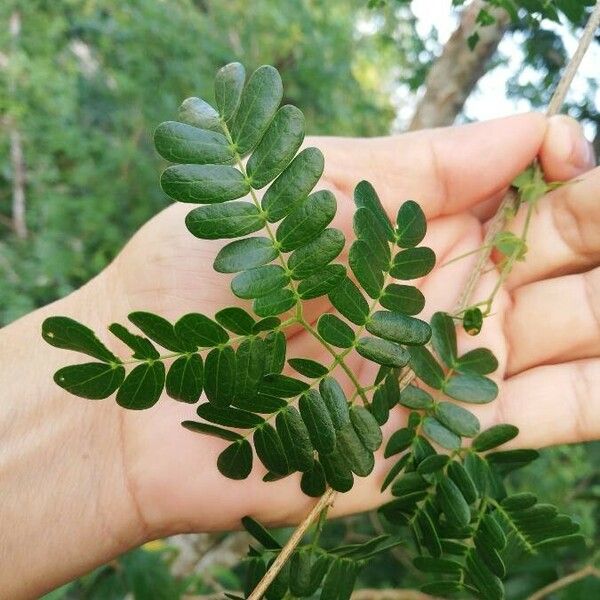
Plant Overview
Often known as the Mongollo or Palo Blanco, Chloroleucon mangense is a sculptural beauty native to the dry forests of Central and South America. It is beloved for its airy, fern-like canopy that creates a dappled "lace" of shade. While it looks delicate enough for a fairy tale, this tree is a resilient survivor, often thriving in harsh, rocky soils where other plants might wither.
🔍 How to Identify
- 🌿 The Foliage: Features bipinnate (twice-feathered) leaves that are remarkably small and delicate. The tiny leaflets give the entire tree a soft, misty appearance from a distance.
- ☁️ The Blooms: Produces fragrant, cream-colored or yellowish "puffball" flowers. These globose heads look like tiny explosions of silk scattered among the green branches.
- 🥨 The Seed Pods: After flowering, it develops flat, dark brown legumes. These pods often twist or curve into unique shapes as they mature and dry on the branch.
🏡 In Your Garden
- 🌞 Sun Worshiper: This species is a true sun-lover. It requires bright, direct light to maintain its structural integrity and is exceptionally drought-tolerant once its root system is established.
- 🌱 Soil Architect: As a member of the legume family, it works behind the scenes to "fix" nitrogen in the soil. It essentially creates its own fertilizer, making it a great "nurse plant" for surrounding greenery.
- ✂️ Pruning Needs: Because it can grow in a somewhat sprawling, zig-zag pattern, it benefits from early "training" or light pruning to encourage a strong central trunk if you prefer a tree-like shape.
⚠️ Safety & Toxicity
- 🛡️ Low Risk: Chloroleucon mangense is generally considered non-toxic to humans and common household pets. It lacks the aggressive thorns found on some of its close cousins.
- 🐾 Digestive Caution: While not poisonous, the seed pods are very high in fiber and tannins. If a curious dog or child consumes a large quantity, it may cause minor stomach upset or a choking hazard.
✨ Fun Fact
Many trees in this genus exhibit "nyctinasty," a rhythmic movement where the leaves fold up tightly at night to conserve moisture and reopen at dawn to greet the sun—it’s like the tree is literally going to sleep!

Detailed Care Instructions

Place in a bright room that is sun drenched almost all day. Or directly in a south-facing window.

Some plants require more regular watering than others, which should be done every few days. It's critical to maintain the soil moist all of the time. The water requirements of the same plant placed in pots with varying sizes will differ. Because the water in the smaller pot evaporates faster than the water in the larger pot, it will require more watering. Regardless of pot size, the surface should constantly be maintained moist.








