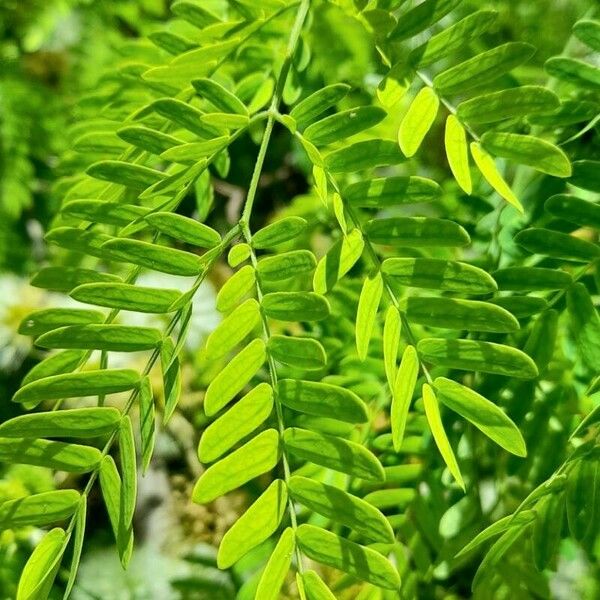
Plant Overview
Commonly known in its native South American range as Abay or Quiebracho Blanco, Chloroleucon tenuiflorum is an elegant member of the legume family. This hardy tree is a master of the dry forests, known for its airy, cloud-like canopy and its ability to thrive where other plants might wither. In its homeland of the Gran Chaco, it is a vital part of the ecosystem, providing shade and "bee-bread" for local pollinators.
🔍 How to Identify
- 🌿 The Foliage: Features delicate, bipinnate (double-feathered) leaves that give the tree a soft, misty appearance. The tiny leaflets fold up slightly in response to extreme heat or darkness.
- ☁️ The Blooms: Produces fragrant, creamy-white "puffball" flowers. These are actually dense clusters of long stamens that look like miniature pom-poms scattered among the branches.
- 🌀 The Seed Pods: One of its most identifying traits is the seed pod, which is often curved or spirally twisted, turning a deep woody brown when mature.
- 🪵 The Bark: The trunk is usually rugged and fissured, providing a sharp, textural contrast to the light, feathery leaves.
🏡 In Your Garden
- 🌱 Nitrogen Fixer: Like many in the Fabaceae family, this plant has a symbiotic relationship with soil bacteria to "fix" nitrogen. This means it actually improves the soil quality for surrounding plants rather than just consuming nutrients.
- ☀️ Drought Specialist: It possesses a deep taproot system, meaning it hates being moved once planted. It is exceptionally drought-tolerant and prefers well-draining, sandy soil that mimics the dry plains of Bolivia and Argentina.
- 🐝 Pollinator Magnet: If you are looking to support local biodiversity, this tree is a favorite for honeybees and butterflies, who are drawn to the nectar-rich globose flowers.
⚠️ Safety & Toxicity
- 🟢 General Status: Generally considered non-toxic to humans and handled safely by gardeners.
- 🐾 Pet Warning: While not specifically listed as a high-risk toxin, the seed pods contain tannins and saponins. If ingested in large quantities by curious dogs or livestock, they may cause mild gastrointestinal upset.
- 🌵 Physical Caution: Older specimens can develop stiff, spine-like twigs; handle with gloves when pruning to avoid scratches.
✨ Fun Fact
The genus name Chloroleucon is derived from the Greek words for "greenish-white," a poetic nod to the ethereal, pale color of its blossoms that seem to glow softly during the golden hour of sunset.

Detailed Care Instructions








