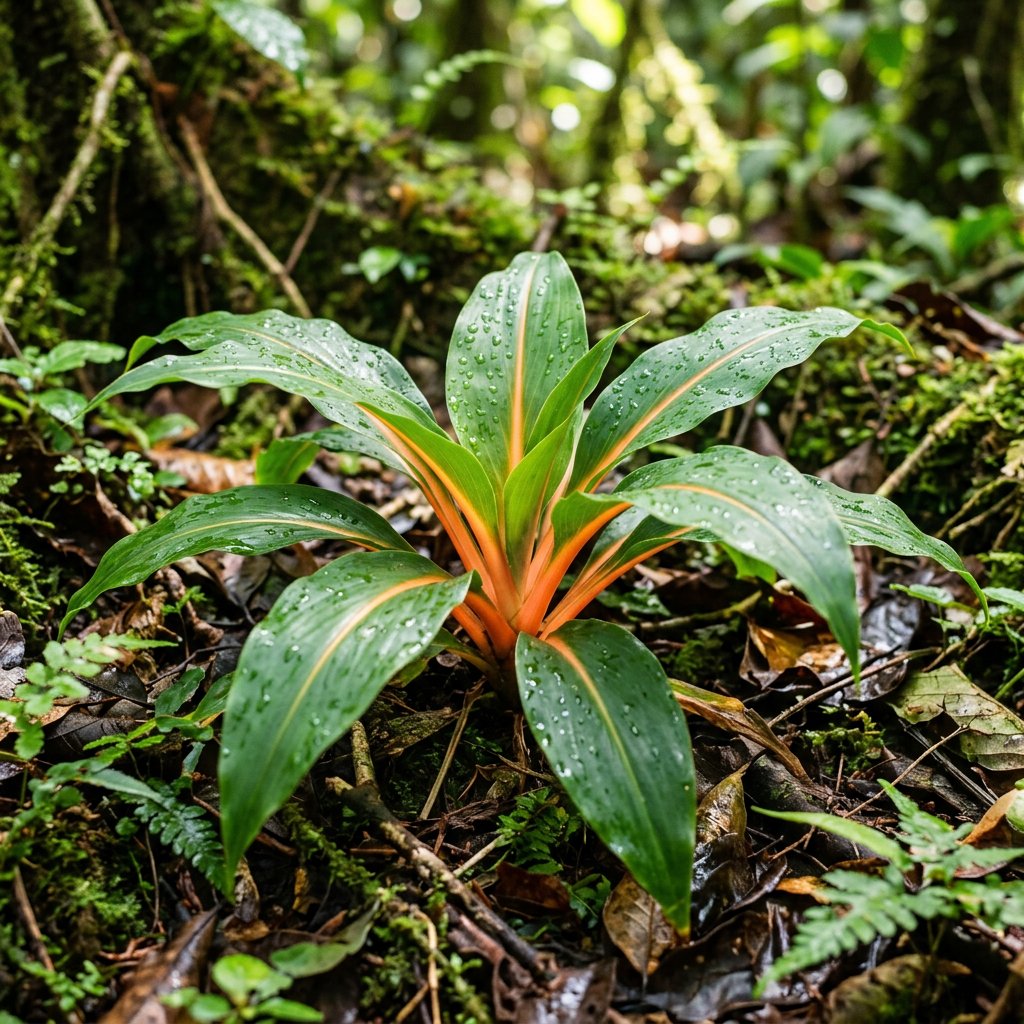
Plant Overview
Often called the "Mandarin Plant," "Fire Flash," or "Sierra Leone Lily," this stunning tropical perennial is the flashy cousin of the common Spider Plant. Unlike its trailing relatives, it commands attention with a glowing orange center that looks almost neon against its deep green foliage. It’s a favorite for those who want a "sunset in a pot" without the high maintenance of a true orchid.
🔍 How to Identify
- 🧡 Luminous Petioles: The most striking feature is the bright coral-to-mandarin orange stems (petioles) and midribs that radiate from the center of the plant.
- 🍃 Broad Foliage: The leaves are wide, lance-shaped, and shiny dark green, providing a sharp contrast to the orange "fire" in the middle.
- 🌱 Growth Habit: It grows in a neat, upright rosette. Unlike the common Spider Plant, it does not produce long runners or "babies" (plantlets).
🏡 In Your Garden
- 💡 The Glow Factor: To keep those orange stems vibrant, place it in bright, indirect light. If the light is too dim, the orange fades to a dull peach; if it’s too harsh, the broad leaves will scorch.
- 💧 Sensitive Sipper: Like many in the Chlorophytum family, this plant is sensitive to fluoride and salts in tap water. If you notice the tips of the leaves turning brown, try switching to distilled or rainwater to keep it looking pristine.
- ☁️ Humidity Lover: Hailing from the rainforests of West Africa, it appreciates a bit of extra humidity. Grouping it with other plants or using a pebble tray will help prevent crispy leaf edges.
⚠️ Safety & Toxicity
- ✅ Safe Status: Good news for pet parents! Chlorophytum orchidastrum is considered non-toxic to cats and dogs.
- 👶 Human Safety: It is generally safe for children as well, though it is always best to discourage curious little ones from chewing on any houseplants to avoid mild stomach upset.
✨ Fun Fact
Despite its name orchidastrum, this plant is not an orchid at all! The name was given because its wide, lush leaves bear a striking resemblance to some species of terrestrial orchids found in the same African regions.

Detailed Care Instructions
| Color | Bright Glossy Green & Yellow-Orange |
| Soil Ph | 6.8 – 7.2 |
| Humidity | Normal |
| Lighting | Part Sun |
| Toxicity | Toxic |
| Soil Type | Moist But Well-Draining Soil |
| Bloom Time | Summer (June To - August) |
| Difficulty | Medium |
| Plant Type | Evergreen |
| Mature Size | 1 - 2 Feet Tall |
| Native Area | Africa |
| Temperature | 18°C - 25°C |
| Sun Exposure | Indirect Sunlight |
| Hardiness Zones | 9-11 |
To grow a Chlorophytum Orchidastrum plant, also known as the Spider Plant, follow these steps:
- Select a suitable location: Spider plants thrive in bright, indirect sunlight. Find a location with good natural light, but avoid direct exposure to harsh sunlight as it can scorch the plant.
- Choose the right soil: Spider plants prefer well-draining, slightly acidic soil. A mix of potting soil, perlite, and peat moss works well. Make sure the pot has drainage holes to prevent waterlogging.
- Propagation: Spider plants are easy to propagate. You can either use the plantlets, or "spiderettes," that develop on the parent plant or use stem cuttings.
- For plantlets: Carefully separate the baby spider plants from the parent plant when they have developed several roots. Plant them in small pots with fresh soil, ensuring the roots are covered but the leaves are above the soil.
- For stem cuttings: Cut a healthy stem with two or three leaves. Place it in a glass of water, ensuring the bottom nodes are submerged. Once new roots have grown, transfer the cutting to a pot with fresh soil.
- For plantlets: Carefully separate the baby spider plants from the parent plant when they have developed several roots. Plant them in small pots with fresh soil, ensuring the roots are covered but the leaves are above the soil.
- Watering: Spider plants prefer slightly moist soil. Water them when the top inch of soil feels dry to the touch. Avoid overwatering, as it can lead to root rot. In winter, reduce watering frequency.
- Humidity: Spider plants appreciate higher humidity levels. In dry environments, consider misting them with water or placing a tray of water near the plant to increase humidity.
- Fertilization: Feed your spider plant with a balanced liquid or water-soluble fertilizer diluted to half-strength every two weeks during the growing season (spring and summer). Reduce or stop fertilization in fall and winter.
- Pruning: Spider plants tend to produce long "spiderettes" or runners. Prune them off once they have developed some roots to promote a bushier growth habit. Remove yellow or dead leaves regularly.
- Repotting: Spider plants prefer slightly crowded conditions, but if they become root-bound or outgrow their pot, repot them into a slightly larger container with fresh soil. Repotting is best done during spring.
- Pest control: Spider plants are generally resistant to most pests. However, they can occasionally face issues with mealybugs or spider mites. Regularly inspect the leaves for signs of pests, and if necessary, treat with an appropriate insecticidal soap.
By following these steps and providing proper care, your Chlorophytum Orchidastrum plant will grow and thrive, adding beauty to your indoor or outdoor space.

Place in a window with dappled sun or a spot in the middle of a room. Or directly in a window facing west or east.

To water this plant, first check the soil moisture level by sticking your finger about an inch into the soil. If it feels dry, it's time to water. Use room temperature water and pour slowly around the base of the plant, avoiding getting water on the leaves or stems. Water should be allowed to drain out the bottom of the pot, so make sure to empty any excess water from the saucer. Avoid overwatering as this can cause root rot. Instead, follow a consistent watering schedule, ensuring the top inch of soil remains moist but not waterlogged.
To fertilize this plant, you should use a balanced, water-soluble fertilizer with equal amounts of nitrogen, phosphorus, and potassium. Dilute the fertilizer to half-strength and apply every two to three weeks during the growing season, which is typically from spring to early fall. Be sure to water the soil thoroughly before and after applying fertilizer to avoid burning the plant's roots. Avoid fertilizing during the winter months when the plant is dormant.
Chlorophytum Orchidastrum is a type of plant that requires well-draining soil. It is important to choose a soil that is not clay-like and is aerated properly. The pH level of the soil should be around 6.0 to 7.5, which is slightly acidic to slightly alkaline. The soil should have a good moisture retention capacity without being excessively wet. It is recommended to mix the soil with organic matter like compost or peat moss to improve soil fertility and retain moisture. Avoid using heavy fertilizers or chemical additives, such as pesticides, as they can damage the roots of the plant. Choosing the right soil will ensure healthy growth and long-term survival of the plant.
To propagate this plant, you will need to gather stem cuttings that are four to six inches long with a few leaves attached. Use a sharp, clean pair of scissors or pruning shears and cut right above a node.
Next, you will want to dip the cut end of the stem in rooting hormone powder to encourage root growth. Then, plant the cutting in a pot filled with moist soil that is well-draining.
Within a few weeks, you should start to see new growth and roots forming. It is important to keep the cutting in a warm, humid environment with indirect sunlight until it has fully acclimated to its new pot.
Over time, the cutting will grow into a mature plant and can be repotted or placed in a larger container to accommodate its growth.
Common pests of the fire flash include Mealybugs, spider mites, fungus gnats, aphids. Make a habit of checking your fire flash frequently for pests so that any infestations can be caught and managed early.








