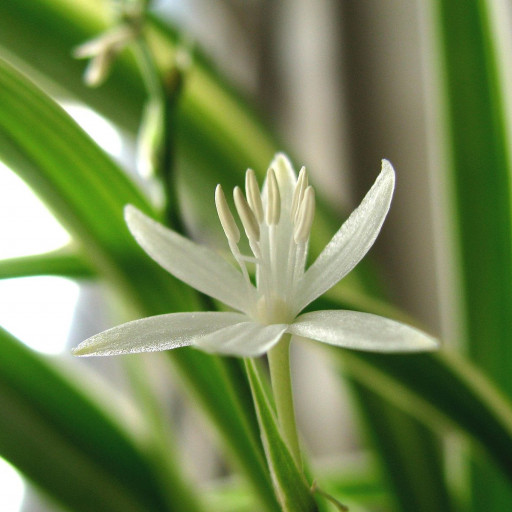
Plant Overview
While you may be familiar with the common variegated Spider Plant found in almost every office, Chlorophytum viridescens is its elegant, "back-to-basics" cousin. Native to the woodlands of East and Southern Africa, this plant opts for a lush, monochromatic look over flashy stripes. It is often referred to by enthusiasts as the "Green Forest Spider Plant" for its deep emerald hues and preference for dappled shade.
🔍 How to Identify
- 🌿 The Foliage: Unlike the common houseplant variety, this species features broader, lance-shaped leaves that are a solid, rich green. They form a dense, fountain-like rosette.
- 🟢 The Blooms: The species name viridescens translates to "becoming green," which refers to its subtle flowers. It produces delicate, star-shaped blossoms that are white with a distinct greenish tint.
- 🌱 Growth Habit: While it clumps beautifully, it is less likely to produce the long, dangling "runners" or "babies" (offsets) seen in C. comosum, making it a more compact choice for tabletops.
🏡 In Your Garden & Home
- 💧 The Hidden Reservoir: Like most members of the Chlorophytum family, this plant possesses thick, fleshy tuberous roots. These act as water storage tanks, allowing the plant to survive a missed watering or two, though it prefers consistent moisture.
- ⛅ Lighting Nuance: Because it lacks white variegation, this plant is more efficient at photosynthesis. It can tolerate slightly lower light levels than variegated types, but it truly thrives in bright, indirect "jungle" light.
- 🪴 Soil Preference: It dislikes "wet feet." Ensure you use a well-draining potting mix. If the leaf tips turn brown, it’s often a sign of salt or fluoride buildup from tap water rather than a lack of humidity.
⚠️ Safety & Toxicity
- ✅ Safe for Families: Chlorophytum viridescens is generally considered non-toxic to humans. It is a popular choice for nurseries and playrooms.
- 🐱 The Cat Factor: While non-toxic to pets, cats are often strangely attracted to the leaves of Spider Plants because they contain compounds that can have a mild hallucinogenic effect on felines. To keep your plant looking pretty and your cat from getting a stomach ache, keep it out of reach!
✨ Fun Fact
In its native African habitats, Chlorophytum viridescens is often found growing alongside rivers and in the shade of dense thickets, where it plays a vital role in the ecosystem by providing ground cover and stabilizing soil with its robust root system.

Detailed Care Instructions
To grow Chlorophytum Viridescens plant, also known as the Green Spider Plant, follow these steps:
- Choose the right location: Chlorophytum Viridescens thrives in bright, indirect sunlight. Place the plant in a location where it can receive a few hours of morning or evening sun, but avoid direct sunlight as it can scorch the leaves.
- Soil requirements: Use a well-draining potting mix that retains some moisture. A mix of peat moss, perlite, and compost can work well. Avoid using heavy soils that retain water, as it can lead to root rot.
- Pot selection: Select a pot that has drainage holes to prevent waterlogging. Make sure the pot is slightly larger than the root ball to provide room for growth.
- Watering: Keep the soil evenly moist but not waterlogged. Chlorophytum Viridescens prefer slightly moist soil, so water the plant when the top inch of soil feels dry. During winter, reduce watering as the plant goes into a dormant phase.
- Humidity: This plant thrives in moderate to high humidity levels. Misting the leaves or placing the plant pot on a tray with water and pebbles can help increase humidity around the plant.
- Temperature: Chlorophytum Viridescens prefer average room temperatures between 18-24°C (64-75°F). Avoid exposing the plant to extreme temperature fluctuations.
- Fertilizer: Apply a balanced, water-soluble fertilizer once a month during the growing season (spring and summer). Follow the package instructions for proper dilution and application rates.
- Pruning: Regularly remove any dead or yellow leaves to keep the plant healthy and attractive. You can also trim back long stems to encourage bushier growth.
- Propagation: Chlorophytum Viridescens can be propagated easily through offsets, also known as spiderettes. These small plantlets can be delicately separated from the parent plant and planted in a separate pot with a well-draining soil mixture. Keep the new plant moist until it establishes roots.
- Pests and diseases: Monitor the plant for common indoor plant pests like mealybugs, spider mites, and aphids. If detected, treat them promptly with organic insecticidal soap or neem oil. Ensure good airflow around the plant to prevent fungal diseases.
By following these guidelines, you should be able to successfully grow and care for your Chlorophytum Viridescens plant.

Place in a window with dappled sun or a spot in the middle of a room. Or directly in a window facing west or east.

To water this particular plant, you should first check the soil moisture level by inserting your finger about an inch deep into the soil. If the soil feels dry, it is time to water the plant. Use room temperature water and pour it slowly onto the soil, being careful not to get water on the leaves or stem. Water until the excess water starts to drain from the bottom of the pot. Avoid overwatering as it can cause root rot and harm the plant. It is recommended to water this plant once a week, but the frequency may depend on the environmental conditions and humidity levels.
To fertilize this plant, use a balanced liquid fertilizer once a month during the growing season, from spring to fall. Dilute the fertilizer to half strength and apply it to moist soil. Avoid over-fertilizing, which can lead to salt buildup and damage the roots.
The best soil to use with this particular plant is a well-draining soil mix that is rich in organic matter, such as compost or peat moss. The soil should be slightly acidic to neutral, with a pH range between 5.5 and 7.0. Avoid using heavy clay soils or soil mixes that are excessively compacted, as these can impede water and nutrient uptake. A loose, friable soil with good aeration is essential for promoting healthy root growth and overall plant health. It is also important to avoid overwatering, as this can lead to root rot and other forms of stress. Ensure that the soil is moist but never saturated, and allow the top inch of soil to dry out before watering again. Regular fertilization may also be necessary, as these plants are fast-growing and require ample nutrients to thrive. A slow-release fertilizer or a balanced liquid fertilizer applied monthly should be sufficient to meet the plant's nutritional needs.
To propagate this plant, you will need to take a mature plant and carefully divide its rhizomes. Each division should have a healthy amount of roots and shoots. Plant each division in separate pots or directly in soil, making sure to keep the soil moist and warm during the rooting process. It is important to ensure that each new plant has access to adequate light and water to continue growing successfully.
Common pests of the chlorophytum viridescens include Spider mites, fungus gnats, aphids. Make a habit of checking your chlorophytum viridescens frequently for pests so that any infestations can be caught and managed early.








