Plant Overview
Often called the East Indian Satinwood, this elegant deciduous tree is a crown jewel of the dry forests of India and Sri Lanka. Renowned for its incredibly lustrous, golden timber that catches the light like spun silk, it has been a prized material for luxury furniture and royal palaces for centuries. It is a slow-growing survivor that adds a touch of historical prestige to any landscape.
🔍 How to Identify
- 🌳 The Bark: Features a thick, corky, and deeply fissured texture with a distinct pale-yellow or yellowish-grey hue that feels spongy to the touch.
- 🍃 The Foliage: Displays feathery, pinnate leaves composed of many small, oblong leaflets; when crushed, they emit a sharp, pungent, and slightly citrusy aroma.
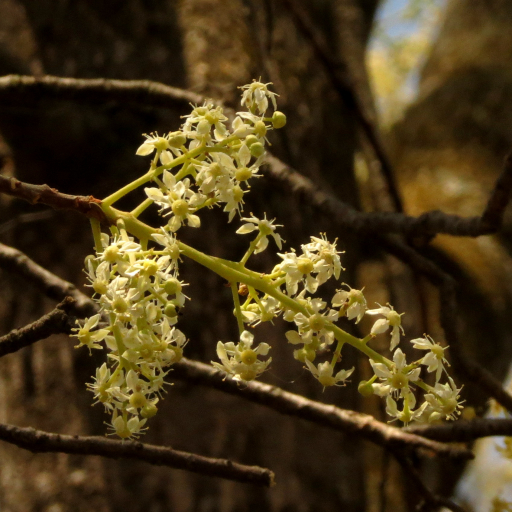
- 🌼 The Blooms: Small, creamy-white or pale green flowers appear in large, branched clusters (panicles) at the ends of the stems, later producing small, oblong seed capsules.
🏡 In Your Garden
- ☀️ Sun & Resilience: This tree is a sun-worshipper and is exceptionally drought-tolerant once established. It is a perfect candidate for xeriscaping or gardens in arid climates where water is scarce.
- 🌱 Root Sensitivity: It develops a deep taproot and is notoriously sensitive to being moved. If you are planting one, ensure you choose its "forever home" immediately, as it hates being transplanted.
- 🪨 Soil Nuance: It thrives in poor, rocky, or gravelly soils where other plants might struggle. However, it will fail quickly in waterlogged or heavy clay soil, as "wet feet" lead to root rot.
⚠️ Safety & Toxicity
- 🚫 Irritant Status: The wood, bark, and essential oils contain alkaloids that can cause "Satinwood Dermatitis"—a blistering skin rash—in sensitive individuals, particularly when handling sawdust or fresh cuttings.
- 🐾 Ingestion Warning: The leaves and bark are considered toxic if ingested. Keep pets and small children away from fallen debris or low-hanging foliage to prevent accidental poisoning.
✨ Fun Fact
In the 18th and 19th centuries, East Indian Satinwood was so highly coveted in Europe that it was used to create the most expensive "Sheraton" style furniture. It was often called "Yellow Wood" because of its natural oily sheen that makes the wood look polished even before any wax is applied!

Detailed Care Instructions
To grow Chloroxylon Swietenia, also known as East Indian satinwood, follow these steps:
- Purchase seeds or young seedlings from a reputable nursery or supplier.
- Choose a well-drained and sunny location for planting. This tree requires full sun to thrive.
- Prepare the soil by removing any weeds or grass and loosening it with a garden fork or tiller. Ensure there is adequate drainage to prevent waterlogging.
- Dig a hole twice as wide and deep as the root ball of the seedling.
- Place the seedling in the hole, ensuring that the top of the root ball is level with or slightly above the soil surface.
- Backfill the hole with soil, gently firming it around the root ball to eliminate air pockets.
- Water the newly planted seedling thoroughly to settle the soil.
- Mulch around the base of the tree with organic matter, such as wood chips or compost, to help retain moisture and suppress weed growth.
- Water the tree regularly, especially during dry spells. Chloroxylon Swietenia prefers consistent moisture but can tolerate brief periods of drought once established.
- Prune the tree occasionally to maintain its desired shape and remove any dead or damaged branches.
- Fertilize the plant annually, preferably in spring or early summer, with a balanced slow-release fertilizer. Follow the manufacturer's instructions for application rates.
- Monitor the tree for any signs of pests or diseases. Treat them promptly using appropriate organic or chemical controls as necessary.
- Be patient, as Chloroxylon Swietenia can take several years to reach its full height and spread. Enjoy watching it grow and develop into a beautiful specimen tree.
The most important thing to keep in mind when watering this plant is to never let the soil dry out completely. It prefers consistently moist soil, but overwatering can lead to root rot. It's recommended to water the plant deeply, allowing the water to soak into the soil at the root level. It's also a good idea to ensure proper drainage by using a pot with drainage holes or adding rocks or gravel to the bottom of the pot. In addition, this plant benefits from occasional misting to increase humidity in the air around it. Finally, during the winter months, it's important to decrease watering frequency to allow the plant to rest.
To fertilize this plant, apply a balanced, slow-release fertilizer in early spring. Use a nitrogen-rich fertilizer during the growing season to encourage healthy growth and lush foliage. Be sure to follow the instructions on the fertilizer package, as over-fertilization can harm the plant. Additionally, use organic compost or manure to enrich the soil and provide essential nutrients. Water the plant thoroughly after fertilizing to help distribute the nutrients throughout the soil.
The ideal soil for Chloroxylon Swietenia plants is a well-drained soil that has a slightly acidic to neutral pH. It should be rich in organic matter and have good moisture retention capabilities. The soil should also be able to support the growth of deep roots, as Chloroxylon Swietenia plants have a taproot system. A mixture of sand, loam, and compost is usually recommended for this plant. Additionally, it is important to ensure that the soil is free of disease-causing pathogens and pests before planting the Chloroxylon Swietenia plant.
To propagate this plant, you will need to collect seeds from mature fruits. After collecting the seeds, remove the surrounding pulp and wash the seeds thoroughly with water.
Once the seeds are cleaned, soak them in water overnight. Then, plant the seeds in a potting mix containing equal parts of perlite and peat moss. Make sure the seeds are planted at a depth of about 1 inch and water them thoroughly.
Place the pot in a warm, well-lit area, but avoid direct sunlight. Keep the soil moist by watering it regularly. The seeds should germinate within 2-3 weeks.
Once the seedlings have developed several sets of true leaves, they can be transplanted into individual pots filled with a similar potting mix as before. Place the pots in a bright area and continue to water them regularly.
Eventually, the seedlings will grow into mature plants that can be transplanted into the ground or larger containers. With proper care, Chloroxylon Swietenia plants can thrive and provide years of enjoyment.








