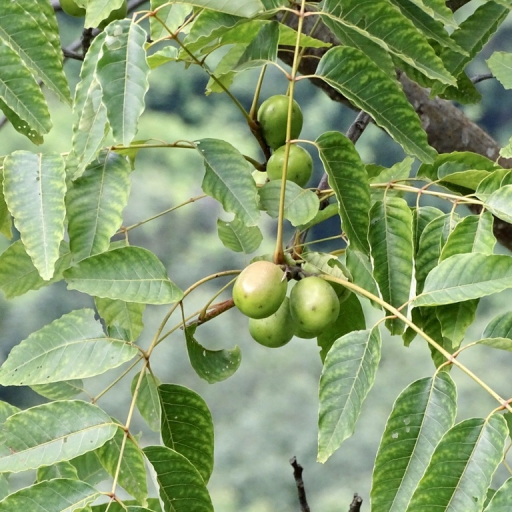
Plant Overview
Known as the Lapsi or Nepali Hog Plum, this deciduous tree is a cultural icon of the Himalayas and Southeast Asia. To the locals in Nepal, it is the "fruit of the mountains," prized for its incredibly tart, vitamin-rich flesh that transforms into spicy pickles and sweet leathers. While it looks like a standard fruit tree at first glance, its secret lies within its stone, which features a peculiar pattern that has earned it a place in traditional jewelry and spiritual practices.
🔍 How to Identify
- 🍃 The Foliage: Large, glossy, pinnate leaves (feather-like) that create a dense, rounded canopy. In the autumn, the leaves turn a vibrant, buttery yellow before falling.
- 🍐 The Fruit: Smooth, oval-shaped drupes that turn a pale, greenish-yellow when ripe. They look somewhat like small, elongated plums but possess a much tougher skin.
- 🕳️ The "Five-Eyed" Seed: The most reliable identifier is the hard, woody stone inside the fruit. It features five distinct small pits or "pores" at one end, which look like tiny eyes.
🏡 In Your Garden
- 🌳 Space & Scale: This is not a plant for small patios. It grows into a majestic, tall tree (up to 20 meters) and requires significant vertical and horizontal space to thrive.
- 👫 The Mating Game: Lapsi trees are typically dioecious, meaning you need both a male and a female tree in relatively close proximity if you want to harvest any fruit.
- ⛰️ Hardiness: It is surprisingly resilient to varying altitudes but performs best in subtropical climates. It prefers well-drained, loamy soil and can be quite sensitive to standing water around its roots.
⚠️ Safety & Toxicity
- ✅ Status: Generally non-toxic and highly valued for food.
- 👄 The Sour Factor: The raw fruit is intensely acidic. While not "toxic," eating too many raw Lapsi can cause temporary mouth irritation or digestive discomfort due to the high acid content.
- 🦴 Choking Hazard: The "five-eyed" seeds are incredibly hard and slippery. They should be kept away from small children and pets, as they pose a significant choking risk.
✨ Fun Fact
In Nepal, the hard inner stones are not thrown away; they are dried and used as game pieces for traditional local games or polished and strung together to create unique, organic "seed beads" for necklaces and bracelets.

Detailed Care Instructions
To grow Choerospondias Axillaris, also known as the Ceylon gooseberry or wild grape, follow these steps:
- Climate: Check if the plant is suitable for your climate. Choerospondias Axillaris generally thrives in tropical and subtropical regions with warm temperatures and high humidity.
- Sunlight: Choose a location with full sunlight or partial shade. The plant prefers at least six hours of direct sunlight each day.
- Soil: Select well-draining soil that is rich in organic matter. The plant can tolerate various soil types, including loamy, clayey, or sandy soils.
- Planting: Dig a hole twice the size of the root ball of the plant. Place the plant in the hole, ensuring that it stands straight. Backfill the hole with soil, pressing firmly around the base of the plant.
- Watering: Water the plant thoroughly after planting to settle the soil. Keep the soil consistently moist but not waterlogged. Avoid overwatering, as it can lead to root rot.
- Fertilization: Apply a balanced slow-release fertilizer during the growing season. Follow the manufacturer's instructions for the proper dosage. Additionally, you can supplement with organic matter, such as compost, to enhance soil fertility.
- Pruning: Prune the plant regularly to maintain a desirable shape. Remove any dead, diseased, or crossing branches. Pruning helps promote new growth and improves overall plant health.
- Pest and disease control: Keep an eye out for common pests like aphids, mealybugs, or scale insects. Use natural or chemical insecticides if necessary. Monitor the plant for signs of diseases such as powdery mildew or leaf spot and treat accordingly.
- Mulching: Apply a layer of organic mulch around the base of the plant to conserve moisture, suppress weed growth, and regulate soil temperature.
- Harvesting: Depending on the variety, Choerospondias Axillaris typically bears fruit in late summer or early autumn. Harvest the fruit when it is ripe, usually when it turns yellow or orange. It is essential to handle the fruits carefully as they are delicate.
Remember to provide adequate care and monitor the plant regularly to ensure its healthy growth and development.

Place in a bright room that is sun drenched almost all day. Or directly in a south-facing window.

To properly water the plant in question, follow these guidelines:
1. Understand the Watering Needs: Choerospondias Axillaris plant prefers a moderately moist environment. It is essential to strike a balance between overwatering and underwatering, as both can harm the plant's health.
2. Observe the Soil Moisture: Regularly check the moisture level of the soil by sticking your finger about an inch deep into the soil. If it feels dry at this depth, it's an indication that the plant requires watering.
3. Watering Method: Use a watering can or a hose attachment with a gentle spray nozzle to avoid disturbing the plant's roots. Ensure that the water flow is soft and not forceful.
4. Watering Frequency: Water the plant as soon as the soil begins to dry out, but avoid letting it sit in overly saturated soil. As a general guideline, watering every 7-10 days is often sufficient, but adjust the frequency based on the plant's specific needs, climate, and environmental conditions.
5. Watering Amount: Aim to provide a thorough watering, ensuring that the entire root ball receives moisture. Slowly and evenly pour water around the base of the plant until it starts to pool on the surface. Allow the water to soak in, then repeat the process to ensure that the roots are properly hydrated.
6. Drainage Consideration: Ensure that the pot or planting site has adequate drainage holes that allow excess water to escape. This prevents waterlogging, which can lead to root rot and other associated problems.
7. Weather Conditions: Be mindful of weather conditions when watering. During hot and dry periods, the soil may dry out faster, necessitating more frequent watering. In contrast, during cooler and rainier seasons, you may need to adjust the watering frequency to avoid overwatering.
8. Adjusting Watering Routine: Monitor the plant's response to your watering routine. If you notice yellowing leaves, mold growth, or a persistently damp soil surface, it may indicate overwatering. On the other hand, wilting or curling leaves can suggest a need for more frequent or thorough watering.
Remember, maintaining a consistent watering schedule for Choerospondias Axillaris plant is crucial for its overall health and well-being. The goal is to provide adequate moisture without subjecting the plant to prolonged periods of drought or excess water saturation.
To fertilize a Choerospondias Axillaris plant, follow these instructions:
- Choose a balanced, slow-release fertilizer specifically formulated for fruit trees or shrubs.
- Read and carefully follow the instructions on the fertilizer packaging for the recommended application rate.
- Generally, it is best to fertilize the plant in early spring before new growth begins.
- Scatter the fertilizer evenly around the base of the plant, avoiding direct contact with the trunk or stems.
- Use a garden fork or rake to gently work the fertilizer into the topsoil to ensure it reaches the plant's root zone.
- Water the plant thoroughly after fertilizing to help activate and distribute the nutrients.
- Avoid over-fertilizing, as it can lead to excessive vegetative growth or nutrient imbalances. It is better to under-fertilize slightly than to overdo it.
- Monitor the plant's growth and health throughout the growing season. If you notice signs of nutrient deficiencies (such as yellowing leaves or stunted growth), consider applying a foliar spray or adjusting the fertilizer application accordingly.
- Regularly check the soil moisture levels and adjust watering accordingly, as proper hydration is also essential for nutrient uptake.
Remember to consider the specific needs and recommendations for your local climate and growing conditions while fertilizing the Choerospondias Axillaris plant.
When selecting soil for Choerospondias Axillaris, it is important to consider the natural environment of the plant. It typically thrives in a specific type of soil that provides proper drainage and nutrient levels.
The ideal soil for Choerospondias Axillaris is well-draining yet moisture-retentive. A loamy or sandy soil composition is preferred, as it allows excess water to easily flow away from the roots while still retaining enough moisture for the plant's needs. This prevents the roots from becoming waterlogged or susceptible to rot.
The soil should be slightly acidic to neutral, with a pH ranging from 6.0 to 7.0. This range ensures optimal nutrient availability and uptake by the plant's roots.
It is also advisable to incorporate organic matter into the soil prior to planting Choerospondias Axillaris. This can include well-rotted compost, leaf mold, or aged manure. Organic matter enhances the soil structure, improves drainage, and increases nutrient content, benefiting overall plant growth and health.
Additionally, it is crucial to consider the location of the plant when selecting soil. Choerospondias Axillaris prefers a spot with full to partial sun exposure, so the soil should be able to support the plant's light requirements.
Regular soil moisture monitoring is recommended to ensure the plant is neither underwatered nor overwatered. Adding a layer of mulch around the base of the plant can help retain moisture and regulate soil temperature.
By providing the appropriate soil conditions, you can help ensure healthy growth and development for your Choerospondias Axillaris plant.
Choerospondias axillaris is a deciduous tree that can be propagated through various methods. Here are the details on how to propagate this plant:
- Propagation by Seeds:
- Collect mature seeds from the tree during the fall season, when they are ripe.
- Remove the fleshy fruit pulp from the seeds by washing them thoroughly.
- Soak the seeds in water for 24 hours to enhance germination.
- Sow the seeds in a nursery container filled with a well-draining soil mix.
- Cover the seeds lightly with soil and mist the surface.
- Place the container in a warm, sunny location, ensuring it receives indirect light.
- Keep the soil moist but not waterlogged throughout the germination period.
- Germination usually takes around 4-8 weeks. Once the seedlings have developed several leaves, they can be transplanted to individual pots or directly into the ground.
- Collect mature seeds from the tree during the fall season, when they are ripe.
- Propagation by Softwood Cuttings:
- Take softwood cuttings in late spring or early summer when the tree is actively growing.
- Select healthy, new growth that is flexible and snaps when bent.
- Using sanitized pruning shears, cut a 6-8 inch long stem below a leaf node.
- Remove the leaves from the bottom half of the cutting.
- Dip the cut end of the cutting into a rooting hormone to encourage root development (optional).
- Insert the cutting into a container with a well-draining potting mix, leaving around 2 inches of the cutting above the soil.
- Mist the cutting and cover the container with a plastic bag to create a humid environment.
- Place the container in a warm, bright spot away from direct sunlight.
- Keep the soil consistently moist but not waterlogged to promote rooting.
- Roots generally form within 4-8 weeks. Once rooted, the cuttings can be transplanted to individual pots or directly into the ground.
- Take softwood cuttings in late spring or early summer when the tree is actively growing.
- Propagation by Grafting:
- Select a healthy rootstock tree of a related species, ideally with similar growth characteristics to Choerospondias axillaris.
- Collect scionwood from a mature Choerospondias axillaris tree during the dormant season (late winter or early spring) when the tree is not actively growing.
- Prepare the scionwood by cutting 2-3 buds on each section, ensuring they are around 4-6 inches long.
- Cut a 2-3 inch slit in the rootstock's bark near the base of the tree.
- Make a matching diagonal cut at the bottom of the scionwood.
- Insert the scionwood into the slit in the rootstock, ensuring the cambium layers align.
- Secure the graft union by wrapping it tightly with grafting tape or using grafting wax.
- Provide appropriate care to the grafted plant, ensuring it receives adequate water, light, and protection from extreme temperatures.
- Over time, the scionwood and rootstock will grow together, resulting in a propagated Choerospondias axillaris tree.
Remember that propagating plants can be challenging, and success rates may vary. It's essential to provide proper care and attention to the propagated plants for their healthy growth and establishment.
- Select a healthy rootstock tree of a related species, ideally with similar growth characteristics to Choerospondias axillaris.








