Plant Overview
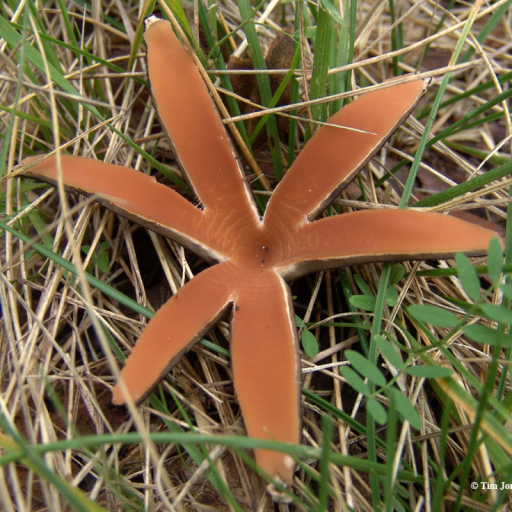
Known as the "Texas Star" or the "Devil's Cigar," the Chorioactis geaster is one of the rarest and most mysterious mushrooms in the world. For decades, it was believed to grow only in select counties of Texas, until it was discovered thousands of miles away in the mountains of Japan. This fungus is famous for its dramatic transformation, starting as a dark, soot-colored cylinder before bursting open into a striking tan star.
🔍 How to Identify
- 🟤 The "Cigar" Phase: Before maturing, the fungus looks like a dark brown, velvety, or leathery cylinder about 3–4 inches long, poking out of the ground.
- ⭐ The Star Burst: Upon maturity, the outer skin splits vertically into 4 to 7 "rays" that peel back to reveal a cream-colored or tan interior.
- 💨 Spore Clouds: If you catch it at the right moment, you may see a distinct puff of "smoke" (spores) being released from the center of the star.
🌲 Habitat & Ecology
- 🍂 Specific Hosts: In the United States, this mushroom is a picky eater; it grows almost exclusively on the decaying roots and stumps of Cedar Elm trees (Ulmus crassifolia).
- 🌏 Geographic Mystery: Scientists are baffled by its "disjunct" distribution. It is found only in Texas and parts of Japan (where it prefers oak trees), with no known populations in between.
- 🌧️ Seasonal Appearance: It typically emerges in late autumn and winter, following periods of heavy rain and high humidity.
⚠️ Safety & Toxicity
- 🚫 Status: WARNING: INEDIBLE.
- ⚠️ Details: While not known to be a "deadly" toxin like the Destroying Angel, the Devil's Cigar is classified as inedible. It has a tough, leathery texture and lacks any culinary value. Because it is so rare, it should never be harvested; it is a protected species in some areas and should be left to release its spores.
✨ Fun Fact
When the Chorioactis geaster splits open to release its spores, it often produces a distinct, audible "hissing" or whistling sound. This rare acoustic phenomenon has led locals to call it the "Whistling Devil's Cigar."

Detailed Care Instructions
Chorioactis Geaster, also known as the devil's cigar or Texas star, is a rare and unique mushroom-like fungus. It is not a plant that can be grown intentionally like other houseplants. The appearance of Chorioactis Geaster in the wild is unpredictable and depends on various environmental factors.
However, if you are really interested in observing and studying Chorioactis Geaster, you can try the following:
- Research its natural habitat: Chorioactis Geaster is usually found in woodland areas with specific environmental conditions. Understanding its natural habitat can provide insight into the specific requirements needed for its growth.
- Visit suitable locations: Locating areas where Chorioactis Geaster has been sighted before can increase your chances of finding it. Regions with high humidity, moderate temperatures, and specific soil and tree species are more likely to support its growth.
- Improve soil and environmental conditions: If you want to encourage Chorioactis Geaster growth in a specific location, try optimizing the environmental conditions. Ensure the soil is well-drained, rich in organic matter, and pH-neutral. Consider the surrounding vegetation and its impact on humidity, light, and air circulation in the area.
- Support a sustainable forest ecosystem: Chorioactis Geaster is believed to be a saprophytic fungus, meaning it obtains nutrients from decaying organic matter. Protecting forest ecosystems and promoting biodiversity can indirectly support the growth of Chorioactis Geaster.
- Be patient: Chorioactis Geaster is rare, and it may take time and persistence to find and observe it in the wild. Keep exploring suitable habitats and be prepared for the possibility that you may not find it at all.
Remember that Chorioactis Geaster is a protected species in some areas, and it is important to respect their natural habitats and not disturb or remove them.
The Chorioactis Geaster plant should be watered regularly to keep the soil moist, but be careful not to overwater as this can lead to root rot. Before watering, check the soil moisture level by sticking your finger about an inch or two into the soil. If it feels dry, it's time to water. Use room temperature water and avoid getting water on the leaves or stem. Watering from the bottom by placing the plant in a tray of water for a few minutes can also be effective. It's important to provide good drainage for the plant by using a well-draining soil mix and a pot with drainage holes.
To fertilize your Chorioactis Geaster plant, utilize a balanced, water-soluble fertilizer. Dilute the fertilizer according to the manufacturer's instructions, ensuring that the concentration is appropriate for the size and age of the plant. During the growing season, which usually occurs in the warmer months, fertilize the plant every two to four weeks. Increase the frequency to once a week during active growth periods. Apply the diluted fertilizer around the base of the plant, avoiding direct contact with the leaves or stems. Be careful not to over-fertilize, as this can lead to nutrient burn or other adverse effects. Regularly monitor the plant's growth and adjust the fertilization schedule as needed to maintain its health and vigor.
The ideal soil for cultivating the plant species in question should be composed of a mixture of organic and mineral components. It should have a neutral pH balance and be light, porous, and well-draining to allow excess moisture to escape. A recommended mixture would consist of peat moss, perlite, and sand in equal proportions. The soil should be sterilized before use to prevent the growth of harmful microorganisms and pests. The plant species requires a moist environment, so the soil should be kept consistently damp, but not waterlogged. Over-fertilization should be avoided, as excessive nutrients can harm the delicate plant.
To propagate Chorioactis Geaster, you can follow these steps:
- Start by collecting mature fruiting bodies of Chorioactis Geaster from its natural habitat. These fruiting bodies usually appear as dark brown to black mushrooms with distinctive features.
- Carefully separate the individual fruiting bodies and place them in a suitable container or tray for further processing.
- Allow the fruiting bodies to dry naturally in a well-ventilated area. This step helps in preserving the spores for later use.
- Once the fruiting bodies are completely dry, gently crush them or grind them into a fine powder using a mortar and pestle. This will release the microscopic spores contained within the fruiting bodies.
- Prepare a sterile growth medium by combining ingredients such as agar, peat moss, and other organic materials commonly used for growing mushrooms.
- Fill sterilized petri dishes or containers with the prepared growth medium. Make sure the medium is evenly spread and leveled within the containers.
- Sprinkle the spore powder evenly across the surface of the growth medium. You can also use a sterilized fine brush or spatula to spread the spores more evenly.
- Cover the containers with their respective lids or use a sterilized plastic wrap to create a humid environment. This helps to retain moisture and promote spore germination.
- Place the containers in a controlled environment with optimal temperature and humidity levels. Chorioactis Geaster prefers cool and damp conditions for optimal growth.
- Regularly monitor the containers and maintain appropriate moisture levels by misting them with sterile water if necessary. Avoid excessive moisture, as it may lead to contamination or the growth of unwanted organisms.
- With time, the spores will germinate and develop into mycelium, which is the vegetative part of the fungus. This mycelium will eventually form the distinctive mushroom structure of Chorioactis Geaster.
- Once the mycelium has fully developed, it can be transferred to a larger container or a suitable outdoor growing area with the right conditions for Chorioactis Geaster to thrive.
Please note that propagating Chorioactis Geaster can be a challenging process, and success rates may vary. It is important to maintain sterile conditions throughout the process to prevent contamination and ensure the healthy growth of the fungus.







