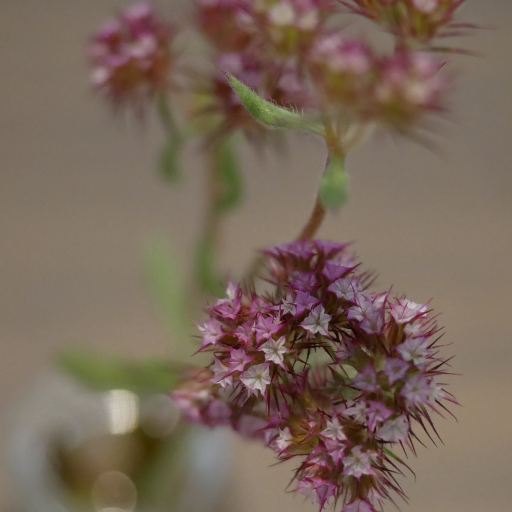
Plant Overview
Often called the Douglas' Spineflower, this California native looks like a collection of tiny, fuzzy pink stars clinging to a sun-baked hillside. Named after the legendary botanist David Douglas, it is a resilient annual that thrives in the rugged chaparral and woodland edges of the Coast Ranges. It’s a master of the "minimalist" aesthetic, focusing its energy on vibrant, papery blooms rather than lush foliage.
🔍 How to Identify
- 🌸 Bloom Style: It produces dense, head-like clusters of tiny flowers that range from soft pink to deep rose-purple, often appearing as miniature, fuzzy pom-poms.
- 🌿 Hairy Stems: The stems are noticeably "villous" (covered in fine, soft hairs), which gives the plant a silvery or grayish sheen when caught in the sunlight.
- 📍 The Spines: True to its name, the flower clusters are protected by tiny, needle-like bracts with hooked tips. These "spines" are the plant's primary defense and seed-dispersal tool.
🏡 In Your Garden
- 🏜️ The Sand Specialist: This plant is a "psammophile," meaning it loves sandy, well-draining soil. In a garden setting, it is perfect for rock gardens or coastal restoration projects where other plants might struggle with poor nutrients.
- ♻️ The Annual Cycle: Because it is an annual, it completes its entire life cycle in one season. It relies on its seeds to return the following year, so gardeners should avoid heavy mulching to allow the seeds to make contact with the soil.
⚠️ Safety & Toxicity
- 🌵 Mechanical Irritation: While not chemically toxic, the hooked spines on the flower heads are quite sharp. They are designed to hitch a ride on fur or clothing, which can cause minor skin irritation or discomfort if handled without gloves.
- 🐾 Pet Safety: There are no known toxic effects for cats or dogs if nibbled. However, the prickly texture usually acts as a natural deterrent, keeping curious pets from treating it like a snack.
✨ Fun Fact
The "Douglas" in its name refers to David Douglas, the 19th-century Scottish plant explorer who also discovered the Douglas Fir. He famously traveled through the California wilderness on horseback, sending thousands of "new" species back to Europe!

Detailed Care Instructions
To successfully grow the Chorizanthe Douglasii plant, you can follow these steps:
- Climate: Ensure that you are in a suitable climate for Chorizanthe Douglasii. It is a native plant in California and prefers a Mediterranean climate or similar conditions.
- Soil: Provide well-draining soil with a sandy or loamy texture. This plant can tolerate poor soil conditions but prefers slightly acidic to slightly alkaline soil (pH 6.0 to 7.5).
- Location: Choose a sunny spot for planting, as Chorizanthe Douglasii requires full sunlight to thrive.
- Watering: While established plants are drought-tolerant, it is recommended to water them regularly during the first growing season. Once established, reduce watering, as they can survive on natural rainfall.
- Planting: Sow the seeds directly into the garden bed or pots after any risk of frost has passed. Lightly cover the seeds with soil, and maintain a distance of about 12-18 inches between each plant.
- Care: Remove weeds and provide occasional light pruning to keep the plant tidy. Mulching around the base of the plant can help retain moisture and suppress weed growth.
- Pests and Diseases: Chorizanthe Douglasii is generally pest and disease resistant. However, keep an eye out for aphids, mealybugs, or spider mites. In case of an infestation, use organic pest control methods or insecticidal soap.
- Propagation: Chorizanthe Douglasii can also be propagated through stem cuttings. Take a 3-4 inch cutting from a healthy stem, remove the lower leaves, and place it in a pot with well-draining soil. Keep the soil moist until roots develop.
- Maintenance: To support plant growth and flowering, provide a balanced fertilizer once or twice a year, following the package instructions.
By following these steps and providing regular care, you should be able to grow and enjoy the Chorizanthe Douglasii plant successfully.

Place in a bright room that is sun drenched almost all day. Or directly in a south-facing window.

To effectively water Chorizanthe douglasii, it is important to consider specific watering techniques suited for this plant's needs. Follow the steps below for proper watering:
1. Observe the Plant: Regularly monitor the condition of your Chorizanthe douglasii to determine when it needs watering. Look for signs of wilted or drooping leaves, as this indicates a need for water.
2. Soil Moisture Check: Before watering, assess the moisture level of the soil. Insert your finger about an inch deep into the soil near the base of the plant and check if it feels dry. If the soil feels moist, postpone watering until it dries out more.
3. Watering Method: Use a gentle watering method to prevent any damage to the plant. A watering can or a garden hose with a misting nozzle is suitable for this purpose. Avoid using a strong jet of water, as it may disturb the delicate roots.
4. Watering Technique: Direct the water towards the base of the plant, allowing it to trickle down slowly. Make sure the water reaches the root zone, ensuring even distribution of moisture. Avoid wetting the leaves excessively, as this can lead to fungal diseases.
5. Frequency and Duration: Chorizanthe douglasii prefers a less frequent but deep watering schedule. This means watering the plant thoroughly, but infrequently. Aim to provide water to the root zone once every 7-10 days during the growing season, adjusting based on the weather conditions.
6. Time of Day: Water the plant in the early morning or late afternoon when temperatures are cooler. This helps minimize moisture evaporation and gives the plant ample time to dry before nightfall, reducing the risk of fungal diseases.
7. Drainage Consideration: Ensure that the plant is situated in a well-draining soil mix or container. Poor drainage can lead to waterlogged soil, which may cause root rot and other issues. If planting in a pot, ensure it has drainage holes to avoid water accumulation.
8. Adjusting Watering Schedule: Adjust the watering frequency according to the season and climate variations. During periods of heavy rainfall, you may need to decrease the frequency of watering, while in hot and dry conditions, you may need to increase it.
Remember, specific environmental factors such as temperature, humidity, and sunlight intensity can influence the watering needs of Chorizanthe douglasii. It is essential to closely monitor the plant's condition and adapt your watering routine accordingly.
To fertilize Chorizanthe Douglasii, follow these instructions:
- Choose a balanced, slow-release fertilizer with equal ratios of nitrogen (N), phosphorus (P), and potassium (K).
- Dilute the fertilizer according to the package instructions. Typically, a 1:1 ratio of fertilizer to water is recommended.
- Apply the diluted fertilizer to the soil around the base of the plant, avoiding direct contact with the leaves or stems.
- Use a watering can or a hose with a gentle spray attachment to evenly distribute the fertilizer throughout the root zone.
- Water the plant thoroughly after fertilizing to ensure the nutrients penetrate the soil.
- Repeat the fertilization process every 2-3 months during the growing season, typically from spring to early fall.
- Monitor the plant's response to the fertilizer and adjust the frequency or strength if necessary. Over-fertilization can cause harm, so it's best to start with a conservative application.
Remember to always read and follow the specific instructions provided with your chosen fertilizer and consider the unique needs of the Chorizanthe Douglasii plant.
When cultivating Chorizanthe Douglasii, it is recommended to use a specific soil composition that caters to the plant's unique growing needs. The ideal soil for this plant should have excellent drainage properties to prevent waterlogging and avoid conditions that can lead to root rot. It should also have a moderate to slightly acidic pH level, ranging between 5.5 and 7.0.
To create an optimal soil mixture, a blend of organic matter, sand, and a porous soil such as loam or sandy loam is suggested. Adding compost or well-rotted manure to the soil mix can enhance its fertility and increase nutrients availability to the plant. Furthermore, the incorporation of sand aids in improving drainage, allowing excess water to pass through the soil efficiently.
Aim to maintain a soil texture that is loose, light, and well-aerated. This encourages healthy root development and prevents compaction. Additionally, providing a soil mix enriched with organic matter aids in water retention while preventing waterlogging, as it allows excess moisture to drain away.
Regularly monitoring the moisture levels in the soil is essential. Typically, allowing the soil to partially dry out between watering sessions is recommended to avoid overwatering. By doing so, it reduces the risk of root rot and other fungal diseases that may harm the plant.
Overall, creating a well-draining, slightly acidic soil mixture, enriched with organic matter, will provide an optimal growing medium for Chorizanthe Douglasii, supporting its growth and overall health.
Chorizanthe douglasii is a perennial plant native to western North America. Here is a detailed guide on propagating this plant:
- Propagation Method: Chorizanthe douglasii can be propagated through seeds or cuttings. Both methods have their advantages and can be successful.
- Collecting Seeds: If you choose to propagate through seeds, you need to collect them when they are fully matured. Wait for the plant to produce flowers and then allow the flowers to develop into seed heads. Once the seed heads turn brown and dry, cut them off and place them in a paper bag. Shake the bag gently to release the seeds.
- Preparing Seeds: Place the collected seeds in a cool, dry location and allow them to dry completely. This will ensure their viability and prevent any mold or fungal growth. Store the seeds in a cool, dark place until you are ready to sow them.
- Soil Preparation: Chorizanthe douglasii prefers well-draining soil that is sandy or loamy. Prior to sowing seeds or planting cuttings, prepare the soil by removing any weeds or debris and loosen it up with a garden fork.
- Sowing Seeds: If using seeds, you can directly sow them in the prepared soil. Scatter the seeds evenly over the surface and lightly press them into the soil. Do not cover the seeds with a thick layer of soil as they require light to germinate.
- Watering: Chorizanthe douglasii prefers a slightly dry environment, so avoid overwatering. Water the seeds or cuttings sparingly, keeping the soil slightly moist but not soggy. Too much water can lead to root rot.
- Germination: Chorizanthe douglasii seeds can take several weeks to germinate. Ensure consistent moisture levels during this period. Once the seeds germinate, small seedlings will emerge from the soil.
- Transplanting: Once the seedlings have established a few sets of true leaves, they can be carefully transplanted into individual containers or directly into the garden. If transplanting into the garden, ensure the spacing is appropriate for the mature size of the plant.
- Propagating through Cuttings: Another method of propagation is through stem cuttings. Take a stem cutting from a healthy Chorizanthe douglasii plant, preferably in spring or early summer. Remove lower leaves and dip the cut end of the stem in a rooting hormone to promote root development.
- Rooting: Place the cutting in a well-draining potting mix or a mixture of sand and perlite. Keep the soil slightly moist and provide indirect light. After a few weeks, the cutting should develop roots.
- Transplanting Cuttings: Once the cuttings have rooted, they can be carefully transplanted into individual containers or directly into the garden using the same process as seedlings.
- Care: Chorizanthe douglasii prefers full sun and requires minimal care once established. Water sparingly, allowing the soil to dry out slightly between waterings. Avoid over-fertilizing, as excess nutrients can negatively impact the plant's overall health.
By following these propagation steps, you can successfully propagate Chorizanthe douglasii and enjoy its unique beauty in your garden.








