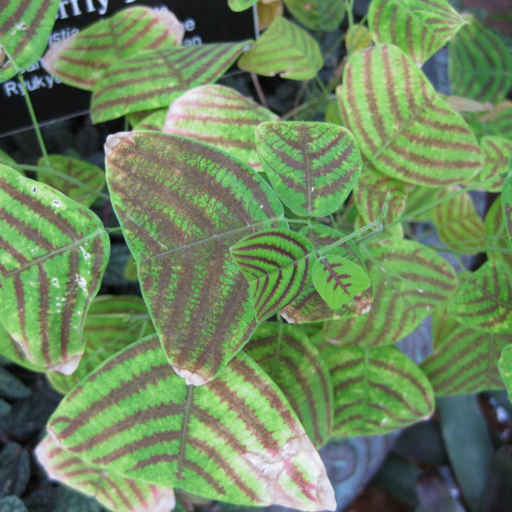
Plant Overview
Often called the Swallowtail Plant or Butterfly Wing, Christia obcordata looks less like a plant and more like a collection of tropical butterflies frozen in flight. This rare Southeast Asian treasure is famous for its mesmerizing triangular leaves and delicate, arching stems that sway with the slightest breeze. It is a prized "holy grail" for indoor gardeners looking to add a whimsical, living mobile to their collection.
🔍 How to Identify
- 🦋 The Wings: The leaves are distinctly triangular (an inverted heart shape) with striking burgundy or chocolate-brown stripes running horizontally across a vibrant green surface.
- 🌿 Texture: The foliage is incredibly thin and papery, giving it an ethereal, weightless appearance that mimics the fragility of a real butterfly wing.
- 🎋 Growth Habit: It grows on thin, wire-like stems that can reach about 12 to 24 inches in height, creating an airy, see-through silhouette rather than a dense bush.
🏡 In Your Garden
- 💧 Humidity is Non-Negotiable: Because its leaves are so paper-thin, they lack the "water storage" found in thicker plants. It wilts quickly in dry air, so it thrives best near a humidifier or in a glass terrarium.
- ☀️ Dappled Sunlight: Think of its leaves like delicate parchment; direct afternoon sun will scorch the patterns instantly. It prefers the "bright-but-filtered" light of a forest floor.
- 🌱 Gentle Handling: This plant has a very sensitive root system and "hates" being moved or repotted frequently. Once you find a spot where it's happy, leave it there to avoid transplant shock.
⚠️ Safety & Toxicity
- 🐾 Pet Safety: Christia obcordata is generally considered non-toxic to cats and dogs, making it a safe choice for pet-filled homes.
- 👶 Handle with Care: While not poisonous, the plant is extremely fragile. Curious toddlers or playful pets can easily snap the thin stems or crush the papery leaves, which may cause the plant to struggle or die back.
✨ Fun Fact
The species name obcordata actually describes the leaf shape—it is a combination of the Latin "ob" (inverted) and "cor" (heart). If you flip a leaf upside down, you will see a perfectly shaped botanical heart!

Detailed Care Instructions
To grow Christia obcordata (Swallowtail plant), follow these steps:
- Choose the right location: Christia obcordata prefers bright, indirect light. Place the plant near a window that receives filtered sunlight. Avoid direct sun exposure, as it may burn the leaves.
- Select a suitable container: Use a pot with drainage holes to prevent waterlogging. Ensure it is large enough to allow the plant's root system to expand.
- Prepare the soil: Use a well-draining potting mix. A mixture of peat moss, perlite, and coarse sand works well for Christia obcordata. Avoid heavy soils that retain excessive moisture.
- Propagate the plant: Christia obcordata is commonly grown from stem cuttings. Take a stem cutting about 4-6 inches long from a healthy, mature plant. Remove the bottom leaves and dip the cut end in a rooting hormone powder. Plant the cutting in moist soil, burying it about an inch deep.
- Maintain suitable humidity: Christia obcordata prefers high humidity. You can increase humidity by using a humidifier or placing a small tray filled with water near the plant. Misting the leaves regularly also helps.
- Watering routine: Keep the soil moderately moist, but avoid overwatering. Check the soil's moisture level by inserting your finger an inch into the soil. Water the plant when the top inch feels dry. Avoid allowing the plant to sit in standing water, as it can lead to root rot.
- Fertilize occasionally: Apply a balanced, water-soluble fertilizer diluted to half the recommended strength every 2-3 months during the growing season (spring to fall). Reduce or eliminate fertilization during the dormant winter period.
- Pruning and shaping: Trim back any leggy or overgrown stems to maintain a bushier plant. Pruning helps promote new growth and maintains an attractive shape.
- Pest control: Monitor the plant for common pests like mealybugs, aphids, or spider mites. If infested, remove the pests by hand or use organic insecticidal soap.
- Provide adequate temperature: Christia obcordata prefers temperatures between 65-80°F (18-27°C). Protect the plant from extreme cold or drafts.
Remember that growing conditions can vary, so it's essential to observe and adjust the care routine based on the specific needs of your Christia obcordata plant.

Place in a dark room with little light, like a dark bedroom or a spot far away from a window or directly in a north-facing window.

Christia Obcordata is a flowering plant that requires proper watering to ensure its healthy growth and development. To water this plant, you need to follow the proper techniques that will not damage the roots or leaves.
First, check the soil moisture level before watering the plant. Insert your finger 1-2 inches deep into the soil to feel the moisture level. If the soil feels dry, it's time to water the plant.
Use a watering can with a narrow spout or a hose with a fine-mist nozzle to avoid disturbing the soil and plants. Water the soil evenly, ensuring that the water penetrates the roots. Do not water the leaves as it can cause fungal diseases, especially if you water excessively.
Avoid overwatering the plant as it can lead to root rot and other diseases. Water the plant only when the soil feels dry to the touch and not before that.
During the winter months, reduce the frequency of watering as the plant goes dormant during this time. You can water the plant once a month or as per the moisture level in the soil.
In summary, check the soil moisture level, use a narrow spout watering can or fine-mist nozzle, water the soil evenly, avoid watering the leaves, and reduce watering during winter months to ensure the healthy growth of Christia Obcordata plant.
To fertilize this plant, first make sure it is well-watered. Then, dilute a balanced liquid fertilizer to half strength and apply it to the soil once every two weeks during the growing season (spring through summer). During the dormant period (fall through winter), reduce fertilization to once a month. Avoid getting the fertilizer on the foliage or stems.
To successfully grow Christia Obcordata plants, it is important to provide them with the appropriate soil type. The soil should be well-draining, nutrient-rich, and acidic in nature. A peat moss-based soil is ideal, as it retains moisture well and provides the necessary nutrients for healthy growth. Additionally, the soil should be loose and aerated, allowing for easy root growth and water penetration. It is important to avoid using heavy or compacted soils, as this can lead to waterlogging and root rot. Overall, providing the right soil conditions is essential for the successful growth of Christia Obcordata plants.
Christia Obcordata plant can be propagated through stem cuttings. First, select a healthy stem from the plant and cut a section that is approximately 4-6 inches long. Remove the lower leaves to expose a node where the roots will grow.
Next, dip the cut end of the stem into rooting hormone powder to encourage root growth. Place the stem cutting into a pot filled with well-draining soil, and water it until the soil is moist. Cover the pot with a plastic bag to create a humid environment and prevent the cutting from drying out.
Place the pot in a bright location, but away from direct sunlight, and keep the soil moist but not waterlogged. Roots should begin to develop within 3-4 weeks. After roots have formed, gradually remove the plastic bag and move the plant into a larger pot or into the ground if desired.
It is important to monitor the cutting closely for signs of stress or disease, and to be patient as it can take several months for the plant to become established and begin to grow.
Common pests of the butterfly plant include Spider mites, aphids, thrips. Make a habit of checking your butterfly plant frequently for pests so that any infestations can be caught and managed early.








