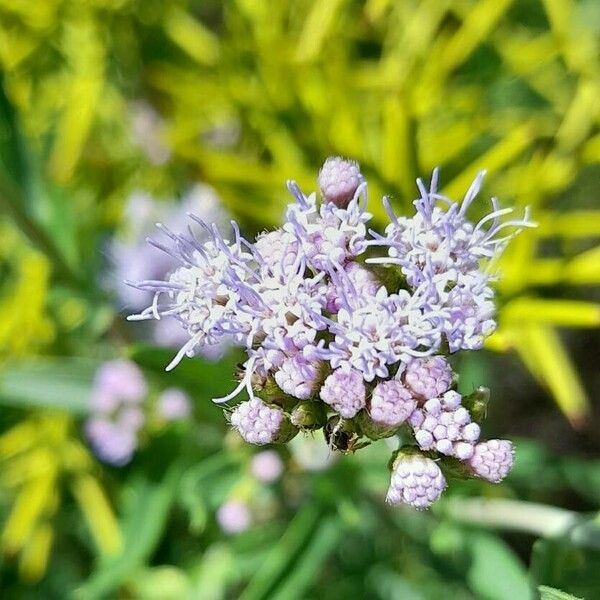
Plant Overview
Often referred to as a cousin to the famous Siam Weed, Chromolaena arnottiana is a resilient and aromatic shrub native to the landscapes of South America. Known for its ability to thrive in disturbed soils and forest edges, it acts as a "botanical pioneer," quickly reclaiming open spaces with its dense, woody growth. While it may look like a common wild shrub, its crown of misty, pale flowers turns it into a magnet for nectar-seeking insects during the blooming season.
🔍 How to Identify
- 🌿 Leaf Shape: The leaves are typically triangular or arrowhead-shaped with distinct serrated (toothed) edges and a slightly velvety texture.
- 🌸 The "Mist" Flowers: It produces dense clusters of small, tubular flowers that lack large petals, giving the plant a fuzzy, "mist-like" appearance. They are usually white or very pale lavender.
- 🪵 Branching Habit: The plant has a sprawling, multi-branched structure that can quickly form a dense thicket, often reaching several feet in height.
🏡 In Your Garden
- 🦋 The Butterfly Magnet: This plant is an ecological powerhouse for pollinators. If you find it on your property, expect frequent visits from bees and various butterfly species drawn to its high nectar yield.
- 🌱 Vigorous Growth: It is a hardy survivor. It prefers full sun and well-draining soil, but it is notoriously difficult to kill once established because it can resprout easily from its woody base.
- ✂️ Pruning Needs: Because it can become "leggy" or take over a space, it requires regular trimming to maintain a neat shape and prevent it from shading out smaller garden residents.
⚠️ Safety & Toxicity
- 🐾 Mildly Toxic to Livestock: Like many members of the Asteraceae family, it contains compounds that can be harmful to grazing animals (like horses or cattle) if consumed in large quantities over time.
- 👶 General Caution: While not considered highly dangerous to humans, the leaves can cause mild stomach upset if ingested by children. It is best treated as an ornamental or wild plant rather than a medicinal one.
- 🧤 Skin Sensitivity: Some gardeners report mild skin irritation from the sap when pruning; wearing gloves is recommended for sensitive individuals.
✨ Fun Fact
The genus name Chromolaena is derived from the Greek words for "color" and "cloak," referring to the colorful bracts that "clothe" the tiny flowers before they fully open!

Detailed Care Instructions








