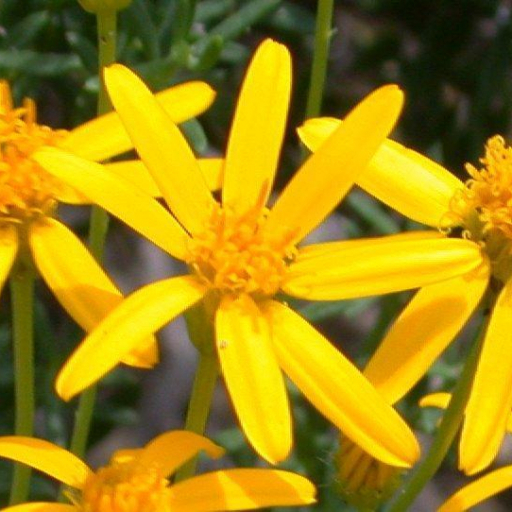
Plant Overview
Affectionately known as the Damianita Daisy, this rugged little shrub is a goldmine for sun-scorched landscapes. Originating from the rocky, limestone-rich regions of Mexico and the Southwestern United States, it is famous for turning harsh, dry hillsides into carpets of brilliant yellow. It is a "tough-as-nails" perennial that thrives where other plants wither, offering a spicy, citrusy fragrance that earns it a top spot in sensory gardens.
🔍 How to Identify
- 🌼 Vibrant Blooms: The flowers are classic daisy-like heads, about one inch wide, featuring bright yellow ray petals surrounding a matching yellow center disk.
- 🌿 Needle-like Foliage: Its leaves are very narrow, dark green, and needle-like, resembling rosemary or certain types of moss. They are densely packed along the stems.
- 🪵 Woody Base: As the plant matures, it develops a distinctive woody base. It typically grows in a low, rounded mound, reaching about 1 to 2 feet in height.
- 👃 Aromatic Scent: If you crush the leaves or brush against the plant, it releases a potent, pleasant aroma that smells like a mix of citrus and pungent spice.
🏡 In Your Garden
- ☀️ Sun Worshiper: Damianita Daisy thrives in the most intense heat and full sun. It is a "desert native" at heart, meaning it rarely needs supplemental water once its root system is established.
- 🪨 The Drainage Rule: This plant's biggest enemy is "wet feet." It requires extremely well-draining soil, preferably rocky or sandy. If your soil is heavy clay, plant it in a raised bed or a rock garden to ensure it doesn't rot during rainy seasons.
- ✂️ Pruning Strategy: To keep it from looking "leggy" or overly woody, give it a light trim in early spring. This encourages a fresh flush of green foliage and a more prolific blooming cycle.
⚠️ Safety & Toxicity
- 🟢 Safe Status: Chrysactinia mexicana is generally considered non-toxic to humans and is not listed on major toxic plant databases for livestock or pets.
- 🐶 Pet Note: While not poisonous, the high essential oil content in the leaves can cause mild stomach upset if a curious dog or cat decides to graze on it. The pungent smell usually acts as a natural deterrent for most animals.
✨ Fun Fact
Damianita is often called a "living perfume." In its native habitat, the scent is so strong that hikers can often smell the plant before they actually see its bright yellow flowers peeking out from behind desert rocks!

Detailed Care Instructions
To grow Chrysactinia Mexicana (also known as Damiana), follow these steps:
- Obtain seeds or young plants: You can purchase seeds or young plants from a reputable nursery or online store. Make sure you choose a healthy specimen.
- Choose the right location: Chrysactinia Mexicana prefers full sunlight, so select a spot in your garden or balcony that receives at least 6 hours of direct sunlight per day. Ensure the soil is well-draining.
- Prepare the soil: Mix organic compost or well-rotted manure into the soil to improve drainage and fertility. Damiana prefers a slightly acidic to neutral soil with a pH level between 6.0 and 7.5.
- Sow the seeds or transplant: If you have seeds, sow them directly into the prepared soil, barely covering them with a thin layer of soil. If you have young plants, gently transplant them into the prepared soil, ensuring they are spaced adequately.
- Watering: Keep the soil consistently moist but not waterlogged. Water thoroughly whenever the top inch of soil feels dry. Ensure good drainage to prevent waterlogging, as excessive moisture can lead to root rot.
- Fertilize: During the growing season, you can apply a balanced, slow-release fertilizer every 6-8 weeks to promote healthy growth and flowering. Follow the instructions on the fertilizer packaging for the correct dosage.
- Pruning: Regularly pruning the plant helps encourage branching and fuller growth. Trim back any dead or damaged branches to maintain its shape and remove any excessive growth.
- Pest control: Damiana is generally resistant to pests and diseases. However, occasionally, aphids and spider mites may attack the plant. Inspect regularly and use organic or chemical insecticides as needed to control these pests.
- Harvesting: Damiana leaves can be harvested once the plant reaches maturity, usually after one to two years. Harvest leaves in the early morning when the essential oils are most potent. Dry the leaves in a cool, dark place and store them in an airtight container for later use.
By following these steps, you can successfully grow your own Chrysactinia Mexicana plant and enjoy its beautiful yellow flowers and medicinal benefits.

Place in a bright room that is sun drenched almost all day. Or directly in a south-facing window.

Chrysactinia Mexicana plant requires regular watering to keep the soil moist, especially during the growing season. Before watering, it is essential to check the soil's moisture level by inserting a finger or a wooden stick into the soil, checking if it feels dry. The plant should be watered thoroughly until the water drains out of the pot's bottom. However, it is crucial not to let the plant sit in standing water, as this can cause root rot. The frequency of watering depends on the plant's location, pot size, and weather conditions. In hot and dry conditions, the plant may require watering once or twice a week, while in cooler weather, watering may be reduced. It is also essential to use room temperature water and not water that is too cold or too hot.
To fertilize this plant, use a balanced fertilizer with equal parts nitrogen, phosphorus, and potassium. Apply the fertilizer in early spring and midsummer, following the instructions on the package for amount and frequency. Avoid over-fertilizing, as this can lead to weak growth and susceptibility to disease. Water the plant deeply after fertilizing to help the nutrients penetrate the soil and root system.
Chrysactinia Mexicana plants prefer well-draining soil with good aeration. The ideal soil for this plant should have a loose and sandy texture, with a slight acidic to neutral pH level. The soil should also contain organic matter, such as compost or peat moss, to provide nutrients for the plant's growth. It is important to avoid using heavy or clay soils as they can cause waterlogging and root rot. Additionally, the soil should not be too rich in nutrients as this can lead to excessive growth and reduced flower production. A mixture of sand, perlite, and peat moss can be a good option for growing Chrysactinia Mexicana plants as it provides good drainage while retaining moisture and nutrients.
- First, identify a healthy stem of the plant that you want to propagate. Cut a length of stem about 6 inches long from the parent plant using a sharp, sterile knife or scissors.
- Strip off the leaves from the bottom half of the stem, leaving just a few leaves at the tip.
- Dip the cut end of the stem into a rooting hormone powder to promote root growth.
- Prepare a pot of well-draining soil mix, such as a 50/50 combination of perlite and peat moss.
- Make a hole in the soil with a pencil or finger and insert the stem into the hole.
- Firmly press the soil around the stem to ensure good contact.
- Water the soil just enough to moisten it, but avoid over-watering, which can cause the cutting to rot.
- Cover the pot and cutting with a plastic bag to create a humid environment and retain moisture.
- Place the pot and cutting in a warm, bright location, but avoid direct sunlight.
- Check the cutting regularly to make sure the soil remains moist, misting it if necessary.
- After a few weeks, gently tug on the cutting to see if it has rooted. If it resists being pulled out, it has likely developed roots.
- Gradually acclimate the new plant to normal environmental conditions, and transplant it into a larger container or the ground when it has reached a suitable size.
Common pests of the damianita include Aphids. Make a habit of checking your damianita frequently for pests so that any infestations can be caught and managed early.








