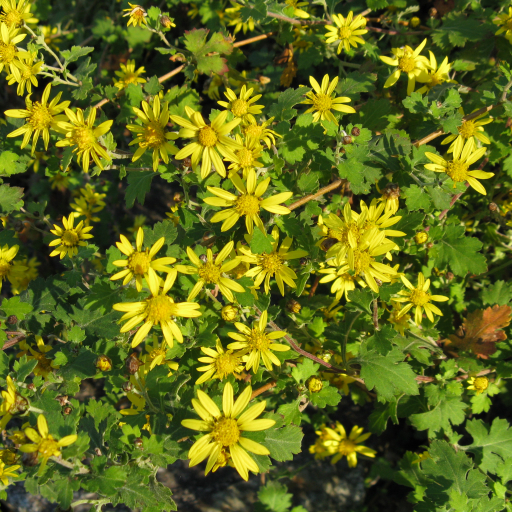
Plant Overview
Known widely as the Indian Chrysanthemum or "Mother Chrysanthemum," this hardy perennial has been a cornerstone of East Asian culture for centuries. Unlike the massive, fluffy "pompom" mums found in floral shops, this wilder relative offers a sea of bright yellow daisies that signal the arrival of autumn. In many traditions, it is celebrated as a symbol of longevity and a literal "golden flower" that heralds the cooling of the earth.
🔍 How to Identify
- 🌼 The Blooms: Features small, bright yellow ray florets surrounding a dense golden center. They look like miniature suns or classic, wild daisies.
- 🌿 The Foliage: The leaves are deeply lobed (pinnatifid) with a slightly fuzzy texture on the underside and a distinct, sharp herbal scent when bruised.
- 🌱 Growth Habit: A bushy, herbaceous perennial that typically reaches 1 to 3 feet in height, spreading outward to create a dense, green mound.
🏡 In Your Garden
- ☀️ Sun-Seeker Nuances: While it thrives in full sun, this species appreciates a bit of afternoon shade in extremely hot climates to prevent the delicate petals from scorching.
- ✂️ The Art of Pinching: To avoid a "leggy" or floppy plant, gardeners often "pinch back" the stems in early summer. This encourages the plant to branch out, resulting in a much more prolific floral display in the fall.
- 💧 Well-Drained Feet: It is highly sensitive to "wet feet" during the winter. Ensure the soil is porous; heavy clay can lead to root rot during the dormant season.
⚠️ Safety & Toxicity
- 🐾 Pet Warning: This plant contains pyrethrins and sesquiterpene lactones, which are toxic to dogs, cats, and horses. Ingestion can lead to vomiting, diarrhea, and lack of coordination.
- 🧤 Skin Sensitivity: Some individuals may develop "mums dermatitis"—an itchy skin rash—after handling the leaves and stems. It is always best to wear gloves when pruning.
✨ Fun Fact
[🍵] The Golden Brew: While most garden mums are strictly ornamental, Chrysanthemum indicum is one of the primary species used to create the famous "Juhua" tea in East Asia. It has been used for over 2,000 years and is prized for its "cooling" properties in traditional wellness practices.

Detailed Care Instructions
| Color | Yellow, White |
| Soil Ph | Slightly Acidic To Neutral |
| Humidity | Normal |
| Lighting | Full Sun |
| Soil Type | Rich And Moist |
| Bloom Time | From August To October |
| Difficulty | Easy |
| Plant Type | Herbaceous Perennials |
| Hibernation | Cold Period |
| Mature Size | Up To 24 In. Tall |
| Native Area | Asia And Northeastern Europe |
| Sun Exposure | Full Sun |
| Hardiness Zones | 3-9 |
To grow a Chrysanthemum Indicum plant, follow these steps:
- Select a suitable growing location: Chrysanthemums prefer full sunlight, so find a location with at least 6 hours of direct sunlight per day. Ensure the soil is well-draining.
- Planting: Chrysanthemums can be grown from seeds or nursery-grown plants. If planting from seeds, sow them in a seed tray or small pots filled with seed-starting mix. Cover the seeds lightly with soil and water gently. Once the seedlings are a few inches tall, transplant them into the desired location. If using nursery plants, dig a hole that is larger than the root ball and gently place the plant in the hole. Backfill around the roots and press down to eliminate any air pockets.
- Watering: Regular watering is essential, especially during hot and dry periods. Keep the soil consistently moist but not waterlogged. Water at the base of the plant to avoid wetting the foliage, as this can promote disease.
- Fertilizing: Apply a balanced, slow-release fertilizer or a water-soluble fertilizer every four to six weeks during the growing season. This will help provide the necessary nutrients for healthy growth and abundant blooms.
- Pinching and Pruning: Chrysanthemums benefit from pinching and pruning to encourage bushier growth and more blooms. Pinch off the top inch of the stems when the plants are around 6 inches tall. This will cause lateral branches to develop, resulting in a fuller plant. Pinch or prune any leggy or overgrown stems throughout the growing season to maintain the desired shape.
- Pests and Disease Control: Regularly inspect the plants for signs of pests, such as aphids or spider mites. Treat any infestations promptly with suitable insecticides or organic pest control methods. Additionally, ensure good air circulation around the plants to prevent fungal diseases. Remove any infected foliage or flowers immediately.
- Overwintering: Chrysanthemums are typically hardy perennials and can withstand mild winter conditions. However, in colder regions, they may need extra protection. Apply a thick layer of mulch around the base of the plants in late fall to insulate the roots from freezing temperatures.
By following these steps, you can successfully grow Chrysanthemum Indicum plants and enjoy their vibrant blooms.

Place in a bright room that is sun drenched almost all day. Or directly in a south-facing window.

To water this plant, you should thoroughly moisten the soil without creating standing water. The frequency of watering will depend on the climate, humidity, and soil type. Check the soil moisture level regularly, and water the plant when the soil feels dry to the touch. Overwatering should be avoided, as it can lead to root rot. If the plant is in a pot, be sure to allow excess water to drain away from the pot before placing it back in its saucer or decorative container.
To fertilize this plant, apply a balanced fertilizer every two weeks during its growing season. Dilute the fertilizer in water according to the package instructions and pour it directly onto the soil around the base of the plant, avoiding getting it on the leaves. For best results, use a fertilizer with a higher ratio of phosphorus to nitrogen, as this will encourage flower production. Avoid over-fertilizing, as this can lead to excessive foliage growth and decreased blooming.
Chrysanthemum Indicum plant grows well in well-draining soil with a pH level of 6.0-6.5. The soil should be rich in nutrients and organic matter to provide the plant with the required nourishment. The ideal soil type is a loamy or sandy loam soil that allows for good water retention but does not become waterlogged.
It is important to avoid using heavy clay soils that are prone to becoming waterlogged, as this can lead to root rot and other fungal diseases. Additionally, the plant needs adequate drainage to prevent moisture buildup and root suffocation.
Avoid using soil that has been previously used to grow plants from the same family, as it may be contaminated with harmful pathogens. Instead, use fresh soil or sterilize the soil before use to ensure that it is free from diseases.
It is recommended to add organic matter such as compost or well-rotted manure to the soil before planting to improve soil fertility and structure. This will also help to retain moisture and promote healthy root growth.
Lastly, ensure that the soil is free from weeds and debris that could compete with the plant for nutrients and water.
Chrysanthemum Indicum is a flowering plant that can be propagated by several methods such as stem cuttings, division, and seed propagation. Stem cuttings are the easiest and fastest way to propagate this plant.
To propagate Chrysanthemum Indicum using stem cuttings, follow the steps below:
- Start by selecting a healthy plant and choose a stem that is about 4-6 inches long and has at least 2-3 nodes.
- Cut the stem just below a node using a sharp and sterilized knife or scissors.
- Remove the leaves from the bottom two-thirds of the stem, leaving only one or two leaves at the top.
- Dip the end of the cutting in rooting hormone powder, tapping off the excess.
- Prepare a pot with well-draining soil and make a hole using a pencil.
- Insert the cutting into the hole and firm the soil around it.
- Water the pot thoroughly and cover it with a plastic bag or a plastic dome to create a humid environment.
- Place the pot in a bright, but indirect light and maintain a consistent moisture level by misting the cutting regularly and watering when the soil dries out.
- After 2-3 weeks, gently tug on the cutting to see if it has started to root. Once roots have formed, remove the plastic cover and move the plant to a larger pot or transplant it to the garden.
- Keep the newly propagated plant moist and in a bright, but indirect light until it is established.
Common pests of the indian chrysanthemum include Spider mites, fungus gnats, aphids. Make a habit of checking your indian chrysanthemum frequently for pests so that any infestations can be caught and managed early.








