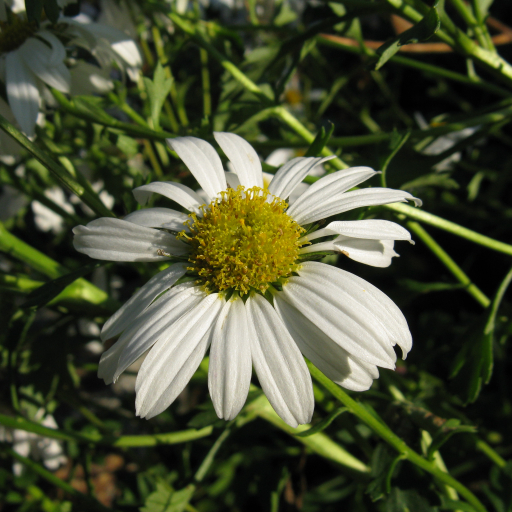
Plant Overview
Often called the Siberian Mum, this wild beauty is the tough-as-nails ancestor of many modern garden favorites. While many florist mums are delicate and fussy, Chrysanthemum zawadskii thrives in the harsh, rocky landscapes of Eastern Europe and Northern Asia. It brings a touch of delicate pink and white to the landscape, proving that true elegance can survive even the coldest winters.
🔍 How to Identify
- 🌸 The Bloom: Large, daisy-like flowers typically featuring a bright yellow central disc surrounded by ray petals that range from pure white to a soft, romantic lavender-pink.
- 🍃 Lacy Foliage: Unlike the broad, heavy leaves of some garden hybrids, these leaves are deeply lobed and almost fern-like, often sporting a subtle grayish-green tint.
- 🌿 Growth Habit: It forms neat, mounding clumps that stay relatively low to the ground, making it an excellent "filler" plant for the front of a garden border or a rock garden.
🏡 In Your Garden
- 🏔️ Siberian Strength: Because of its origins, this plant is incredibly cold-hardy. It is often one of the last splashes of color in a garden before the deep winter sets in, blooming late when other flowers have faded.
- 🏜️ Drainage is Key: While it is tough, its "Achilles' heel" is soggy soil. It evolved in well-draining, rocky terrain; if its roots sit in heavy, wet mud over winter, it may suffer from root rot.
- ✂️ The Pinch Method: To encourage a bushier shape and more flowers, gardeners often "pinch" the stems back in early summer. This prevents the plant from becoming too "leggy" or flopping over under the weight of its own blossoms.
⚠️ Safety & Toxicity
- 🐾 Toxic to Pets: Like all members of the Chrysanthemum family, this plant contains pyrethrins and sesquiterpene lactones. It is considered toxic to dogs, cats, and horses if ingested, potentially causing vomiting, diarrhea, or drooling.
- 🧤 Skin Sensitivity: Handling the foliage can cause "Mum dermatitis"—a mild skin rash or irritation in sensitive individuals. It’s always a good idea to wear gloves when pruning or dividing these clumps.
✨ Fun Fact
🧬 The Great Ancestor: Chrysanthemum zawadskii is a botanical celebrity in the breeding world. It was a primary parent used to create the "Korean Hybrid" mums, passing on its legendary cold resistance to the colorful varieties we see in garden centers today.

Detailed Care Instructions
| Humidity | Normal |
| Lighting | Full Sun |
| Difficulty | Medium |
| Hardiness Zones | 5 - 9 |
To grow Chrysanthemum Zawadskii plants, follow these steps:
- Select a suitable location: Chrysanthemum Zawadskii plants require full sunlight for at least 6-8 hours a day. Choose a well-draining area with fertile soil.
- Prepare the soil: Chrysanthemums prefer well-draining, loamy soil. Amend the soil with organic matter, such as compost or well-rotted manure, to improve its fertility and drainage.
- Propagation: Chrysanthemum Zawadskii plants can be propagated from seeds or cuttings. If using seeds, sow them directly into the prepared soil in early spring. If using cuttings, take 3-4-inch stem cuttings from a healthy plant and remove the lower leaves. Dip the cut end in rooting hormone, then plant it in a pot filled with a combination of potting soil and perlite. Keep the pot in a warm, well-lit area until roots develop, then transplant it into the garden.
- Watering: Chrysanthemums require regular watering, especially during the summer months. Water consistently to keep the soil evenly moist, but avoid overwatering, as it can lead to root rot.
- Fertilization: Feed Chrysanthemum Zawadskii plants with a balanced fertilizer every three weeks during the growing season. Follow the instructions on the fertilizer packaging for the appropriate application rates.
- Pinching and staking: To encourage bushier growth and more compact plants, pinch off the growing tips of young plants when they reach about 6 inches in height. Insert stakes or a trellis at the time of planting to provide support for the plants as they grow taller.
- Mulching: Apply a layer of organic mulch, such as straw or wood chips, around the plants to help conserve moisture, suppress weeds, and regulate soil temperature.
- Pruning: Regularly deadhead spent flowers to encourage continuous blooming. Prune back the plants in late winter or early spring to promote fresh growth and maintain their shape.
- Pests and diseases: Monitor the plants for common pests like aphids, spider mites, and leafhoppers. If necessary, treat with appropriate insecticidal soaps or insecticides. Also, watch out for fungal diseases such as powdery mildew or gray mold. Ensure good air circulation around the plants and avoid overwatering to help prevent these issues.
By following these steps and providing proper care, you can successfully grow Chrysanthemum Zawadskii plants in your garden.

Place in a dark room with little light, like a dark bedroom or a spot far away from a window or directly in a north-facing window.

When it comes to watering this plant, it's important to keep it consistently moist but not waterlogged. You can achieve this by watering it thoroughly once a week, and then checking the soil moisture level regularly to ensure it's not drying out too quickly or staying too wet. One trick is to stick your finger into the soil up to your second knuckle - if it feels dry, it's time to water. However, make sure you're not overwatering, as this can lead to root rot and other issues. It's also a good idea to water the plant at the base rather than overhead, to avoid getting the foliage wet and potentially causing fungal diseases. Finally, be aware that the plant's water needs may vary depending on factors like the temperature, humidity, and light levels in the space where it's growing.
To fertilize this plant, use a balanced fertilizer with equal parts of nitrogen, phosphorus, and potassium. Apply the fertilizer once a month during the growing season. Follow the instructions on the fertilizer packaging for the correct amount to use. Avoid over-fertilizing as this can damage the plant.
The ideal soil for the Chrysanthemum Zawadskii plant should be well-draining, loose, and loamy. It should have a neutral pH level, which means it should be neither too acidic nor too alkaline. The soil should be rich in organic matter and have good water retention capabilities. A soil mix composed of equal parts of garden soil, perlite, and peat moss would be suitable for this plant. It is also recommended to add some compost or well-rotted manure to the soil to increase nutrient levels. Avoid using heavy clay soils or soils that are poorly draining, as this can cause root rot and other issues.
- Choose a healthy parent plant - Select a healthy Chrysanthemum Zawadskii plant as the parent plant for propagation.
- Take a cutting - Using a clean, sharp pair of scissors or pruning shears, take a cutting from the parent plant. Cut just below a node (the point where a leaf meets the stem).
- Remove lower leaves - Carefully remove the lower leaves from the cutting, leaving only the top leaves intact.
- Dip in rooting hormone - Dip the cut end of the cutting in rooting hormone powder. This will help to promote root development.
- Plant the cutting - Plant the cutting in a pot or container filled with a well-draining soil mix. Water the soil well and place the pot in a bright, warm location away from direct sunlight.
- Maintain humidity - Cover the pot with a clear plastic bag or a propagation dome to maintain humidity. This will help the cutting to root faster.
- Monitor the cutting - Check the cutting regularly to ensure that the soil is moist but not waterlogged. After a few weeks, gently tug on the cutting to see if it has developed roots. If it has, it is time to gradually remove the plastic bag or dome and introduce the plant to more light.
- Transplant - Once the cutting has developed a good root system, it can be transplanted into its own pot or planted in the garden.








